Rosamunde Pilcher - September
Здесь есть возможность читать онлайн «Rosamunde Pilcher - September» весь текст электронной книги совершенно бесплатно (целиком полную версию без сокращений). В некоторых случаях можно слушать аудио, скачать через торрент в формате fb2 и присутствует краткое содержание. Жанр: Современная проза, на английском языке. Описание произведения, (предисловие) а так же отзывы посетителей доступны на портале библиотеки ЛибКат.
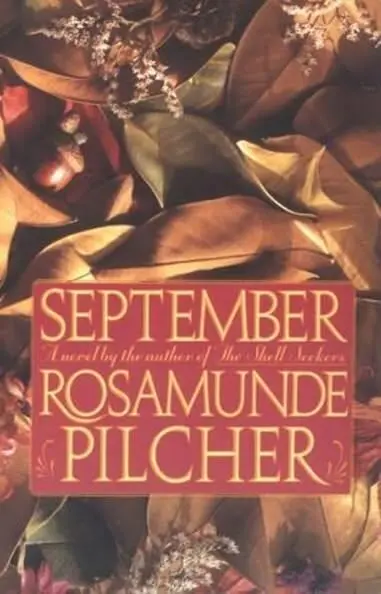
- Название:September
- Автор:
- Жанр:
- Год:неизвестен
- ISBN:нет данных
- Рейтинг книги:5 / 5. Голосов: 1
-
Избранное:Добавить в избранное
- Отзывы:
-
Ваша оценка:
September: краткое содержание, описание и аннотация
Предлагаем к чтению аннотацию, описание, краткое содержание или предисловие (зависит от того, что написал сам автор книги «September»). Если вы не нашли необходимую информацию о книге — напишите в комментариях, мы постараемся отыскать её.
September — читать онлайн бесплатно полную книгу (весь текст) целиком
Ниже представлен текст книги, разбитый по страницам. Система сохранения места последней прочитанной страницы, позволяет с удобством читать онлайн бесплатно книгу «September», без необходимости каждый раз заново искать на чём Вы остановились. Поставьте закладку, и сможете в любой момент перейти на страницу, на которой закончили чтение.
Интервал:
Закладка:
She realized, too, that the last thing she wanted to do was go out. Smile, chat, conceal her apprehensions. She did not want to leave the safe haven of her house, her fireside. Something, somewhere, was lying in wait, and her frail human instinct was to bolt herself indoors, in safety, sit by the telephone, and keep watch.
But she was not superstitious.
She pulled herself together, got out of her chair, put the guard on the dying fire, and went upstairs. Swiftly, she bathed, and then dressed herself for the party. Silk underclothes and black silk stockings, the venerable black velvet gown, the satin court shoes. She dressed her hair, and then took up her diamond tiara and settled it on her head, fixing, with a bit of difficulty, the loop of elastic at the back. She powdered her nose, found a lacy handkerchief, sprayed a little eau-de-cologne about her person. Moving to her long mirror, she gauged, with critical eyes, the general effect. Saw a large and stout dowager for whom the word "dignified" seemed the kindest description.
Large and stout. And old. All at once, she felt very tired. Tiredness did funny things to one's imagination, for, staring into the mirror, she saw beyond her own reflection the cloudy image of another woman. Never beautiful, but unlined, and brown-haired and filled with a raging energy for life. Herself, wearing the crimson satin ball gown that had been her most favourite. And beside that other woman, stood Geordie. For an instant the mirage stayed, so real that she could have touched it. And then it faded and was gone, and she was left alone. For years, she had not felt so alone. But there was no time to stand and feel sorry for herself. Others were waiting for her, as always, demanding her company, her attention. She turned from the mirror, reached for her fur coat and pulled it on, picking up her evening bag and switching off the lights. Downstairs, she went out through the kitchen door, locking it behind her. The night was dark, and damp with a drizzling mist. She crossed over to the garage and got into her car. Lifts had been offered by all and sundry, but she had chosen to drive herself to Croy, and after dinner, she would drive herself to Corriehill. That way she would be totally independent of any person and able to return home whenever she chose.
You should always leave a party just when you are most enjoying yourself.
That had been one of Geordie's maxims. Thinking of Geordie, hearing his dear voice in her head filled her with a certain comfort. On such occasions, she never felt that he was very far away. How amused he would be by her now, seventy-eight years old, dolled up in velvet and diamonds and fur, and driving herself in her mud-stained motor car to… of all things… a ball.
Headed up the hill, watching the road ahead contained by the beam of her own headlights, she made Geordie a promise.
I know this is a ludicrous situation, my darling, but it is the last time. After this evening, if any person is kind enough to ask me to a dance, I shall tell them no. And my excuse will be that I am really far too old.
Henry walked. Darkness had fallen and a thin rain drifted into his face. The river, the Croy, kept him company, flowing alongside the winding road. He could not see it, but was aware all the time of the presence of moving water, the rippling sound as the shallows tumbled downhill in a series of little pools and waterfalls. It was comforting to know that the Croy was there. The only other noises to reach his ears were familiar, but strangely magnified by his own solitude. The wind, stirring the branches of trees, and the curlew's lonely call. His footsteps sounded enormous. Sometimes he imagined other footsteps, following some way behind him, but it was probably just an echo of his own tread. Any alternative was too scary to contemplate.
He had been passed by only three cars, driving from Caple Bridge and heading, as he was headed, up the glen. On each occasion, aware of the approaching headlights, he had bundled himself down into the ditch, hiding until the car was gone, zipping past with a hiss of tyres on the wet road. He did not wish to be observed, and as well, he did not wish to be offered a lift. Accepting lifts from strangers was not only dreadfully dangerous, but totally forbidden, and at this stage of his long journey, Henry was not about to risk being driven somewhere he did not want to go, and murdered.
However, when he was less than a mile from Strathcroy, and could actually see the lights of the village pricking like welcome stars through the gloom, he did get a lift. A massive double-deckered sheep-float came grinding up the road behind him, and Henry somehow hadn't the energy to jump for the ditch before being caught in its headlights. Even as it passed Henry, the sheep-float was already slowing down. It drew to a throbbing halt, and the driver opened the door of his high cab and waited for Henry to catch up with him. He squinted down into the murky dusk and saw Henry's Balaclava-ed face staring up at him.
"Hello, sonny." He was a great burly man in a tweed bonnet. A familiar sort of person. Not a stranger. As well, Henry's legs were beginning to feel wobbly, like cooked spaghetti, and he was not certain whether he was going to be able to make that last bit of the road to Strathcroy.
"Hello."
"Where are you off to?"
"Strathcroy."
"Did you miss the bus?"
This seemed a good excuse. "Yes," fibbed Henry.
"Want a ride?"
"Yes, please."
"Up you come, then."
The man reached down a horny hand. Henry put his own hand into it and was heaved upwards, as though he weighed no more than a fly, onto the big man's knee, and then over and onto the other seat. The cab was warm and snug and very dirty. It smelt fuggy, of old cigarettes and sheep, and there were sweetie papers and match-ends littered around the floor, but Henry didn't mind this, because it was good to be there, with another person for company, and to know that he didn't have to walk any farther.
The driver slammed his door shut, shoved his engine into gear, and they moved forward.
"Where have you walked from?"
"Caple Bridge."
"That's a long walk on a wet night."
"Yes."
"Do you live in Strathcroy?"
"I'm going to see someone there." Before he could be asked any more questions, Henry decided to ask one himself. "Where have you been?"
"To the market in Relkirk."
"Did you have a lot of sheep?"
"Aye."
"Were they your own?"
"No, I've no sheep. I'm just the driver."
"Where do you live?"
"Inverness."
"Are you going there tonight?"
"Oh, aye."
"It's a long way."
"Maybe so, but I like to sleep in my own bed."
The windscreen wipers swung to and fro. Through the clean fan of glass, Henry watched as the lights of Strathcroy came closer. Then they passed the thirty-miles-an-hour sign, and then the War Memorial. Around the last curve of the road, and the long main street of the village stretched ahead into the darkness.
"Where do you want me to drop you off?"
"Just here will do very nicely, thank you."
Once more, the sheep-float ground to a juddering halt.
"You'll be all right, now?" The man reached over to open Henry's door.
"Yes, of course. Thank you very much indeed. You've been very kind."
"You mind yourself, now."
"I will." He clambered down the great height to the road. "Goodbye."
"Goodbye, sonny."
The door slammed shut. The massive vehicle went on its way, and Henry stood and watched it go, its red tail-light winking like a friendly eye. The sound of the engine faded into the darkness, and after it was gone, everything seemed very quiet.
He started off again, walking down the middle of the deserted street. He felt extremely tired, but that didn't matter, because he was almost there. He knew exactly where he was going and what he was going to do, because he had laid his secret plans with the greatest possible thought and care. He'd mulled over every eventuality, and left nothing to chance. He was not going to Balnaid, nor Pennyburn, but to Edie's. He was not going to Balnaid because there would be nobody there. His mother, his father, Alexa and her friend were all at Croy, having dinner with the Balmerinos before going to Mrs. Steynton's party. And he was not going to Pennyburn because Vi was at Croy too. And even if they had all been at home, he would still have made for Edie's cottage because Edie would be there.
Читать дальшеИнтервал:
Закладка:
Похожие книги на «September»
Представляем Вашему вниманию похожие книги на «September» списком для выбора. Мы отобрали схожую по названию и смыслу литературу в надежде предоставить читателям больше вариантов отыскать новые, интересные, ещё непрочитанные произведения.





Обсуждение, отзывы о книге «September» и просто собственные мнения читателей. Оставьте ваши комментарии, напишите, что Вы думаете о произведении, его смысле или главных героях. Укажите что конкретно понравилось, а что нет, и почему Вы так считаете.