Rosamunde Pilcher - September
Здесь есть возможность читать онлайн «Rosamunde Pilcher - September» весь текст электронной книги совершенно бесплатно (целиком полную версию без сокращений). В некоторых случаях можно слушать аудио, скачать через торрент в формате fb2 и присутствует краткое содержание. Жанр: Современная проза, на английском языке. Описание произведения, (предисловие) а так же отзывы посетителей доступны на портале библиотеки ЛибКат.
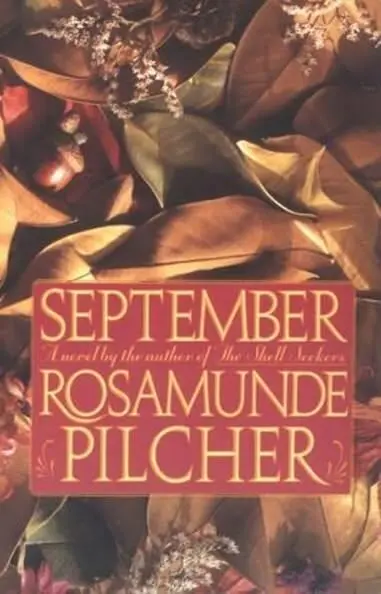
- Название:September
- Автор:
- Жанр:
- Год:неизвестен
- ISBN:нет данных
- Рейтинг книги:5 / 5. Голосов: 1
-
Избранное:Добавить в избранное
- Отзывы:
-
Ваша оценка:
September: краткое содержание, описание и аннотация
Предлагаем к чтению аннотацию, описание, краткое содержание или предисловие (зависит от того, что написал сам автор книги «September»). Если вы не нашли необходимую информацию о книге — напишите в комментариях, мы постараемся отыскать её.
September — читать онлайн бесплатно полную книгу (весь текст) целиком
Ниже представлен текст книги, разбитый по страницам. Система сохранения места последней прочитанной страницы, позволяет с удобством читать онлайн бесплатно книгу «September», без необходимости каждый раз заново искать на чём Вы остановились. Поставьте закладку, и сможете в любой момент перейти на страницу, на которой закончили чтение.
Интервал:
Закладка:
"I'll go down." He got to his feet, stretched his arms, swallowed a yawn. "I need a drink. Do you want one?"
"Later."
He made for the door. "What time are we expected at Croy?"
"Half past eight."
"You can have your drink in the library before we leave."
"There's no fire."
"I lit it."
He went out of the room. Listening, Virginia heard him traverse the landing, start down the stairs. And then Alexa's voice. "Fa!"
"Hello, my darling."
He had left the door open. She went to shut it and then returned to her dressing-table, with some idea of starting to do something about her face. But tears, so long controlled, rose in her eyes, overflowed, streamed down her cheeks.
She sat and watched her own weeping reflection.
The country bus, stopping and starting and taking its time, trundled through the twilit countryside. Leaving Relkirk, it had been full, with every seat occupied, and one or two passengers standing. Some of the people were returning home from work, others had been shopping. A lot of them seemed to know each other, smiling and chatting as they climbed on board. Probably they travelled together every day. There was a man with a sheep-dog. The dog sat between his knees and gazed without ceasing into the man's eyes. The man didn't have to buy a ticket for the dog.
Henry sat at the front, just behind the driver. He was squashed in by the window, because a hugely fat lady had chosen to sit beside him.
"Hello, pet," she'd said, as she settled herself, her massive bottom shunting him sideways and her bulging thighs taking up most of the space. She had two laden message bags with her, one of which she put at her feet, and the other on her lap. From the top of this bag stuck out a head of celery and a bright pink celluloid windmill. Henry decided that she was taking it home for her grandchild.
She had a round, kind face, not unlike Edie, and beneath the brim of her sensible hat, her eyes screwed up in a friendly way. But when she spoke to him, Henry did not answer her; he simply turned away and gazed from the window, although there was nothing to be seen except rain.
He wore his school stockings and shoes, his new tweed overcoat, which was much too big for him, and his Balaclava helmet. The Balaclava helmet had been a good idea; and he was proud of himself for thinking of it. It was navy-blue and very thick, and he had pulled 't right down over his face, like a terrorist, so that only his eyes showed. It was his disguise, because he did not want anybody to recognize him.
The bus made slow progress, and they had already been travelling for nearly an hour. Every mile or so, they drew to a halt at some crossroad, or lonely cottage, to allow people to get off. Henry watched as the seats emptied; passengers gathered up their possessions and alighted one by one, to set off on foot, to walk the last bit of their journey home. The fat lady beside him got out at Kirkthomton, but she didn't have to walk, because her husband had come to meet her in his little farm truck. As she struggled to her feet, she said, "Goodbye, pet," to Henry. He thought this very nice of her but, once more, made no reply. It wasn't easy to say something with a Balaclava over your mouth.
Once more, they set off. Now, there were only half a dozen people on board. The engine of the bus made a grinding sound as they climbed the hill out of the little market town, and at the top of the hill it became quite foggy. The driver turned on his headlights, and thorn hedges and wind-bent beeches raced towards them out of the gloom, wreathed in mist and looking ghostly. Henry thought about the five empty miles between Caple Bridge and Strathcroy, which he was going to have to walk because Caple Bridge was where he had to get off the bus. The prospect scared him a bit, but not all that much, because he knew the road, and the difficult bit was over, and he was nearly there.
At Pennyburn, Violet prepared herself for the rigours of the evening that lay ahead.
She had not been invited to a proper dance for longer than she could remember, and, at seventy-eight, it was unlikely that she would ever be invited to another. For this reason, she had decided to make the most of the occasion. Accordingly, this afternoon, she had driven to Relkirk, and there had her hair professionally washed and waved. As well, she had indulged in a manicure, and the nice girl, with her cushion, had spent some time digging earth out of Violet's nails and pushing back her neglected cuticles.
After this little beautifying session, she had called in at the bank, and withdrawn from its vaults the battered leather box that contained Lady Primrose's diamond tiara. It was not very large, and had to be held together at the back with a loop of elastic, but she had brought it home and cleaned it up with an old tooth-brush dipped in neat gin. This was a household tip that she had gleaned, long ago, from Mrs. Harris, who had once been cook at Croy. It worked well, but still seemed to Violet a terrible waste of gin.
Then, from her wardrobe, she had taken down her ball-dress, black velvet and at least fifteen years old. The frill of black lace at the neck had come away a little, and needed the attention of a needle and thread, and her evening shoes, black satin with diamante buckles, proved, on inspection, to have grown a few whiskers around the toes, so she took up her nail scissors and gave them a trim.
When all was ready, she allowed herself a little relaxation. She was not due at Croy until half past eight. So, there was time to pour a restoring whisky and soda and settle down by the fire to watch the news on television and then "Wogan." She enjoyed Wogan. She liked his cheerful Irish charm, his blarney. This evening, he was interviewing a young pop star, who, for some reason, had become deeply involved in the preservation of rural hedgerows. People were really quite extraordinary, Violet decided, watching the young man, with his punk hair and his earring, burbling on about nesting yellowham-mers.
Then Wogan finished, and a quiz-show came on. Four people were meant to guess the value of various bits of antique junk which were set before them. Violet, all on her own, joined in the guessing game, and became certain that her assessments were far more accurate than anybody else's. She was beginning to enjoy herself when the telephone rang.
How tiresome. Why did the wretched thing always ring at the least opportune moment? She set down her glass, heaved herself out of her comfortable chair, turned down the television, and picked up the receiver.
"Hello?"
"Mrs. Aird?"
"Yes."
"This is Dr. Martin. From the Relkirk Royal."
"Oh, yes."
"Mrs. Aird, I'm afraid we have a little trouble on our hands. Miss Carstairs has disappeared."
"She's disappeared ?" It sounded like some sort of a dreadful conjuring trick, bringing visions of an explosion, a puff of smoke, and Lottie fading into nothing. "How could she possibly have disappeared?"
"She's gone. She went out of doors for a walk in the garden with another patient. She never returned."
"But that's perfectly terrible."
"We think she must have simply walked out through the gates. We've alerted the police, of course, and I'm certain that she cannot be far away. She'll probably come back here of her own accord. She's been quite content, responding to treatment, and not troublesome in any sort of way. There is no reason why she shouldn't return. But I felt I should let you know…"
Violet thought that he was being very feeble.
"Surely you should have taken more care of her?"
"Mrs. Aird, we are overcrowded here and understaffed. Under the circumstances, we do the best we can, but ambulant patients, whom we consider able, up to a point, to take care of themselves, have always been allowed a certain amount of freedom."
Читать дальшеИнтервал:
Закладка:
Похожие книги на «September»
Представляем Вашему вниманию похожие книги на «September» списком для выбора. Мы отобрали схожую по названию и смыслу литературу в надежде предоставить читателям больше вариантов отыскать новые, интересные, ещё непрочитанные произведения.












Обсуждение, отзывы о книге «September» и просто собственные мнения читателей. Оставьте ваши комментарии, напишите, что Вы думаете о произведении, его смысле или главных героях. Укажите что конкретно понравилось, а что нет, и почему Вы так считаете.