Haruki Murakami - Dance Dance Dance
Здесь есть возможность читать онлайн «Haruki Murakami - Dance Dance Dance» весь текст электронной книги совершенно бесплатно (целиком полную версию без сокращений). В некоторых случаях можно слушать аудио, скачать через торрент в формате fb2 и присутствует краткое содержание. Жанр: Современная проза, на английском языке. Описание произведения, (предисловие) а так же отзывы посетителей доступны на портале библиотеки ЛибКат.
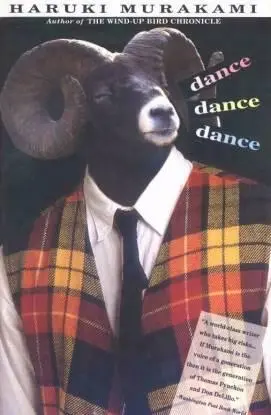
- Название:Dance Dance Dance
- Автор:
- Жанр:
- Год:неизвестен
- ISBN:нет данных
- Рейтинг книги:5 / 5. Голосов: 1
-
Избранное:Добавить в избранное
- Отзывы:
-
Ваша оценка:
Dance Dance Dance: краткое содержание, описание и аннотация
Предлагаем к чтению аннотацию, описание, краткое содержание или предисловие (зависит от того, что написал сам автор книги «Dance Dance Dance»). Если вы не нашли необходимую информацию о книге — напишите в комментариях, мы постараемся отыскать её.
has the fascination of a well-written detective story combined with a surreal dream narrative . . . full of appealing, well-developed characters.»
— «A world-class writer who . . . takes big risks. ... If Murakami is the voice of a generation, then it is the generation of Thomas Pynchon and Don DeLillo.»
— Washington Post Book World «All the hallmarks of Murakami's greatness are here: restless and sensitive characters, disturbing shifts into altered reality, silky smooth turns of phrase and a narrative with all the momentum of a roller-coaster. . . . This is the sort of page-turner [Mishima] might have written.»
— «[Murakami's] writing injects the rock 'n' roll of everyday language into the exquisite silences of Japanese literary prose.» — «One of the most exciting new writers to appear on the international scene.» —
Dance Dance Dance — читать онлайн бесплатно полную книгу (весь текст) целиком
Ниже представлен текст книги, разбитый по страницам. Система сохранения места последней прочитанной страницы, позволяет с удобством читать онлайн бесплатно книгу «Dance Dance Dance», без необходимости каждый раз заново искать на чём Вы остановились. Поставьте закладку, и сможете в любой момент перейти на страницу, на которой закончили чтение.
Интервал:
Закладка:
«Anything you say.»
We caught a cab to my apartment in Shibuya, where I got out of my Hokkaido clothes. Leather jacket, sweater, and sneakers. Then we got in my Subaru and drove fifteen minutes to an Italian restaurant I sometimes go to. Call it an occupational skill; I do know how to locate good eating establishments.
«It's like those pigs in France,» I told her, «trained to grunt when they find a truffle.»
«Don't you like your work?»
«Nah. What's to enjoy? It's all pretty meaningless. I find a good restaurant. I write it up for a magazine. Go here, try this. Why bother? Why shouldn't people just go where they feel like and order what they want? Why do they need someone to tell them? What's a menu for? And then, after I write the place up, the place gets famous and the cooking and service go to hell. It always happens. Supply and demand gets all screwed up. And it was me who screwed it up. I do it one by one, nice and neat. I find what's pure and clean and see that it gets all mucked up. But that's what people call information. And when you dredge up every bit of dirt from every corner of the living environment, that's what you call enhanced information. It kind of gets to you, but that's what I do.»
She eyed me from across the table, as if she were looking at some rare species in the zoo.
«But still you do it,» she said.
«It's my job,» I replied, then suddenly I remembered that I was with a thirteen-year-old. Great. What did I think I was doing, shooting my mouth off like that to a girl not half my age? «Let's go,» I said. «It's getting late. I'll take you to your apartment.»
We got in the Subaru. Yuki picked up one of my cassettes and put it on to play. Driving music. The streets were empty, so we made it to Akasaka in no time.
«Okay, point the way,» I said.
«I'm not telling,» Yuki answered.
«What? «I said.
«I said I'm not telling you. I don't want to go home yet.»
«Hey, it's past ten,» I tried reasoning with her. «It's been a long, hard day. And I'm dog-tired.»
This made little impression on her. She was unbudgeable. She just sat there and stared at me, while I tried to keep my eyes on the road. There was no emotion whatsoever in her stare, but it still made me jumpy. After a while, she turned to look out the window.
«I'm not sleepy,» she began. «Anyway, once you drop me off, I'll be all alone, so I want to keep driving and listening to music.»
I thought it over. «All right. We drive for one hour. Then you're going home to bed. Fair?»
«Fair,» said Yuki.
So we drove around Tokyo, music playing on the stereo. It's because we let ourselves do these things that the air gets polluted, the ozone layer breaks up, the noise level increases, people become irritable, and our natural resources are steadily depleted. Yuki lay her head back in her seat and gazed silently at the city night.
«Your mother's in Kathmandu now?» I asked.
«Yeah,» she answered listlessly.
«So you'll be on your own until she returns?»
«We have a maid in Hakone.»
«Hmm, this sort of scene happens all the time?»
«You mean Mama up and leaving me?»
«Yeah.»
«All the time. Work is the only thing Mama thinks of. She doesn't mean to be mean or anything, that's just how she is. She only thinks about herself. Sometimes she forgets I'm around. Like an umbrella, you know, I just slip her mind. And then she's outa there. If she gets it into her head to go to Kathmandu, that's it, she's off. She apologizes later. But then the same thing happens the next time. She dragged me up to Hokkaido on a whim—and that was kind of fun—but she left me alone in the room all the time. She hardly ever came back to the hotel and I usually ate by myself. . . . But I'm used to it now, and I guess I don't expect anything more. She says she'll be back in a week, but maybe from Kathmandu she'll fly off to somewhere else.»
«What's your mother's name?» I asked.
I'd never heard of her.
«Her professional name,» she tried again, «is Ame. Rain .
That's why I'm Yuki. Snow . Dumb, huh? But that's her idea of a sense of humor.»
Of course I'd heard of Ame. Who hadn't? Probably the most famous woman photographer in the country. She was famous, but she herself never appeared in media. She kept a low profile. She only accepted work that she liked. Well-known for her eccentricity. Her photos were known for the way they startled you and stuck in your mind.
«So that means your father's the novelist, Hiraku Makimura?» I said.
Yuki shrugged. «He's not such a bad person. No talent though.»
Years back I'd read a couple of his early novels and a collection of short stories. Pretty good stuff. Fresh prose, fresh viewpoint. Which is what made them best-sellers. He was the darling of the literary community. He appeared on TV, was in all the magazines, expressed an opinion on the full spectrum of social phenomena. And he married an up-and-coming photographer who went by the name of Ame. That was his peak. After that, it was downhill all the way. He never wrote anything decent. His next two or three books were a joke. The critics panned them, they didn't sell.
So Makimura underwent a transformation. From naif novelist he was suddenly avant-garde. Not that there was any change in the lack of substance. Makimura modeled his style on the French nouvelle vague, rhetoric for rhetoric's sake. A real horror. He managed to win over a few brain-dead critics with a weakness for such pretensions. But after two years of the same old stuff, even they got tired of him. His talent was gone, but he persisted, like a once-virile hound sniffing the tail of every bitch in the neighborhood. By that time, he and Ame had divorced. Or more to the point, Ame had written him off. At least that was how it played in the media.
Yet that wasn't the end of Hiraku Makimura. Early in the seventies, he broke into the new field of travel writing as a self-styled adventurer. Good-bye avant-garde, time for action and adventure. He visited exotic and forbidden destinations in far corners of the globe. He ate raw seal meat with the Eskimos, lived with the pygmies, infiltrated guerrilla camps high in the Andes. He cast aspersions on armchair literarians and library shut-ins. Which wasn't so bad at first, but after ten years, the pose wore thin. After all, we're no longer living in the age of Livingstone and Amundsen. The adventures didn't have the stuff they used to, but Makimura's prose was pompous as ever.
And the thing of it was, they'd ceased to be real adventures. By now he was dragging around whole entourages, coordinators and editors and cameramen. Sometimes TV would get into the act and there'd be a dozen crew members and sponsors tagging along. Things got to be staged, more and more. Before long, everyone had his number.
Not such a bad person perhaps. But like his daughter said, no talent.
Nothing more was said about Yuki's father. She obviously didn't want to talk about the guy. I was sorry I brought him up.
We kept quiet and listened to the music. Me at the wheel, eyes on the lights of the blue BMW in front of us. Yuki tapped her boot along with Solomon Burke and watched the passing scenery.
«I like this car,» Yuki spoke up after a while. «What is it?»
«A Subaru,» I said. «I got it used from a friend. Not many people look twice at it.»
«I don't know much about cars, but I like the way it feels.»
«It's probably because I shower it with warmth and affection.»
«So that makes it nice and friendly?»
«Harmonics,» I explained.
«What?»
«The car and I are pals. We help each other out. I enter its space, and I give off good vibes. Which creates a nice atmosphere. The car picks up on that. Which makes me feel good, and it makes the car feel good too.»
Читать дальшеИнтервал:
Закладка:
Похожие книги на «Dance Dance Dance»
Представляем Вашему вниманию похожие книги на «Dance Dance Dance» списком для выбора. Мы отобрали схожую по названию и смыслу литературу в надежде предоставить читателям больше вариантов отыскать новые, интересные, ещё непрочитанные произведения.

Обсуждение, отзывы о книге «Dance Dance Dance» и просто собственные мнения читателей. Оставьте ваши комментарии, напишите, что Вы думаете о произведении, его смысле или главных героях. Укажите что конкретно понравилось, а что нет, и почему Вы так считаете.