Selma Dabbagh - Out of It
Здесь есть возможность читать онлайн «Selma Dabbagh - Out of It» весь текст электронной книги совершенно бесплатно (целиком полную версию без сокращений). В некоторых случаях можно слушать аудио, скачать через торрент в формате fb2 и присутствует краткое содержание. Город: London, Год выпуска: 2011, ISBN: 2011, Издательство: Bloomsbury Publishing, Жанр: Современная проза, на английском языке. Описание произведения, (предисловие) а так же отзывы посетителей доступны на портале библиотеки ЛибКат.
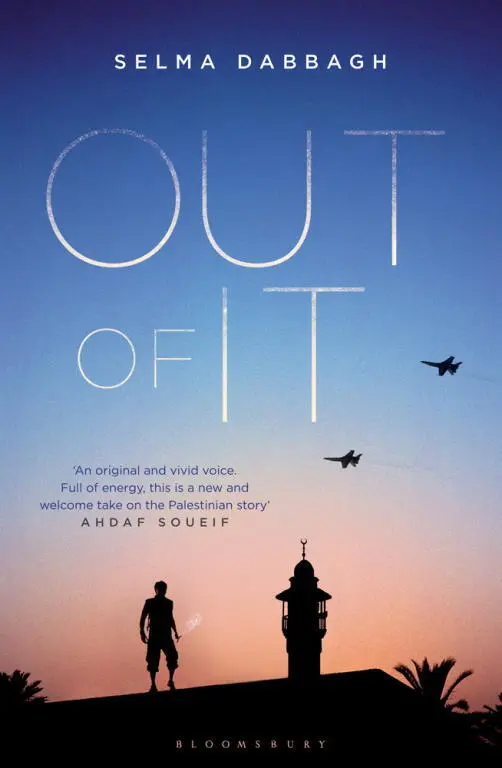
- Название:Out of It
- Автор:
- Издательство:Bloomsbury Publishing
- Жанр:
- Год:2011
- Город:London
- ISBN:978-1-4088-2430-6
- Рейтинг книги:5 / 5. Голосов: 1
-
Избранное:Добавить в избранное
- Отзывы:
-
Ваша оценка:
Out of It: краткое содержание, описание и аннотация
Предлагаем к чтению аннотацию, описание, краткое содержание или предисловие (зависит от того, что написал сам автор книги «Out of It»). Если вы не нашли необходимую информацию о книге — напишите в комментариях, мы постараемся отыскать её.
Meanwhile Sabri, the oldest brother of this disparate Palestinian family works on a history of Palestine from his wheelchair as their mother pickles vegetables and feuds with their neighbours.
Written with extraordinary humanity and humour, and moving between Gaza London and the Gulf, Out of It is a tale that redefines Palestine and its people. It follows the lives of Rashid and Iman as they try to forge paths for themselves in the midst of occupation, religious fundamentalism and the divisions between Palestinian factions. It tells of family secrets, unlikely love stories and unburied tragedies as it captures the frustrations and energies of the modern Arab world.
Out of It — читать онлайн бесплатно полную книгу (весь текст) целиком
Ниже представлен текст книги, разбитый по страницам. Система сохранения места последней прочитанной страницы, позволяет с удобством читать онлайн бесплатно книгу «Out of It», без необходимости каждый раз заново искать на чём Вы остановились. Поставьте закладку, и сможете в любой момент перейти на страницу, на которой закончили чтение.
Интервал:
Закладка:
The weather was perfect, but useless to him in all its perfection. It was far better if it was all lousy. He registered the sounds of his mother wheeling Sabri into the garden along the path. A tray outside clattered with its pot and saucer on it. The smell of coffee came into Rashid’s room with the jasmine garden air.
Rashid’s visa (he could not be bothered to check it was in his passport; he knew it was there) was to Canada and for resettlement (a term that annoyed him, with its presumption that he had been settled in the first place). It was, according to everyone and their mother, exceptional, thrilling and amazing that Rashid had managed to get the visa, but nothing about it thrilled or amazed Rashid, nor did he feel remotely exceptional. When he was out, in London, he had had no choice but to return. Now that he was back, he had no choice but to leave. And so it was.
‘…that Mahmoudi boy,’ he could hear his mother whispering, ‘…known informer…’ but the breeze rustling in the bougainvillea made him miss whatever acidic response it was that Sabri offered back. It didn’t matter; he knew they were still talking about him. He was a fish swimming in a bowl with a crowd of people gawping at him while tapping on the glass. Everything he did was seen, watched, and reported on. There was no getting away from it. He should tell his mother. He looked across at his plant’s blackened stem and could not quite curse her, not with her so close and audible. But she should know that had she bothered to look after his plant he would not have needed to go and seek out the services of Ahmed Mahmoudi. That was their doing, their neglect. The breakfast conversation was back to reports of new checkpoints, the extent of the closure, of dwindling fuel supplies, the fighting with the Islamist groups. The usual stuff.
Iman had come back the day before. Although she had been away for months, all they had been interested in, as far as Rashid could tell, was her experience at the borders. ‘Tell me,’ their mother had asked, several times over, ‘it was the bearded man who went through the papers not the woman with short hair?’
Rashid had waited for Iman’s return, counted the days, expecting it to lift him out of the place where he had fallen, but her flushed excitement (he could not believe it was just about being back; something had happened to her in London, he was sure of it) had left him exactly where he had been, if not further down. When he had asked her why she had come back, as she could have stayed longer in London if she had wanted to, she had replied, ‘But I don’t exist there,’ laughing as though that was incredibly obvious, too. How could you even ask, Rashid? was her look.
His father had cut him off as well. As soon as he heard what Rashid had got the police caution for, he’d spluttered fury down the phone. Drugs? Drugs? I send the boy to London for drugs? And stopped Rashid’s allowance. With immediate effect, you hear? Nothing more from me! Iman had given him a little money, enough to pay Ahmed Mahmoudi this time, but after that he had no idea. No idea at all. He could not believe he was expected to stay in Gaza broke and sober. There could not be a worse reality that he could think of. Stoned, it was almost manageable. Sober, it was a nightmare of hideous proportions.
‘Rashid?’ Iman tapped at the door before she entered stepping over the bags, balancing a glass of tea on its saucer. He moved his legs to make space for her on the end of his bed and conducted his side of the conversation in silence for as long as he could.
‘Mama says that they closed Sindibad’s?’
[nod]
‘Are you going to carry on at the Centre with Khalil?’
[shrug]
‘Are you really going to Canada?’
[nod]
‘But what will you do there?’
[shrug]
Iman rubbed her feet against the printed synthetic blanket and traced her big toe along the brown line of a rose petal print until Rashid spoke.
‘Mama thinks I’d be better off in prison,’ he said, clearing his throat. ‘Do you think so, too? It seems that the women around me want me locked up. Nothing according to them would do me better than a stint in jail.’ He blew at his tea, but it was too hot and made his eyes water.
‘Forget Lisa. Forget her, Rashid. And of course Mama doesn’t want you to go to prison.’
‘I just heard her saying it to Sabri, that it was an experience I would have gained from, like he did, like Jamal, that fieldworker, is currently gaining from – well, according to her at least.’ He slurped noisily. ‘But, you know, I’m not that sure that being tied up and shoved into a cupboard with a sack over my head would further my self-improvement.’ He slurped again. ‘Thanks for the tea, habibti .’
‘What will you do in Canada?’ Iman asked after they had stared up at the ceiling for a while following the banging and pattering of children’s feet above them. They were a strange breed of children up there, Rashid thought. They all seemed to run on the heels of their feet.
‘Work,’ he shrugged again. ‘Work.’ He straightened himself out against the wall and hoped that she would not ask what he would work as because all he could think of, even on a good day, was of packing bags in a supermarket. In his envisioned life in Canada he wore a large black puffer jacket, even when he tried to see himself eating breakfast or sleeping. He saw himself living in a room in an apartment building composed of stacked columns of such rooms, where the neighbours would hide behind their doors when he went in or out so that they would not have to speak to him and where the nights were full of the muffled screams of sex, drink and battery. The puffer jacket that he wore in this future life got larger and larger with time, until he was swollen like a blimp bumbling along a deserted snowy street of an anonymous North American city, his head protruding dark and oily like Gloria’s stump.
‘I found out about Mama and Baba,’ Iman whispered. ‘Sabri told me.’
‘Did he?’ Rashid didn’t look up at Iman who was keen to register some interest from him. ‘Did Mama talk about her past with you, too? Because no one’s mentioned anything to me.’
‘No, no,’ Iman continued. ‘But they’re connected, the two things: Mama’s activities, the hijacking, ’ Iman was almost breathless with excitement, ‘and the divorce.’
‘I see.’ Rashid tried to appear as though he was far more interested in the bougainvillea leaves that were making intricate patterns of shade and sparkle on the wall in front of him.
‘Don’t pretend you’re not interested, because I know you are. Besides, it’s a great story and I can’t tell anyone else so you can at least act like you’re listening.’
‘Sure.’ When Iman had sat on the blanket Rashid’s toes had been under the edge of her leg. She had not moved and he didn’t want her to.
‘Baba apparently didn’t even know that she was in the Front. They’ve gone, right?’ She whispered nodding at the window to which Rashid shrugged so she carried on whispering. ‘When Sabri was a baby she left him with Baba in Beirut, saying that she had to visit a sick aunt in Jordan, and came back two weeks later with her face all bandaged up and wearing a brace on her teeth. She told him that she had fallen and had an operation. You see, the Front’s hijackings, her hijackings, had put Baba’s party into a total spin. They had not been told that they were going to happen so Baba was really busy with his party in meetings trying to sort things out.’
Rashid was listening but trying hard not to show how keenly he was doing so. He was never told anything. There were still murmurs coming from outside, the sounds of a tray being cleared away.
Читать дальшеИнтервал:
Закладка:
Похожие книги на «Out of It»
Представляем Вашему вниманию похожие книги на «Out of It» списком для выбора. Мы отобрали схожую по названию и смыслу литературу в надежде предоставить читателям больше вариантов отыскать новые, интересные, ещё непрочитанные произведения.









Обсуждение, отзывы о книге «Out of It» и просто собственные мнения читателей. Оставьте ваши комментарии, напишите, что Вы думаете о произведении, его смысле или главных героях. Укажите что конкретно понравилось, а что нет, и почему Вы так считаете.