Selma Dabbagh - Out of It
Здесь есть возможность читать онлайн «Selma Dabbagh - Out of It» весь текст электронной книги совершенно бесплатно (целиком полную версию без сокращений). В некоторых случаях можно слушать аудио, скачать через торрент в формате fb2 и присутствует краткое содержание. Город: London, Год выпуска: 2011, ISBN: 2011, Издательство: Bloomsbury Publishing, Жанр: Современная проза, на английском языке. Описание произведения, (предисловие) а так же отзывы посетителей доступны на портале библиотеки ЛибКат.
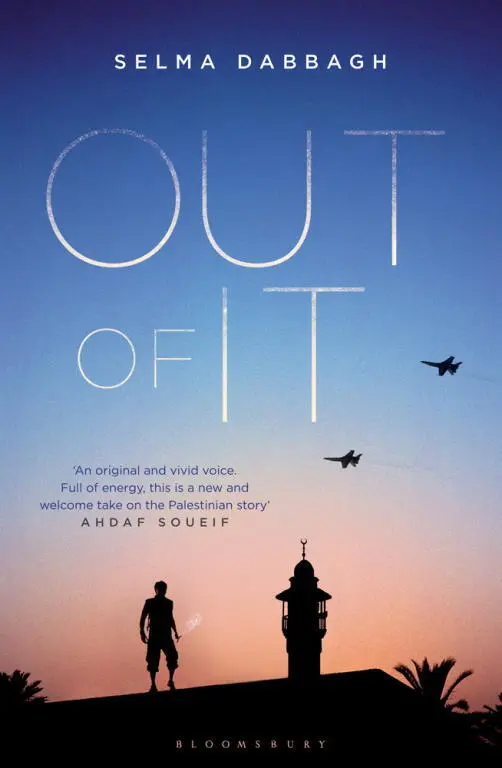
- Название:Out of It
- Автор:
- Издательство:Bloomsbury Publishing
- Жанр:
- Год:2011
- Город:London
- ISBN:978-1-4088-2430-6
- Рейтинг книги:5 / 5. Голосов: 1
-
Избранное:Добавить в избранное
- Отзывы:
-
Ваша оценка:
Out of It: краткое содержание, описание и аннотация
Предлагаем к чтению аннотацию, описание, краткое содержание или предисловие (зависит от того, что написал сам автор книги «Out of It»). Если вы не нашли необходимую информацию о книге — напишите в комментариях, мы постараемся отыскать её.
Meanwhile Sabri, the oldest brother of this disparate Palestinian family works on a history of Palestine from his wheelchair as their mother pickles vegetables and feuds with their neighbours.
Written with extraordinary humanity and humour, and moving between Gaza London and the Gulf, Out of It is a tale that redefines Palestine and its people. It follows the lives of Rashid and Iman as they try to forge paths for themselves in the midst of occupation, religious fundamentalism and the divisions between Palestinian factions. It tells of family secrets, unlikely love stories and unburied tragedies as it captures the frustrations and energies of the modern Arab world.
Out of It — читать онлайн бесплатно полную книгу (весь текст) целиком
Ниже представлен текст книги, разбитый по страницам. Система сохранения места последней прочитанной страницы, позволяет с удобством читать онлайн бесплатно книгу «Out of It», без необходимости каждый раз заново искать на чём Вы остановились. Поставьте закладку, и сможете в любой момент перейти на страницу, на которой закончили чтение.
Интервал:
Закладка:
Khalil took off his jacket. Eva rubbed her nose with the back of her hand. Khalil gestured at a chair, even though it was her place, but she seemed to want to talk.
‘What was it you said that set her off?’ he asked.
‘That Israel was the only democracy in the Middle East. That’s bad is it?’
‘Unforgivable,’ Khalil replied sternly, ‘and no longer accurate either.’
‘I only said something because she seemed so distressed. I wanted her to explain. It is such a dominant conflict in the world. To have the kind of limited understanding of it that I have, is kind of sad.’ Eva looked appropriately miserable.
‘You need to come to the demonstration then,’ Khalil said as though it was an obvious conclusion. ‘The speakers are excellent.’
Eva was about to object. She had her finals coming up. She had 124 pages left to do that afternoon on blood. She should be studying. Demonstration? She had never been on a demonstration. She didn’t know this man at all. Going on a demonstration about the Middle East ? No. That just was the kind of thing she did not do. Khalil looked up at her again, his eyebrows raised a fraction, just enough to make her feel the challenge in them.
‘Yes. Yes. OK. I’ll do that.’ Her mouth expressed that she had resolved something of significance.
‘Good. It starts at two. We’ll go together.’ It being agreed, Khalil and Eva sat together in silence. He had never managed to master small talk. He thought of his papers. ‘I could show you some maps that would help to explain the background,’ he said, not wanting to push it. ‘If you are interested that is.’
‘Yes,’ Eva said. ‘Yes, that would be good.’
‘These maps show it graphically, which is the most important thing, and you can see here that the whole conflict is about land and the depopulation of that land of one group of people for the benefit of another. Ethnic cleansing, basically.’ Khalil pulled out a book and bent back the spine to show three dated maps of the same land with different borders and blocks of shading. ‘Here, in 1917, we have a hundred per cent of the land under the Mandate. Go to 1947, the recommendation is that we should have thirty-three per cent. Currently, what we are actually given is less than five per cent of the land, and then no real autonomy in that part…’
Eva looked at a solid elongated country with its hatched grey land becoming blotched with amoeba-shaped patches of the same colour. She also looked at the hands holding the book open to her, delicate male hands with noticeably clean fingernails.
Chapter 31
‘You knew about this, didn’t you?’ Rashid was asking. ‘You knew and you didn’t tell me.’
After filling in multiple forms, Iman and Rashid had been taken into a room with bright blue carpet tiles and lined with empty shelves the colour of bleached oak. They had read the memo that was on the top of the file twice and had looked at the one photograph clipped on to it of their mother challenging a cameraman with a gun in her hand.
‘They told you, didn’t they? Sabri and Mama? They just decided that it was me who shouldn’t know.’
Rashid’s internal tumble and slide to somewhere below and apart from the rest of his family was quick and brutal. The sense of being punched out from the group was not a new one and once the realisation (and the shove that came with it) that they had been in on this together came to him, it felt obvious, as though it was something he should have always have known was going to happen. It was an eternity ago that he had had any expectation that it wouldn’t. His family were on a piece of ice that had broken off and was scudding away from him on a different current. He was no part of it, no part of the struggle and no part of them. He didn’t know why it had taken him so long to understand that this was the case.
‘I had no idea that the photographs meant this,’ Iman said. ‘I honestly had no idea, Rashid. And I did try to discuss this with you. You just didn’t want to know. I guessed these documents would be to do with her, because of the photos that I found. I knew no more than you did. I would never have guessed that she was… well, that she was someone like this . I mean, would you? No, obviously you didn’t, but there’s no harm… I mean, really, it’s amazing, isn’t it? Rashid, sit down. Don’t just stand there staring at me like I’ve harmed you in some way.’
‘This is the way that they decide to tell us, well to tell me anyway: to send me down to a Public Records Office to find a document that has been released after thirty years. What would they have done if this document had been held back for fifty years or a hundred? Do you think they would ever have told us what she did? What she was? I mean, she is our mother after all.’
Rashid flicked at strip of laminate that had come loose from the corner of a shelf.
‘She would not have been able to tell us for security reasons. Probably nobody knows; I mean, everybody knows about her, about the person she was, but she had to keep her identity secret from everyone. I mean, it must’ve been really dangerous for her if she had to change her face and everything. And Sabri needed the documents for his research.’ Iman moved to get up.
‘It’s always about Sabri, isn’t it? Always about Sabri needs this and that and whatever…’ Rashid tugged at his jacket and remembered what he had left in his pocket from the night before and the proximity of it to his body was like contact with a sensual presence, like the touch of the lover whom you were not aware was in the room. ‘I’m going outside for a smoke. I’ll be on a bench or something, if you want me.’
Iman let him go, she wanted to stay with the file for a little longer, to rest her hands on the memos written by the men of Whitehall that her mother had thwarted. She smiled at the carbon-copied documents and the notes scribbled in the margins, the codes of numbers and letters. She read the top memo again, settled into the pride of the heritage it bestowed on her:
Re: Palestinian Leftist Groups Hijackings
Profile: ‘ASFOOR’ or ‘The Sparrow’
Date: 11 December, 1971
It is believed that this is the only existing photograph of this female member of the communist Popular Front for the Palestinian Struggle for Liberation (‘PFPSL’) who is known by the name of ‘ Asfoor ’ or ‘The Sparrow’ in the popular Arab press. For security reasons it has been decided that this photograph should not be made public, although its broad circulation to our security forces and those security forces with whom we have signed the Agreements on Security for the Co-ordinated Response to the Hijacking of Aircraft as well as our intelligence and Foreign Office branches is to be encouraged.
This photograph was provided by an unnamed source that has declined to provide any further information about this suspected terrorist.
Little is known about the suspect. She is in her late twenties, of dark appearance, with a noticeable gap between her front teeth. She is approximately 5 ’ 4 ’’ and of slim build.
The Sparrow has been turned into a heroine in the popular Arab press due to the PFPSL’s hijacking of Flight 432 from Athens to Tel Aviv on 23 September, 1971. Details of the hijacking have been documented elsewhere (see Memo to HQ of 28 September and 12 October, 1971 and the Intelligence Report of 8 January, 1970), it suffices here to report that the hijacking was considered by the PFPSL and the popular Arab press to be a ‘success’ for the PFPSL and Palestinian resistance in general, their demands being met by the Israeli government and all of the hijackers having escaped arrest. The mystery surrounding The Sparrow’s origins appears to have added to her personal appeal.
Читать дальшеИнтервал:
Закладка:
Похожие книги на «Out of It»
Представляем Вашему вниманию похожие книги на «Out of It» списком для выбора. Мы отобрали схожую по названию и смыслу литературу в надежде предоставить читателям больше вариантов отыскать новые, интересные, ещё непрочитанные произведения.

Обсуждение, отзывы о книге «Out of It» и просто собственные мнения читателей. Оставьте ваши комментарии, напишите, что Вы думаете о произведении, его смысле или главных героях. Укажите что конкретно понравилось, а что нет, и почему Вы так считаете.