Alice Munro - Alice Munro's Best
Здесь есть возможность читать онлайн «Alice Munro - Alice Munro's Best» весь текст электронной книги совершенно бесплатно (целиком полную версию без сокращений). В некоторых случаях можно слушать аудио, скачать через торрент в формате fb2 и присутствует краткое содержание. Город: Toronto, Год выпуска: 2008, ISBN: 2008, Издательство: McClelland & Stewart, Жанр: Современная проза, на английском языке. Описание произведения, (предисловие) а так же отзывы посетителей доступны на портале библиотеки ЛибКат.
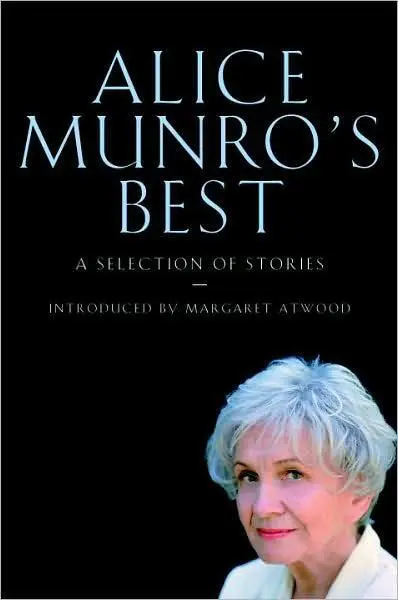
- Название:Alice Munro's Best
- Автор:
- Издательство:McClelland & Stewart
- Жанр:
- Год:2008
- Город:Toronto
- ISBN:9780771065200
- Рейтинг книги:3 / 5. Голосов: 1
-
Избранное:Добавить в избранное
- Отзывы:
-
Ваша оценка:
Alice Munro's Best: краткое содержание, описание и аннотация
Предлагаем к чтению аннотацию, описание, краткое содержание или предисловие (зависит от того, что написал сам автор книги «Alice Munro's Best»). Если вы не нашли необходимую информацию о книге — напишите в комментариях, мы постараемся отыскать её.
This splendid gift edition is sure to delight Alice Munro’s growing body of admirers, what Atwood calls her “devoted international readership.” Long-time fans of her stories will enjoy meeting old favourites, where their new setting in this book may reveal new sides to what once seemed a familiar story; devoted followers may even dispute the exclusion of a specially-beloved story. Readers lucky enough to have found her recently will be delighted, as one masterpiece succeeds another.
The 17 stories are carefully arranged in the order in which she wrote them, which allows us to follow the development of her range. “A Wilderness Station,” for example, breaks “short story rules” by taking us right back to the 1830s then jumping forward more than 100 years. “The Albanian Virgin” destroys the idea that her stories are set in B.C. or in Ontario’s “Alice Munro Country.” And “The Bear Came Over the Mountain,” the story behind the film
, takes us far from the world of young girls learning about sex into unflinching old age.
This is a book to read slowly, savouring each story. It deserves a place in every Canadian book-lover’s library.
Alice Munro's Best — читать онлайн бесплатно полную книгу (весь текст) целиком
Ниже представлен текст книги, разбитый по страницам. Система сохранения места последней прочитанной страницы, позволяет с удобством читать онлайн бесплатно книгу «Alice Munro's Best», без необходимости каждый раз заново искать на чём Вы остановились. Поставьте закладку, и сможете в любой момент перейти на страницу, на которой закончили чтение.
Интервал:
Закладка:
“‘Oh,’ someone said to me. ‘Did you get the little girl?’
“I understood what was meant. The little girl’s bones. I saw that my bag was really quite small and light, to contain Ladner. I mean, Ladner’s bones. What little girl? I thought, but I was already getting confused about everything and had a suspicion that I might be dreaming. It came into my mind, Do they mean the little boy? Just as I woke up I was thinking of Kenny and wondering, Was it seven years since the accident? (I hope it doesn’t hurt you, Liza, that I mention this — also I know that Kenny was no longer little when the accident happened.) I woke up and thought that I must ask Ladner about this. I always know even before I am awake that Ladner’s body is not beside me and that the sense of him I have, of his weight and heat and smell, are memories. But I still have the feeling — when I wake — that he is in the next room and I can call him and tell him my dream or whatever. Then I have to realize that isn’t so, every morning, and I feel a chill. I feel a shrinking. I feel as if I had a couple of wooden planks lying across my chest, which doesn’t incline me to get up. A common experience I’m having. But at the moment I’m not having it, just describing it, and in fact I am rather happy sitting here with my bottle of red wine.”
This was a letter Bea Doud never sent and in fact never finished. In her big, neglected house in Carstairs, she had entered a period of musing and drinking, of what looked to everybody else like a slow decline, but to her seemed, after all, sadly pleasurable, like a convalescence.
Bea Doud had met Ladner when she was out for a Sunday drive in the country with Peter Parr. Peter Parr was a science teacher, also the Principal of the Carstairs High School, where Bea had for a while done some substitute teaching. She did not have a teacher’s certificate, but she had an M.A. in English and things were more lax in those days. Also, she would be called upon to help with school excursions, herding a class to the Royal Ontario Museum or to Stratford for their annual dose of Shakespeare. Once she became interested in Peter Parr, she tried to keep clear of such involvements. She wished things to be seemly, for his sake. Peter Parr’s wife was in a nursing home — she had multiple sclerosis, and he visited her faithfully. Everyone thought he was an admirable man, and most understood his need to have a steady girlfriend (a word Bea said she found appalling), but some perhaps thought that his choice was a pity. Bea had had what she herself referred to as a checkered career. But she settled down with Peter — his decency and good faith and good humor had brought her into an orderly life, and she thought that she enjoyed it.
When Bea spoke of having had a checkered career, she was taking a sarcastic or disparaging tone that did not reflect what she really felt about her life of love affairs. That life had started when she was married. Her husband was an English airman stationed near Walley during the Second World War. After the war she went to England with him, but they were soon divorced. She came home and did various things, such as keeping house for her stepmother, and getting her M.A. But love affairs were the main content of her life, and she knew that she was not being honest when she belittled them. They were sweet, they were sour; she was happy in them, she was miserable. She knew what it was to wait in a bar for a man who never showed up. To wait for letters, to cry in public, and on the other hand to be pestered by a man she no longer wanted. (She had been obliged to resign from the Light Opera Society because of a fool who directed baritone solos at her.) But still she felt the first signal of a love affair like the warmth of the sun on her skin, like music through a doorway, or the moment, as she had often said, when the black-and-white television commercial bursts into color. She did not think that her time was being wasted. She did not think it had been wasted.
She did think, she did admit, that she was vain. She liked tributes and attention. It irked her, for instance, when Peter Parr took her for a drive in the country, that he never did it for the sake of her company alone. He was a well-liked man and he liked many people, even people that he had just met. He and Bea would always end up dropping in on somebody, or talking for an hour with a former student now working at a gas station, or joining an expedition that had been hatched up with some people they had run into when they stopped at a country store for ice-cream cones. She had fallen in love with him because of his sad situation and his air of gallantry and loneliness and his shy, thin-lipped smile, but in fact he was compulsively sociable, the sort of person who could not pass a family volleyball game in somebody’s front yard without wanting to leap out of the car and get into the action.
On a Sunday afternoon in May, a dazzling, freshly green day, he said to her that he wanted to drop in for a few minutes on a man named Ladner. (With Peter Parr, it was always a few minutes.) Bea thought that he had already met this man somewhere, since he called him by a single name and seemed to know a great deal about him. He said that Ladner had come out here from England soon after the war, that he had served in the Royal Air Force (yes, like her husband!), had been shot down and had received burns all down one side of his body. So he had decided to live like a hermit. He had turned his back on corrupt and warring and competitive society, he had bought up four hundred acres of unproductive land, mostly swamp and bush, in the northern part of the county, in Stratton Township, and he had created there a remarkable sort of nature preserve, with bridges and trails and streams dammed up to make ponds, and exhibits along the trails of lifelike birds and animals. For he made his living as a taxidermist, working mostly for museums. He did not charge people anything for walking along his trails and looking at the exhibits. He was a man who had been wounded and disillusioned in the worst way and had withdrawn from the world, yet gave all he could back to it in his attention to Nature.
Much of this was untrue or only partly true, as Bea discovered. Ladner was not at all a pacifist — he supported the Vietnam War and believed that nuclear weapons were a deterrent. He favored a competitive society. He had been burned only on the side of his face and neck, and that was from an exploding shell during the ground fighting (he was in the Army) near Caen. He had not left England immediately but had worked for years there, in a museum, until something happened — Bea never knew what — that soured him on the job and the country.
It was true about the property and what he had done with it. It was true that he was a taxidermist.
Bea and Peter had some trouble finding Ladner’s house. It was just a basic A-frame in those days, hidden by the trees. They found the driveway at last and parked there and got out of the car. Bea was expecting to be introduced and taken on a tour and considerably bored for an hour or two, and perhaps to have to sit around drinking beer or tea while Peter Parr consolidated a friendship.
Ladner came around the house and confronted them. It was Bea’s impression that he had a fierce dog with him. But this was not the case. Ladner did not own a dog. He was his own fierce dog.
Ladner’s first words to them were “What do you want?”
Peter Parr said that he would come straight to the point. “I’ve heard so much about this wonderful place you’ve made here,” he said. “And I’ll tell you right off the bat, I am an educator. I educate high-school kids, or try to. I try to give them a few ideas that will keep them from mucking up the world or blowing it up altogether when their time comes. All around them what do they see but horrible examples? Hardly one thing that is positive. And that’s where I’m bold enough to approach you, sir. That’s what I’ve come here to ask you to consider.”
Читать дальшеИнтервал:
Закладка:
Похожие книги на «Alice Munro's Best»
Представляем Вашему вниманию похожие книги на «Alice Munro's Best» списком для выбора. Мы отобрали схожую по названию и смыслу литературу в надежде предоставить читателям больше вариантов отыскать новые, интересные, ещё непрочитанные произведения.


Обсуждение, отзывы о книге «Alice Munro's Best» и просто собственные мнения читателей. Оставьте ваши комментарии, напишите, что Вы думаете о произведении, его смысле или главных героях. Укажите что конкретно понравилось, а что нет, и почему Вы так считаете.