Alice Munro - Alice Munro's Best
Здесь есть возможность читать онлайн «Alice Munro - Alice Munro's Best» весь текст электронной книги совершенно бесплатно (целиком полную версию без сокращений). В некоторых случаях можно слушать аудио, скачать через торрент в формате fb2 и присутствует краткое содержание. Город: Toronto, Год выпуска: 2008, ISBN: 2008, Издательство: McClelland & Stewart, Жанр: Современная проза, на английском языке. Описание произведения, (предисловие) а так же отзывы посетителей доступны на портале библиотеки ЛибКат.
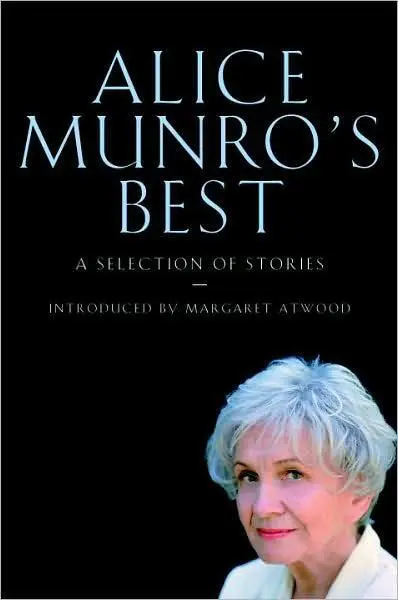
- Название:Alice Munro's Best
- Автор:
- Издательство:McClelland & Stewart
- Жанр:
- Год:2008
- Город:Toronto
- ISBN:9780771065200
- Рейтинг книги:3 / 5. Голосов: 1
-
Избранное:Добавить в избранное
- Отзывы:
-
Ваша оценка:
Alice Munro's Best: краткое содержание, описание и аннотация
Предлагаем к чтению аннотацию, описание, краткое содержание или предисловие (зависит от того, что написал сам автор книги «Alice Munro's Best»). Если вы не нашли необходимую информацию о книге — напишите в комментариях, мы постараемся отыскать её.
This splendid gift edition is sure to delight Alice Munro’s growing body of admirers, what Atwood calls her “devoted international readership.” Long-time fans of her stories will enjoy meeting old favourites, where their new setting in this book may reveal new sides to what once seemed a familiar story; devoted followers may even dispute the exclusion of a specially-beloved story. Readers lucky enough to have found her recently will be delighted, as one masterpiece succeeds another.
The 17 stories are carefully arranged in the order in which she wrote them, which allows us to follow the development of her range. “A Wilderness Station,” for example, breaks “short story rules” by taking us right back to the 1830s then jumping forward more than 100 years. “The Albanian Virgin” destroys the idea that her stories are set in B.C. or in Ontario’s “Alice Munro Country.” And “The Bear Came Over the Mountain,” the story behind the film
, takes us far from the world of young girls learning about sex into unflinching old age.
This is a book to read slowly, savouring each story. It deserves a place in every Canadian book-lover’s library.
Alice Munro's Best — читать онлайн бесплатно полную книгу (весь текст) целиком
Ниже представлен текст книги, разбитый по страницам. Система сохранения места последней прочитанной страницы, позволяет с удобством читать онлайн бесплатно книгу «Alice Munro's Best», без необходимости каждый раз заново искать на чём Вы остановились. Поставьте закладку, и сможете в любой момент перейти на страницу, на которой закончили чтение.
Интервал:
Закладка:
I DIDN’T HAVE a problem right away with Beryl’s story. For one thing, I was hungry and greedy, and a lot of my attention went to the roast chicken and gravy and mashed potatoes laid on the plate with an ice-cream scoop and the bright diced vegetables out of a can, which I thought much superior to those fresh from the garden. For dessert, I had a butterscotch sundae, an agonizing choice over chocolate. The others had plain vanilla ice cream.
Why shouldn’t Beryl’s version of the same event be different from my mother’s? Beryl was strange in every way — everything about her was slanted, seen from a new angle. It was my mother’s version that held, for a time. It absorbed Beryl’s story, closed over it. But Beryl’s story didn’t vanish; it stayed sealed off for years, but it wasn’t gone. It was like the knowledge of that hotel and dining room. I knew about it now, though I didn’t think of it as a place to go back to. And indeed, without Beryl’s or Mr. Florence’s money, I couldn’t. But I knew it was there.
The next time I was in the Wildwood Inn, in fact, was after I was married. The Lions Club had a banquet and dance there. The man I had married, Dan Casey, was a Lion. You could get a drink there by that time. Dan Casey wouldn’t have gone anywhere you couldn’t. Then the place was remodelled into the Hideaway, and now they have strippers every night but Sunday. On Thursday nights, they have a male stripper. I go there with people from the real-estate office to celebrate birthdays or other big events.
THE FARM WAS sold for five thousand dollars in 1965. A man from Toronto bought it, for a hobby farm or just an investment. After a couple of years, he rented it to a commune. They stayed there, different people drifting on and off, for a dozen years or so. They raised goats and sold the milk to the health-food store that had opened up in town. They painted a rainbow across the side of the barn that faced the road. They hung tie-dyed sheets over the windows, and let the long grass and flowering weeds reclaim the yard. My parents had finally got electricity in, but these people didn’t use it. They preferred oil lamps and the woodstove, and taking their dirty clothes to town. People said they wouldn’t know how to handle lamps or wood fires, and they would burn the place down. But they didn’t. In fact, they didn’t manage badly. They kept the house and barn in some sort of repair and they worked a big garden. They even dusted their potatoes against blight — though I heard that there was some sort of row about this and some of the stricter members left. The place actually looked a lot better than many of the farms round about that were still in the hands of the original families. The McAllister son had started a wrecking business on their place. My own brothers were long gone.
I knew I was not being reasonable, but I had the feeling that I’d rather see the farm suffer outright neglect — I’d sooner see it in the hands of hoodlums and scroungers — than see that rainbow on the barn, and some letters that looked Egyptian painted on the wall of the house. They seemed a mockery. I even disliked the sight of those people when they came to town — the men with their hair in ponytails, and with holes in their overalls that I believed were cut on purpose, and the women with long hair and no makeup and their meek, superior expressions. What do you know about life, I felt like asking them. What makes you think you can come here and mock my father and mother and their life and their poverty? But when I thought of the rainbow and those letters, I knew they weren’t trying to mock or imitate my parents’ life. They had displaced that life, hardly knowing it existed. They had set up in its place these beliefs and customs of their own, which I hoped would fail them.
That happened, more or less. The commune disintegrated. The goats disappeared. Some of the women moved to town, cut their hair, put on makeup, and got jobs as waitresses or cashiers to support their children. The Toronto man put the place up for sale, and after about a year it was sold for more than ten times what he had paid for it. A young couple from Ottawa bought it. They have painted the outside a pale gray with oyster trim, and have put in skylights and a handsome front door with carriage lamps on either side. Inside, they’ve changed it around so much that I’ve been told I’d never recognize it.
I did get in once, before this happened, during the year that the house was empty and for sale. The company I work for was handling it, and I had a key, though the house was being shown by another agent. I let myself in on a Sunday afternoon. I had a man with me, not a client but a friend — Bob Marks, whom I was seeing a lot at the time.
“This is that hippie place,” Bob Marks said when I stopped the car. “I’ve been by here before.”
He was a lawyer, a Catholic, separated from his wife. He thought he wanted to settle down and start up a practice here in town. But there already was one Catholic lawyer. Business was slow. A couple of times a week, Bob Marks would be fairly drunk before supper.
“It’s more than that,” I said. “It’s where I was born. Where I grew up.” We walked through the weeds, and I unlocked the door.
He said that he had thought, from the way I talked, that it would be farther out.
“It seemed farther then.”
All the rooms were bare, and the floors swept clean. The woodwork was freshly painted — I was surprised to see no smudges on the glass. Some new panes, some old wavy ones. Some of the walls had been stripped of their paper and painted. A wall in the kitchen was painted a deep blue, with an enormous dove on it. On a wall in the front room, giant sunflowers appeared, and a butterfly of almost the same size.
Bob Marks whistled. “Somebody was an artist.”
“If that’s what you want to call it,” I said, and turned back to the kitchen. The same woodstove was there. “My mother once burned up three thousand dollars,” I said. “She burned three thousand dollars in that stove.”
He whistled again, differently. “What do you mean? She threw in a check?”
“No, no. It was in bills. She did it deliberately. She went into town to the bank and she had them give it all to her, in a shoebox. She brought it home and put it in the stove. She put it in just a few bills at a time, so it wouldn’t make too big a blaze. My father stood and watched her.”
“What are you talking about?” said Bob Marks. “I thought you were so poor.”
“We were. We were very poor.”
“So how come she had three thousand dollars? That would be like thirty thousand today. Easily. More than thirty thousand today.”
“It was her legacy,” I said. “It was what she got from her father. Her father died in Seattle and left her three thousand dollars, and she burned it up because she hated him. She didn’t want his money. She hated him.”
“That’s a lot of hate,” Bob Marks said.
“That isn’t the point. Her hating him, or whether he was bad enough for her to have a right to hate him. Not likely he was. That isn’t the point.”
“Money,” he said. “Money’s always the point.”
“No. My father letting her do it is the point. To me it is. My father stood and watched and he never protested. If anybody had tried to stop her, he would have protected her. I consider that love.”
“Some people would consider it lunacy.”
I remember that that had been Beryl’s opinion, exactly.
I went into the front room and stared at the butterfly, with its pink-and-orange wings. Then I went into the front bedroom and found two human figures painted on the wall. A man and a woman holding hands and facing straight ahead. They were naked, and larger than life size.
“It reminds me of that John Lennon and Yoko Ono picture,” I said to Bob Marks, who had come in behind me. “That record cover, wasn’t it?” I didn’t want him to think that anything he had said in the kitchen had upset me.
Читать дальшеИнтервал:
Закладка:
Похожие книги на «Alice Munro's Best»
Представляем Вашему вниманию похожие книги на «Alice Munro's Best» списком для выбора. Мы отобрали схожую по названию и смыслу литературу в надежде предоставить читателям больше вариантов отыскать новые, интересные, ещё непрочитанные произведения.



Обсуждение, отзывы о книге «Alice Munro's Best» и просто собственные мнения читателей. Оставьте ваши комментарии, напишите, что Вы думаете о произведении, его смысле или главных героях. Укажите что конкретно понравилось, а что нет, и почему Вы так считаете.