Alice Munro - Alice Munro's Best
Здесь есть возможность читать онлайн «Alice Munro - Alice Munro's Best» весь текст электронной книги совершенно бесплатно (целиком полную версию без сокращений). В некоторых случаях можно слушать аудио, скачать через торрент в формате fb2 и присутствует краткое содержание. Город: Toronto, Год выпуска: 2008, ISBN: 2008, Издательство: McClelland & Stewart, Жанр: Современная проза, на английском языке. Описание произведения, (предисловие) а так же отзывы посетителей доступны на портале библиотеки ЛибКат.
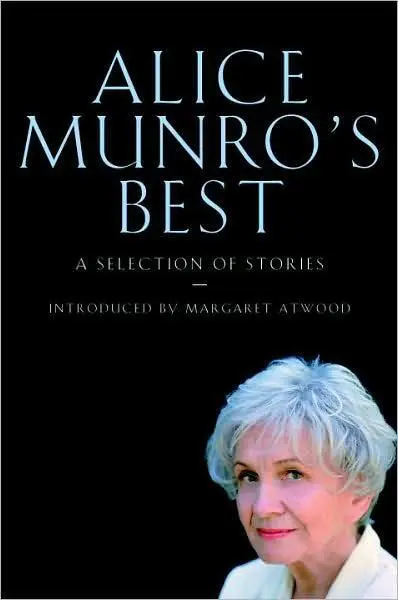
- Название:Alice Munro's Best
- Автор:
- Издательство:McClelland & Stewart
- Жанр:
- Год:2008
- Город:Toronto
- ISBN:9780771065200
- Рейтинг книги:3 / 5. Голосов: 1
-
Избранное:Добавить в избранное
- Отзывы:
-
Ваша оценка:
Alice Munro's Best: краткое содержание, описание и аннотация
Предлагаем к чтению аннотацию, описание, краткое содержание или предисловие (зависит от того, что написал сам автор книги «Alice Munro's Best»). Если вы не нашли необходимую информацию о книге — напишите в комментариях, мы постараемся отыскать её.
This splendid gift edition is sure to delight Alice Munro’s growing body of admirers, what Atwood calls her “devoted international readership.” Long-time fans of her stories will enjoy meeting old favourites, where their new setting in this book may reveal new sides to what once seemed a familiar story; devoted followers may even dispute the exclusion of a specially-beloved story. Readers lucky enough to have found her recently will be delighted, as one masterpiece succeeds another.
The 17 stories are carefully arranged in the order in which she wrote them, which allows us to follow the development of her range. “A Wilderness Station,” for example, breaks “short story rules” by taking us right back to the 1830s then jumping forward more than 100 years. “The Albanian Virgin” destroys the idea that her stories are set in B.C. or in Ontario’s “Alice Munro Country.” And “The Bear Came Over the Mountain,” the story behind the film
, takes us far from the world of young girls learning about sex into unflinching old age.
This is a book to read slowly, savouring each story. It deserves a place in every Canadian book-lover’s library.
Alice Munro's Best — читать онлайн бесплатно полную книгу (весь текст) целиком
Ниже представлен текст книги, разбитый по страницам. Система сохранения места последней прочитанной страницы, позволяет с удобством читать онлайн бесплатно книгу «Alice Munro's Best», без необходимости каждый раз заново искать на чём Вы остановились. Поставьте закладку, и сможете в любой момент перейти на страницу, на которой закончили чтение.
Интервал:
Закладка:
After Mrs. Willets her heart had been dry, and she had considered it might always be so. And now such a warm commotion, such busy love.
MR. MCCAULEY DIED about two years after Johanna’s departure. His funeral was the last one held in the Anglican church. There was a good turnout for it. Sabitha — who came with her mother’s cousin, the Toronto woman — was now self-contained and pretty and remarkably, unexpectedly slim. She wore a sophisticated black hat and did not speak to anybody unless they spoke to her first. Even then, she did not seem to remember them.
The death notice in the paper said that Mr. McCauley was survived by his granddaughter Sabitha Boudreau and his son-in-law Ken Boudreau, and Mr. Boudreau’s wife Johanna, and their infant son Omar, of Salmon Arm, B.C.
Edith’s mother read this out — Edith herself never looked at the local paper. Of course, the marriage was not news to either of them — or to Edith’s father, who was around the corner in the front room, watching television. Word had got back. The only news was Omar.
“Her with a baby ,” Edith’s mother said.
Edith was doing her Latin translation at the kitchen table. Tu ne quaesieris, scire nefas, quem mihi, quem tibi –
In the church she had taken the precaution of not speaking to Sabitha first, before Sabitha could not speak to her.
She was not really afraid, anymore, of being found out — though she still could not understand why they hadn’t been. And in a way, it seemed only proper that the antics of her former self should not be connected with her present self — let alone with the real self that she expected would take over once she got out of this town and away from all the people who thought they knew her. It was the whole twist of consequence that dismayed her — it seemed fantastical, but dull. Also insulting, like some sort of joke or inept warning, trying to get its hooks into her. For where, on the list of things she planned to achieve in her life, was there any mention of her being responsible for the existence on earth of a person named Omar?
Ignoring her mother, she wrote, “You must not ask, it is forbidden for us to know—”
She paused, chewing her pencil, then finished off with a chill of satisfaction, “— what fate has in store for me, or for you—”
SAVE THE REAPER
THE GAME THEY played was almost the same one that Eve had played with Sophie, on long dull car trips when Sophie was a little girl. Then it was spies — now it was aliens. Sophie’s children, Philip and Daisy, were sitting in the backseat. Daisy was barely three and could not understand what was going on. Philip was seven, and in control. He was the one who picked the car they were to follow, in which there were newly arrived space travellers on their way to the secret headquarters, the invaders’ lair. They got their directions from the signals offered by plausible-looking people in other cars or from somebody standing by a mailbox or even riding a tractor in a field. Many aliens had already arrived on earth and been translated — this was Philip’s word — so that anybody might be one. Gas station attendants or women pushing baby carriages or even the babies riding in the carriages. They could be giving signals.
Usually Eve and Sophie had played this game on a busy highway where there was enough traffic that they wouldn’t be detected. (Though once they had got carried away and ended up in a suburban drive.) On the country roads that Eve was taking today that wasn’t so easy. She tried to solve the problem by saying that they might have to switch from following one vehicle to another because some were only decoys, not heading for the hideaway at all, but leading you astray.
“No, that isn’t it,” said Philip. “What they do, they suck the people out of one car into another car, just in case anybody is following. They can be like inside one body and then they go schlup through the air into another body in another car. They go into different people all the time and the people never know what was in them.”
“Really?” Eve said. “So how do we know which car?”
“The code’s on the license plate,” said Philip. “It’s changed by the electrical field they create in the car. So their trackers in space can follow them. It’s just one simple little thing, but I can’t tell you.”
“Well no,” said Eve. “I suppose very few people know it.”
Philip said, “I am the only one right now in Ontario.”
He sat as far forward as he could with his seat belt on, tapping his teeth sometimes in urgent concentration and making light whistling noises as he cautioned her.
“Unh-unh, watch out here,” he said. “I think you’re going to have to turn around. Yeah. Yeah. I think this may be it.”
They had been following a white Mazda, and were now, apparently, to follow an old green pickup truck, a Ford. Eve said, “Are you sure?”
“Sure.”
“You felt them sucked through the air?”
“They’re translated simultaneously,” Philip said. “I might have said ‘sucked,’ but that’s just to help people understand it.”
What Eve had originally planned was to have the headquarters turn out to be in the village store that sold ice cream, or in the playground. It could be revealed that all the aliens were congregated there in the form of children, seduced by the pleasures of ice cream or slides and swings, their powers temporarily in abeyance. No fear they could abduct you — or get into you — unless you chose the one wrong flavor of ice cream or swung the exact wrong number of times on the designated swing. (There would have to be some remaining danger, or else Philip would feel let down, humiliated.) But Philip had taken charge so thoroughly that now it was hard to manage the outcome. The pickup truck was turning from the paved county road onto a gravelled side road. It was a decrepit truck with no topper, its body eaten by rust — it would not be going far. Home to some farm, most likely. They might not meet another vehicle to switch to before the destination was reached.
“You’re positive this is it?” said Eve. “It’s only one man by himself, you know. I thought they never travelled alone.”
“The dog,” said Philip.
For there was a dog riding in the open back of the truck, running back and forth from one side to the other as if there were events to be kept track of everywhere.
“The dog’s one too,” Philip said.
THAT MORNING, when Sophie was leaving to meet Ian at the Toronto airport, Philip had kept Daisy occupied in the children’s bedroom. Daisy had settled down pretty well in the strange house — except for wetting her bed every night of the holiday — but this was the first time that her mother had gone off and left her behind. So Sophie had asked Philip to distract her, and he did so with enthusiasm (happy at the new turn events had taken?). He shot the toy cars across the floor with angry engine noises to cover up the sound of Sophie’s starting the real rented car and driving away. Shortly after that he shouted to Eve, “Has the B.M. gone?”
Eve was in the kitchen, clearing up the remains of breakfast and disciplining herself. She walked into the living room. There was the boxed tape of the movie that she and Sophie had been watching last night.
The Bridges of Madison County.
“What does mean ‘B.M.’?” said Daisy.
The children’s room opened off the living room. This was a cramped little house, fixed up on the cheap for summer rental. Eve’s idea had been to get a lakeside cottage for the holiday — Sophie’s and Philip’s first visit with her in nearly five years and Daisy’s first ever. She had picked this stretch of the Lake Huron shore because her parents used to bring her here with her brother when they were children. Things had changed — the cottages were all as substantial as suburban houses, and the rents were out of sight. This house half a mile inland from the rocky, unfavored north end of the usable beach had been the best she could manage. It stood in the middle of a cornfield. She had told the children what her father had once told her — that at night you could hear the corn growing.
Читать дальшеИнтервал:
Закладка:
Похожие книги на «Alice Munro's Best»
Представляем Вашему вниманию похожие книги на «Alice Munro's Best» списком для выбора. Мы отобрали схожую по названию и смыслу литературу в надежде предоставить читателям больше вариантов отыскать новые, интересные, ещё непрочитанные произведения.




Обсуждение, отзывы о книге «Alice Munro's Best» и просто собственные мнения читателей. Оставьте ваши комментарии, напишите, что Вы думаете о произведении, его смысле или главных героях. Укажите что конкретно понравилось, а что нет, и почему Вы так считаете.