Hilary Mantel - Beyond Black
Здесь есть возможность читать онлайн «Hilary Mantel - Beyond Black» — ознакомительный отрывок электронной книги совершенно бесплатно, а после прочтения отрывка купить полную версию. В некоторых случаях можно слушать аудио, скачать через торрент в формате fb2 и присутствует краткое содержание. Год выпуска: 2006, Издательство: Macmillan, Жанр: Современная проза, roman, Детектив, sf_mystic, на английском языке. Описание произведения, (предисловие) а так же отзывы посетителей доступны на портале библиотеки ЛибКат.
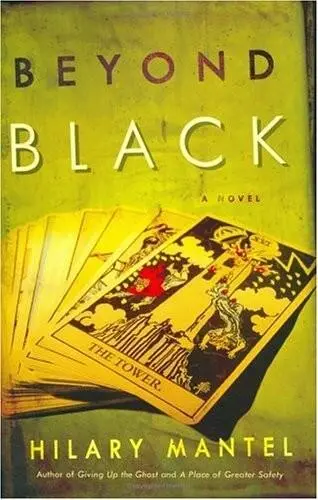
- Название:Beyond Black
- Автор:
- Издательство:Macmillan
- Жанр:
- Год:2006
- ISBN:нет данных
- Рейтинг книги:5 / 5. Голосов: 1
-
Избранное:Добавить в избранное
- Отзывы:
-
Ваша оценка:
Beyond Black: краткое содержание, описание и аннотация
Предлагаем к чтению аннотацию, описание, краткое содержание или предисловие (зависит от того, что написал сам автор книги «Beyond Black»). Если вы не нашли необходимую информацию о книге — напишите в комментариях, мы постараемся отыскать её.
Alison, the daughter of a prostitute, beleaguered during her childhood by the pressures of her connection to the spiritual world, lives in a different kind of solitude. She cannot escape the dead who speak to her, least of all the constant presence of Morris, her low-life spiritual guide. An expansive presence onstage, Alison at once feels her bond with Colette, inviting her to join her on the road as her personal assistant and companion.
Troubles spiral out of control when the pair moves to a suburban wasteland in what was once the English countryside and take up with a spirit guide and his drowned therapist. It is not long before Alison's connection to the place beyond black threatens to uproot their lives forever. This is Hilary Mantel at her finest- insightful, darkly comic, unorthodox, and thrilling to read.
Beyond Black — читать онлайн ознакомительный отрывок
Ниже представлен текст книги, разбитый по страницам. Система сохранения места последней прочитанной страницы, позволяет с удобством читать онлайн бесплатно книгу «Beyond Black», без необходимости каждый раз заново искать на чём Вы остановились. Поставьте закладку, и сможете в любой момент перейти на страницу, на которой закончили чтение.
Интервал:
Закладка:
Sometimes, when famous people pass, their fans-in-spirit are waiting for them—their fans and, in the case of someone like Diana, their ancestors too—and often those ancestors have something to say, about the way estates have been subdivided, money frittered, their portraits sold at auction. Also, when famous people pass they attract spirit imposters, just as on this side you have look-alikes and body doubles. This fact, unless kept constantly in mind by a medium, can ruin an evening on the platform, as the tribute bands and the impersonators break through, claiming to be Elvis, Lennon, Glenn Miller. Occasionally some oddball breaks through saying he’s Jesus. But I don’t know, Al said, there’ll be something in his manner—you just know he’s not from ancient Palestine. In Mrs. Etchell’s day, she explained, people still thought they were Napoleon. They were better educated then, she said, they knew dates and battles. Surprisingly, Cleopatra is still popular. “And I don’t like doing Cleopatra, because—”
“Because you don’t do ethnics.”
Al had explained it to her, in delicate language. She didn’t work the inner city or places like downtown Slough. “I’m not a racist, please don’t think that, but it just gets too convoluted.” It wasn’t just the language barrier, she explained, but these people, those races who think they have more than one life. Which means, of course, more than one family. Often several families, and I don’t know, it just gets—She closed her eyes tight, and flapped her fingers at her head, as if trying to beat off mosquitoes. She shivered, at the thought of some bangled wrinkly from the Ganges popping up: and she, flailing in time and space, not able to skewer her to the right millennium.
When Colette looked back, from the end of August 1997 to the early summer, when they had met … .“It’s what you call a steep learning curve,” she said. That the dead can be lonely, that the dead can be confused; all these things were a surprise to Colette, who had only ever spoken to one dead person: who earlier in her life had never given them much thought, except insofar as she had hoped—in some limp sort of way—that the dead were best off where they were. She now understood that Al hadn’t been quite straight with her in those first few weeks. There wasn’t a necessary tie-up between what she said on the platform and the true state of affairs. Uncomfortable truths were smoothed over before Al let them out to the public; when she conveyed soothing messages, Colette saw, they came not from the medium but from the saleswoman, from the part of her that saw the value in pleasing people. She had to admire it, grudgingly; it was a knack she had never acquired.
Until the princess died, Colette had not seen the seamy side of the work. Take Morris out of the equation, and it was much like any other business. Al needed a more modern communications system, a better through-put and process-flow. She needed a spam filter for her brain, to screen out unwanted messages from the dead; and if Colette could not provide this, she could at least control how Al managed those messages. She tried to view Al as a project and herself as project manager. It was lucky she’d got such sound experience as a conference organizer, because of course Al was something like a conference in herself.
When she moved in with Al, Colette had made a pretty smart exit from her early life—a clean break, she told herself. Nevertheless, she expected old workmates to track her down. She practiced in her mind what she’d tell them. I find my new role diverse, rewarding, and challenging, she would say. Above all, I like the independence. The personal relationships are a bonus; I’d describe my boss as caring and professional. Do I miss going to the office every day? You must appreciate I never exactly did that; travel was always part of the brief. Think what I haven’t got: no slander at the water cooler, no interdepartmental tensions, no sexual harassment, no competitive dressing. I have to be smart, of course, because I’m customer-facing, but it’s a real perk to be able to express yourself through your own sense of style. And that encapsulates, more or less, what I feel about my new situation; I’ve a role that I can sculpt to suit my talents, and no two days are the same.
All this rehearsal was wasted, except upon herself. No one, in fact, did track her down, except Gavin, who called one night wanting to boast about his annual bonus. It was as if she’d ceased to exist.
But after that death night at the end of August, she couldn’t fool herself that her position with Al was just a logical part of her career development. And exactly what was her position with Al? Next day, she, Colette, tried to sit her down for a talk, and said, Al, I need you to be straight with me.
Al said, “It’s okay, Col, I’ve been thinking about it. You’re a godsend to me, and I don’t know what I ever did without you. I never thought I’d get someone to agree to live in, and you can see that at a time of crisis, twenty-four-hour care is what I need.” Only a half hour before Al had been bringing up a clear ropey liquid; once again, rank sweat filmed her face. “I think we should agree on new terms. I think you should have a profit share.”
Colette flushed pink up to the roots of her hair. “I didn’t mean money,” she said. “I didn’t mean, be straight with me in that way. I—thank you Al, I mean it’s good to be needed. I know you’re not financially dishonest. I wasn’t saying that. I only mean I think you’re not giving me the full picture about your life. Oh, I know about Morris. Now I know, but when I took on the job you didn’t tell me I’d be working with some foul-mouthed dwarf spook; you let me find that out. I feel as if I don’t want any more nasty shocks. You do see that, surely? I know you mean well. You’re sparing my feelings. Like you do with the trade. But you must realize, I’m not the trade, I’m your friend. I’m your partner.”
Alison said, “What you’re asking me is, how do you do it?”
“Yes, that’s exactly right. That’s what I’m asking you.”
She made Al some ginger tea; and Al talked then about the perfidy of the dead, their partial, penetrative nature, their way of dematerializing and leaving bits of themselves behind, or entangling themselves with your inner organs. She talked about her sharp earsight and voices she heard in the wall. About the deads’ propensity to fib and confabulate. Their selfish, trivial outlook. Their general cluelessness.
Colette was not satisfied. She rubbed her eyes; she rubbed her forehead. She stopped and glared, when she saw Alison smiling at her sympathetically. “Why? Why are you smiling?”
“My friend Cara would say, you’re opening your third eye.”
Colette pointed to the space between her brows. “There is no eye. It’s bone.”
“Brain behind it, I hope.”
Colette said angrily, “It’s not that I don’t believe in you. Well I do. I have to believe in what you do, because I see you doing it, I see and hear you, but how can I believe it, when it’s against the laws of nature?”
“Oh, those,” Al said. “Are you sure we have them anymore? I think it’s a bit of a free-for-all these days.”
They had arranged, on the Saturday of the princess’s funeral, to do an evening event in the Midlands, a major fayre in an area where psychic fayres were just establishing themselves. Mandy Coughlan said on the phone to Al, “It would be a shame to cancel, sweetie. You can take a sick bag in the car if you’re still feeling queasy. Because you know if you pull out they’ll charge you full price for the stall, and some amateur from up the M6 will be straight in there, quicksticks. So if you’re feeling up to it? Good girl. Do you think Mrs. Etchells is going?”
Читать дальшеИнтервал:
Закладка:
Похожие книги на «Beyond Black»
Представляем Вашему вниманию похожие книги на «Beyond Black» списком для выбора. Мы отобрали схожую по названию и смыслу литературу в надежде предоставить читателям больше вариантов отыскать новые, интересные, ещё непрочитанные произведения.











Обсуждение, отзывы о книге «Beyond Black» и просто собственные мнения читателей. Оставьте ваши комментарии, напишите, что Вы думаете о произведении, его смысле или главных героях. Укажите что конкретно понравилось, а что нет, и почему Вы так считаете.