Édouard Levé - Suicide
Здесь есть возможность читать онлайн «Édouard Levé - Suicide» весь текст электронной книги совершенно бесплатно (целиком полную версию без сокращений). В некоторых случаях можно слушать аудио, скачать через торрент в формате fb2 и присутствует краткое содержание. Город: Lonton, Год выпуска: 2011, ISBN: 2011, Издательство: Dalkey Archive Press, Жанр: Современная проза, на английском языке. Описание произведения, (предисловие) а так же отзывы посетителей доступны на портале библиотеки ЛибКат.
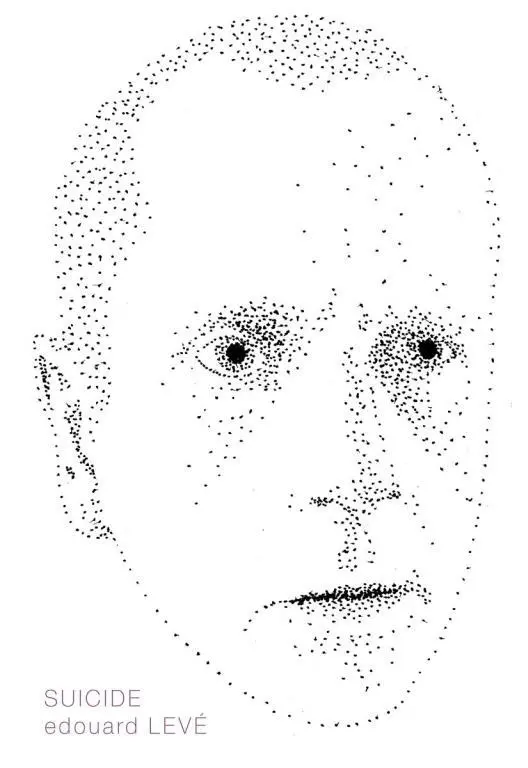
- Название:Suicide
- Автор:
- Издательство:Dalkey Archive Press
- Жанр:
- Год:2011
- Город:Lonton
- ISBN:978-1-56478-628-9
- Рейтинг книги:3 / 5. Голосов: 1
-
Избранное:Добавить в избранное
- Отзывы:
-
Ваша оценка:
Suicide: краткое содержание, описание и аннотация
Предлагаем к чтению аннотацию, описание, краткое содержание или предисловие (зависит от того, что написал сам автор книги «Suicide»). Если вы не нашли необходимую информацию о книге — напишите в комментариях, мы постараемся отыскать её.
, just a few days before he took his own life.
Suicide
Suicide
Suicide — читать онлайн бесплатно полную книгу (весь текст) целиком
Ниже представлен текст книги, разбитый по страницам. Система сохранения места последней прочитанной страницы, позволяет с удобством читать онлайн бесплатно книгу «Suicide», без необходимости каждый раз заново искать на чём Вы остановились. Поставьте закладку, и сможете в любой момент перейти на страницу, на которой закончили чтение.
Интервал:
Закладка:
To know makes me grow
Not to know harms me
To forget frees me
Losing is bothersome to me
Winning is a matter of indifference to me
To play is disappointing to me
To deny tempts me
To affirm excites me
To suggest is enough for me
Seducing seduces me
Loving transforms me
Separating pains me
Clothing announces me
Disguises hide me
Uniforms efface me
Speaking commits me
Listening teaches me
Silence tempers me
Birth befalls me
Life occupies me
Death completes me
To climb is difficult for me
To descend is easy for me
To be stationary is useless to me
Homage obliges me
Oration touches me
Eulogy buries me
The flash blinds me
The beam dazzles me
The reflection intrigues me
Speaking identifies me
Shouting frees me
Whispering imposes on me
Humming rocks me
Intoning suspends me
Singing unfolds me
The beginning enthuses me
The middle sustains me
The end disappoints me
Goodness impresses me
Stupidity amuses me
Malice disgusts me
November upsets me
April refreshes me
September soothes me
Envy indisposes me
Jealousy moves me to pity
Hatred distances me
Yesterday wearies me
Sleep immobilizes me
Awakening attacks me
The millennium enfolds me
The century situates me
The decade decorates me
The hour rules me
The minute hurries me
Seconds escape me
Threats fool me
Anguish moves me
Fear excites me
Surprise displeases me
Improvisation harms me
Announcements buttress me
Traps seduce me
Liars fool me
Informers horrify me
The baroque sickens me
The gothic chills me
Novels enlighten me
Red irritates me
Black moves me
White calms me
The solo attracts me
The quartet sustains me
The symphony distances me
Rules serve me
Constraints stimulate me
Obligation extinguishes me
Dialogue binds me
Monologue imposes upon me
Soliloquy isolates me
The air penetrates me
The ground resists me
The underground smothers me
Rhythm leads me
Melody charms me
Harmony troubles me
Aquariums sadden me
Aviaries oppress me
Cages revolt me
Rain doubles me up
Snow enchants me
Hail stops me
My finger draws
My hand catches
My arm enlaces
My brain conceives
My eye guides
My body makes
The first time tempts me
Its sequel accustoms me
The last depresses me
Tiredness calms me
Lassitude discourages me
Exhaustion stops me
Constructing obsesses me
Conserving calms me
Destroying relieves me
Arriving changes me
Staying costs me
Leaving animates me
The group oppresses me
Solitude holds me
Madness stalks me
To please pleases me
To displease displeases me
To be indifferent is indifferent to me
Age overtakes me
Youth abandons me
Memory remains with me
Happiness precedes me
Sadness follows me
Death awaits me
AFTERWORD
Edouard Levé committed suicide on October 15, 2007. Ten days earlier he had given a manuscript to his editor; it was a novel entitled Suicide , the same you hold in your hands.
Suicide ’s reception in France has been deeply influenced by the circumstances of the author’s death. Although it is a fictional work, written in the second person about a friend of the narrator’s who had committed suicide twenty years earlier, its title and subject matter ensure that, despite reports that Levé did leave a suicide note, the present text is taken as a sort of literary explanation of his decision to die. Levé’s readers are left to ask, along with the narrator of Suicide :
Did you know why you wanted to die? If you did, why not write it down? Out of fatigue from living and disdain for leaving traces that would survive you? Or because the reasons that were pushing you to disappear seemed empty? Maybe you wanted to preserve the mystery of your death, thinking that nothing should be explained. Are there good reasons for committing suicide? Those who survived you asked themselves these questions; they will not find answers.
Suicide demands interpretation. No one who reads this novel and knows of Levé’s suicide (and its timing guarantees that nearly every reader does know of it) can avoid projecting Levé’s questions back onto his own choice of death.
To what extent can we conflate Levé’s characters and their motivations with the author and his? The “you” of the novel shares at least two factual details with Levé’s life: each were born in winter, and each ended his life by his own hand. But we can find Levé in the artistic method and philosophy of Suicide ’s “I” as much as we can in the taste for sparseness and stoicism of Suicide ’s “you.” The narrator claims that
[t]o portray your life in order would be absurd: I remember you at random. My brain resurrects you through stochastic details, like picking marbles out of a bag.
This stochastic, yet formally constrained, method of “picking marbles out of a bag” is present in all of Levé’s writing. In this regard Levé owes a self-acknowledged debt to the writers of the Oulipo group, especially Georges Perec. The opening sentence of Levé’s Autoportrait —a novel without paragraph breaks consisting of facts about the author as well as his opinions—reads:
Adolescent je croyais que La Vie mode d’emploi m’aiderait à vivre, et Suicide mode d’emploi à mourir. [1] Levé, Edouard. Autoportrait . Paris: P.O.L, 2008, p. 7.
As an adolescent I believed that [Perec’s] Life A User’s Manual would help me to live, and that [Claude Guillon and Yves le Bonniec’s] Suicide A User’s Manual would help me to die.
Stylistic and thematic elements of Suicide were already present in Levé’s Autoportrait . This is not unusual for Levé’s works, which frequently announce or contain later works in embryonic form. For example, Œuvres (2002) consists of the author’s description of 533 imagined œuvres (works). Levé brought some of these works to completion later. In 2006, for example, he published Amérique , consisting of images of arbitrary parts of obscure American towns named after grander world cities—Florence, Berlin, Jericho, Oxford, Stockholm, Rio, Delhi, Amsterdam, Paris, Rome, Mexico, Lima, Versailles, Calcutta and Baghdad. [2] In 2009, two years after Levé’s suicide, the writer Gérard Gavarry published Expérience d’Edward Lee, Versailles , a series of fragmentary texts, each using one of the photos in Amérique as a starting point. “Edward Lee” is Gavarry’s Americanization of “Edouard Levé.”
Интервал:
Закладка:
Похожие книги на «Suicide»
Представляем Вашему вниманию похожие книги на «Suicide» списком для выбора. Мы отобрали схожую по названию и смыслу литературу в надежде предоставить читателям больше вариантов отыскать новые, интересные, ещё непрочитанные произведения.

Обсуждение, отзывы о книге «Suicide» и просто собственные мнения читателей. Оставьте ваши комментарии, напишите, что Вы думаете о произведении, его смысле или главных героях. Укажите что конкретно понравилось, а что нет, и почему Вы так считаете.