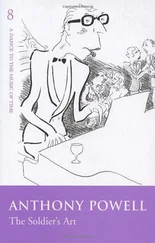
Anthony Powell - The Military Philosophers
Здесь есть возможность читать онлайн «Anthony Powell - The Military Philosophers» весь текст электронной книги совершенно бесплатно (целиком полную версию без сокращений). В некоторых случаях можно слушать аудио, скачать через торрент в формате fb2 и присутствует краткое содержание. Год выпуска: 2005, Жанр: Современная проза, на английском языке. Описание произведения, (предисловие) а так же отзывы посетителей доступны на портале библиотеки ЛибКат.
- Название:The Military Philosophers
- Автор:
- Жанр:
- Год:2005
- ISBN:нет данных
- Рейтинг книги:5 / 5. Голосов: 1
-
Избранное:Добавить в избранное
- Отзывы:
-
Ваша оценка:
The Military Philosophers: краткое содержание, описание и аннотация
Предлагаем к чтению аннотацию, описание, краткое содержание или предисловие (зависит от того, что написал сам автор книги «The Military Philosophers»). Если вы не нашли необходимую информацию о книге — напишите в комментариях, мы постараемся отыскать её.
The novels follow Nicholas Jenkins, Kenneth Widmerpool and others, as they negotiate the intellectual, cultural and social hurdles that stand between them and the “Acceptance World.”
The Military Philosophers — читать онлайн бесплатно полную книгу (весь текст) целиком
Ниже представлен текст книги, разбитый по страницам. Система сохранения места последней прочитанной страницы, позволяет с удобством читать онлайн бесплатно книгу «The Military Philosophers», без необходимости каждый раз заново искать на чём Вы остановились. Поставьте закладку, и сможете в любой момент перейти на страницу, на которой закончили чтение.
Интервал:
Закладка:
‘I don’t think they noticed Pluto,’ he whispered.
It was late that night when, after inspecting a mass of things, we reached billets. A clock struck twelve as the cars entered the seaside town where these had been arranged. By the time we arrived I had forgotten the name of the place, evidently a resort in peacetime, because we drew up before the doors of a largish hotel. It was moonlight. We got out. Finn conferred with the Conducting Officer from Army Group, who was still with us. Then he turned to me.
‘They can’t get us all into the Grand.’
‘No room at the inn, sir?’
‘Not enough mattresses or something, though it looks big enough. So, Nicholas, you’ll attend General Asbjornsen, General Bobrowski, General Philidor and Major Prasad to La Petite Auberge. Everything’s been laid on there for the five of you.’
I never knew, then or later, why that particular quartet was chosen to represent the overflow from the Grand. One would have expected four generals — Lebedev, for example, or Cobb, recently promoted brigadier-general — alternatively, four more junior in rank, Gauthier de Graef, Al Sharqui, a couple of lieutenant-colonels. However, that was how it was. One of the cars took the five of us to La Petite Auberge, which turned out to be a little black-and- white half-timbered building, hotel or pension, in Tudor, or, I suppose, Francois Premier or Henri Quatre style. Only one of the rooms had a bathroom attached, which was captured by General Asbjornsen, possibly by being the most senior in rank, more probably because he climbed the stairs first. Obviously I was not in competition for the bath myself, so I did not greatly care who took it, nor by what methods. Prasad, like Asbjornsen, went straight up to his room, but the other two generals and I had a drink in the bar, presided over by the patronne , who seemed prepared to serve Allies all night. Bobrowski and Philidor were talking about shooting wild duck. Then Asbjornsen came down and had a drink too. He started an argument with Bobrowski about the best sort of skiing boots. Philidor and I left them to it. I had already begun to undress, when there was a knock on the door. It was Prasad.
‘Major Jenkins..
‘Major Prasad?’
He seemed a little embarrassed about something. I hoped it was nothing like damp sheets, a problem that might spread to the rest of us. Prasad was still wearing breeches and boots and his Sam Browne.
‘There’s a room with a bath,’ he said.
‘Yes — General Asbjornsen’s.’
Prasad seemed unhappy. There was a long pause.
‘I want it,’ he said at last.
That blunt statement surprised me.
‘I’m afraid General Asbjornsen got there first.’
I thought it unnecessary to add that baths were not for mere majors like ourselves, especially when there was only one. Majors were lucky enough to be allowed a basin. I saw how easy it might become to describe the hardness of conditions when one had first joined the army. The declaration was also quite unlike Prasad’s apparent appreciation of such things.
‘But I need it.’
‘I agree it would be nice to have one, but he is a general — a lieutenant-general, at that.’
Prasad was again silent for a few seconds. He was certainly embarrassed, though by no means prepared to give up the struggle.
‘Can you ask General Asbjornsen to let me have it, Major Jenkins?’
He spoke rather firmly. This was totally unlike Prasad, so quiet, easy going, outwardly impregnated with British army ‘good form’. I was staggered. Apart from anything else, the request was not a reasonable one. For a major to eject a general from his room in the small hours of the morning was a grotesque conception. It looked as if it might be necessary to embark on an a priori disquisition regarding the Rules and Disciplines of War, which certainly laid down that generals had first option where baths were concerned. It was probably Rule One. I indicated that a major — even a military attaché, in a sense representing his own country — could not have a bathroom to himself, if three generals, themselves equally representative, were all of them at least theoretically, in the running. I now saw how lucky I was that neither Bobrowski nor Philidor had shown any sign of considering himself slighted by being allotted a bathless room. In fact Prasad’s claim did not merit serious discussion. I tried to put that as tactfully as possible. Prasad listened respectfully. He was not satisfied. I could not understand what had come over him. I changed the ground of argument, abandoning seniority of rank as reason, pointing out that General Asbjornsen had won the bath by right of conquest. He had led the way up the stairs, the first man — indeed, the first general — to capture the position. Prasad would not be convinced. There was another long pause. I wondered whether we should stay up all night. Prasad gave the impression of having a secret weapon, battery he preferred not to unmask unless absolutely necessary. However, it had to come into action at last.
‘It’s my religion,’ he said.
He spoke now apologetically. This was an entirely unexpected aspect.
‘Oh, I see.’
I tried to play for time, while I thought up some answer.
‘So I must have it,’ Prasad said.
He spoke with absolute finality.
‘Of course, I appreciate, Major Prasad, that what you have said makes a difference.’
He did not reply. He saw his projectile had landed clean on the target. I was defeated. The case was unanswerable, especially in the light of my instructions. Prasad looked sorry at having been forced to bring matters to this point. He looked more than sorry; terribly upset.
‘So can I have the bathroom?’
I buttoned up my battledress blouse again.
‘I’ll make certain enquiries.’
‘I’m sorry to be so much trouble.’
‘Wait a moment, Major Prasad.’
By a great piece of good fortune, General Asbjornsen was still in the bar. He and Bobrowski had not stopped arguing, though the subject had shifted from skiing boots to tactics. Asbjornsen was perhaps getting the worst of it, because his expression recalled more than ever the craggy features of Monsieur 0rn, the Norwegian at La Grenadière, who had such a row with Monsieur Lundquist, the Swede, for sending ‘sneaks’ over the net at tennis. I hoped no similar display of short temper was in the offing.
‘Sir?’
General Asbj0rnsen gave his attention.
‘Major Prasad has asked me if you would possibly consider surrendering to him the room with the bath?’
General Asbjornsen looked absolutely dumbfounded. He did not show the smallest degree of annoyance, merely stark disbelief that he had rightly grasped the meaning of the question.
‘But — I have the bath.’
‘I know, sir. That was why I was asking.’
‘I am there.’
‘That’s just it, sir. Major Prasad wants it.’
‘He wants it?’
‘Yes, sir.’
‘The bathroom?’
‘Yes, sir.’
‘But — the bathroom — it is for me.’
‘It’s a very special request, sir.’
General Asbjornsen’s face by now showed at least that he accepted the request as a special one. It was only too easy to understand his surprise, the fact that the idea took some time to penetrate. This was not at all on account of any language difficulty. General Asbjornsen spoke English with the greatest fluency. As the conception began to take shape in his mind that Prasad’s designs on the bath were perfectly serious, the earlier look of wonder had changed to one of displeasure. His face hardened. Bobrowski, who loved action, especially if it offered conflict, grasping that a superbly comic tussle was promised, now joined in.
‘You are trying to take General Asbjornsen’s bath away from him, Major Jenkins?’
Читать дальшеИнтервал:
Закладка:
Похожие книги на «The Military Philosophers»
Представляем Вашему вниманию похожие книги на «The Military Philosophers» списком для выбора. Мы отобрали схожую по названию и смыслу литературу в надежде предоставить читателям больше вариантов отыскать новые, интересные, ещё непрочитанные произведения.



Обсуждение, отзывы о книге «The Military Philosophers» и просто собственные мнения читателей. Оставьте ваши комментарии, напишите, что Вы думаете о произведении, его смысле или главных героях. Укажите что конкретно понравилось, а что нет, и почему Вы так считаете.