Minae Mizumura - A True Novel
Здесь есть возможность читать онлайн «Minae Mizumura - A True Novel» весь текст электронной книги совершенно бесплатно (целиком полную версию без сокращений). В некоторых случаях можно слушать аудио, скачать через торрент в формате fb2 и присутствует краткое содержание. Год выпуска: 2013, Издательство: Other Press, Жанр: Современная проза, на английском языке. Описание произведения, (предисловие) а так же отзывы посетителей доступны на портале библиотеки ЛибКат.
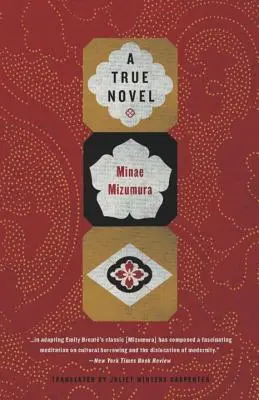
- Название:A True Novel
- Автор:
- Издательство:Other Press
- Жанр:
- Год:2013
- ISBN:нет данных
- Рейтинг книги:4 / 5. Голосов: 1
-
Избранное:Добавить в избранное
- Отзывы:
-
Ваша оценка:
A True Novel: краткое содержание, описание и аннотация
Предлагаем к чтению аннотацию, описание, краткое содержание или предисловие (зависит от того, что написал сам автор книги «A True Novel»). Если вы не нашли необходимую информацию о книге — напишите в комментариях, мы постараемся отыскать её.
A True Novel
The winner of Japan’s prestigious Yomiuri Literature Prize, Mizumura has written a beautiful novel, with love at its core, that reveals, above all, the power of storytelling.
A True Novel — читать онлайн бесплатно полную книгу (весь текст) целиком
Ниже представлен текст книги, разбитый по страницам. Система сохранения места последней прочитанной страницы, позволяет с удобством читать онлайн бесплатно книгу «A True Novel», без необходимости каждый раз заново искать на чём Вы остановились. Поставьте закладку, и сможете в любой момент перейти на страницу, на которой закончили чтение.
Интервал:
Закладка:
At the first beat of the drum that announced the arrival of the kamishibai man, a picture-board storyteller, Taro and Yoko would rush through the front gate and watch enviously as neighborhood kids flocked to buy a variety of traditional sweets—candies made like paper cutouts, say, or drooping lollipops—which emerged like magic from the box on his bicycle. Unlike the other children, Yoko was not given any pocket money as a rule, and buying snacks was forbidden anyway. The two looked on from behind the crowd as the man told his tale.
The big drum for the autumn festival had a deeper, throbbing sound you could feel down in your belly. Festival day was a special enough occasion for the children to get some pocket money from Mrs. Utagawa. At one time I used to take Yoko myself, but after she had Taro as a companion, I could send them off to the local shrine after they’d had supper and tidy up the kitchen at leisure before setting out to keep an eye on them. Taro, I noticed, preferred games of skill like fishing for water balloons or scooping out goldfish, while Yoko concentrated on buying and eating goodies. By the time I arrived she’d have already made the rounds of the stalls selling cotton candy, peppermint pipes, and sauce-dipped crackers and be ready to go again. As soon as she caught sight of me she’d hold her hand out and wheedle. “I’ll pay you back at New Year’s, so don’t tell Grandma, okay?” I would give her five yen—then ten yen—and another ten yen. If we happened to run into Taro’s brother, the one with the pimply face, out with his pals from middle school, Yoko would panic; but with me there, all they could do was leer. Usually a play would be in progress on a stage thrown together in the middle of the compound. The part of the woman was taken by a young male actor in a wig and white makeup, dressed in a flimsy kimono, who shrieked and ran away when the man playing the warrior brandished his sword. The two children gaped at it all, peering between grown-up spectators.
I remember strings of lanterns hung between the pines, a shiny gold portable shrine, a mound of sake casks wrapped in rush matting, and the shrill piping of sacred kagura music in the background. The shrine itself, hidden away among trees so tall that sunlight never reached the ground, was normally cool and quiet, but on that day it was transformed, buzzing with color and activity, crowded with people in bright summer yukata . The children loved it.
“Grandma, I want to wear a yukata !” Yoko begged when she got home, draping herself around her grandmother’s hunched back where she sat at her usual place, near the hibachi. The three Saegusa sisters were too modern to dress their children in old-fashioned cotton kimonos, even for festivals.
“Well, then,” said Mrs. Utagawa, “one of these days I’ll sew you one. Next summer we’ll go and buy the fabric together, shall we?”
LATE IN THE autumn I took the children out to gather chestnuts and acorns. For chestnuts, we went as far as a stand of trees some distance away and knocked the branches with sticks to dislodge the nuts. When we got back, we peeled them and then I cooked them with rice. We picked up acorns at the shrine, where they covered the ground, and then we strung them together to make necklaces, just the way I used to do when I was a little girl.
Around the time the wind turned cold, we raked up the leaves in the yard and made a bonfire.
Sasanquas, sasanquas , blooming on the path.
A bonfire, a bonfire, a fire of fallen leaves.
Shall we stop now to warm our frozen hands?
Yes, let’s stop and warm our hands.
Yoko warbled this for us proudly, having been chosen as one of twenty children in the entire school to sing in a radio program. Once she got started, she’d get carried away and sing one autumn song after another: “Rabbit, little rabbit, what makes you jump so high? It’s the harvest moon, so big and round up in the sky …” “Listen to the cricket sing, chinchiro chinchiro chinchiro-rin …” “In the light of an autumn sunset, in the shining golden light, see how mountain maples glow …” Out they came, song after song that she’d learned at school. In the meantime, the sweet potatoes buried at the bottom of the burning leaves cooked through, and we ate them together, peeling off the burned black skin and blowing on them to cool them.
At that same time of year, we trooped out to clean up clutter in the garden shed. Taro helped chop firewood as well. Since I was still far stronger than he was, I would stand a block of firewood on a tree stump and split it in two. His job was to carry the pieces to the shed and stack them neatly, though he sometimes picked up the hatchet and had a go himself. Mrs. Utagawa would be off at one side with a cloth wrapped around her head, grilling some mackerel pike on a portable stove for dinner, fanning life into the coals. Doing it indoors would have filled the house with the smell; so as not to offend Natsue, she always did it in the back yard.
Yoko, the only one with nothing to do, just stood behind her grandmother watching the thin plumes of white smoke rise high in the air.
When it turned cold, the kotatsu heater would make its appearance in Mrs. Utagawa’s room, and the two children would sit there with their feet tucked under the warm quilt cover, doing their homework. Once they were done, they went to play in the main room, so the stove that used to be lit there only in the evening was started earlier. Everything became a game, and they took turns throwing coal through the little slot in the stove. When they put in too much, the iron body would glow red, looking as if it might chug off like a locomotive.
AT SOME POINT every winter, Yoko would catch a cold and take to her bed with a fever and swollen lymph glands or tonsils. Much as Taro would have preferred staying there with her to going to school, he knew that Mrs. Utagawa would never approve, and so, reluctantly, he went. But as soon as school let out he was back. He’d draw up a chair to the head of her bed, and then it would start: “Need anything? Want me to put some more ice in the cold pack? Shall I change the water in your hot-water bottle?” Since Yoko was allowed to read manga only when she had a fever, he would head off to the book-rental shop by the station with some coins from Mrs. Utagawa and bring back several volumes of the sort that girls liked, then set off again to borrow new ones when she had finished them. Taro himself seemed to have a strong immune system: he never caught any of her colds.
Yoko’s asthma scared him stiff. During a long spasm her face would turn red, while his turned white. When her spasms were especially bad, he would sometimes stand and knock his head against the wall. One day when the spasms had finally calmed down and she was asleep, he picked a time when he must have thought no one was watching and went up to her pillow. I saw him put his head next to hers and whisper in her ear, “Yoko, don’t die. Please don’t die, okay?” He kept his face pressed into her pillow for a while without moving, as if he were breathing in the smell of her neck. I had never seen anything so touching. Having found a friend for the first time in his life, his heart must have actually hurt from the pressure of such love.
Another time, I went into the bedroom and found Yoko crying, her face buried in her pillow.
“Just go away and leave me alone!”
Taro was standing blankly by her side, holding a comb. His endless offers to do this or that sometimes got on her nerves.
Actually, they quarreled frequently. Not wanting her grandmother to know, Yoko would go outside by the kitchen door and sob convulsively, red-faced, smothering the sound. Taro’s affection for her was so intense it must have been a strain on her. When it made her cry, he would sulk, or apologize reluctantly, or cry like a girl himself. It varied.
Читать дальшеИнтервал:
Закладка:
Похожие книги на «A True Novel»
Представляем Вашему вниманию похожие книги на «A True Novel» списком для выбора. Мы отобрали схожую по названию и смыслу литературу в надежде предоставить читателям больше вариантов отыскать новые, интересные, ещё непрочитанные произведения.












Обсуждение, отзывы о книге «A True Novel» и просто собственные мнения читателей. Оставьте ваши комментарии, напишите, что Вы думаете о произведении, его смысле или главных героях. Укажите что конкретно понравилось, а что нет, и почему Вы так считаете.