Minae Mizumura - A True Novel
Здесь есть возможность читать онлайн «Minae Mizumura - A True Novel» весь текст электронной книги совершенно бесплатно (целиком полную версию без сокращений). В некоторых случаях можно слушать аудио, скачать через торрент в формате fb2 и присутствует краткое содержание. Год выпуска: 2013, Издательство: Other Press, Жанр: Современная проза, на английском языке. Описание произведения, (предисловие) а так же отзывы посетителей доступны на портале библиотеки ЛибКат.
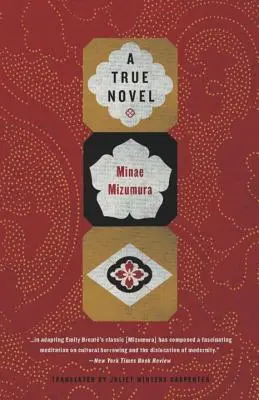
- Название:A True Novel
- Автор:
- Издательство:Other Press
- Жанр:
- Год:2013
- ISBN:нет данных
- Рейтинг книги:4 / 5. Голосов: 1
-
Избранное:Добавить в избранное
- Отзывы:
-
Ваша оценка:
A True Novel: краткое содержание, описание и аннотация
Предлагаем к чтению аннотацию, описание, краткое содержание или предисловие (зависит от того, что написал сам автор книги «A True Novel»). Если вы не нашли необходимую информацию о книге — напишите в комментариях, мы постараемся отыскать её.
A True Novel
The winner of Japan’s prestigious Yomiuri Literature Prize, Mizumura has written a beautiful novel, with love at its core, that reveals, above all, the power of storytelling.
A True Novel — читать онлайн бесплатно полную книгу (весь текст) целиком
Ниже представлен текст книги, разбитый по страницам. Система сохранения места последней прочитанной страницы, позволяет с удобством читать онлайн бесплатно книгу «A True Novel», без необходимости каждый раз заново искать на чём Вы остановились. Поставьте закладку, и сможете в любой момент перейти на страницу, на которой закончили чтение.
Интервал:
Закладка:
Other rooms went mostly unused.
The house was quite wide from west to east. In the western half were the Japanese-style tatami rooms, including the sunny eight-mat one with south-facing windows for Mrs. Utagawa and one for the children. These served as sitting rooms during the day and became bedrooms in the evening, with futons and quilts brought out from the closet. The darker, north-facing rooms included the maid’s room, a bathroom, and a separate toilet. In contrast, the eastern half was all in the Western style, with wooden floors. On the first story was what the family called the main room, which included the kitchen, a dining area, living area, and, at the far end, a playroom with an upright piano, all open to each other. Guests hardly ever visited, so there was no formal place for entertaining. On the second floor were Takero’s study and the master bedroom. The latter had a double bed and a three-way mirror, both familiar to me from the American lieutenant’s house at the base, but fairly uncommon in Japanese houses at that time. Though the house had some tatami rooms, the place looked basically modern, with only a few pieces of old furniture from the Utagawa Clinic remaining: the late Dr. Utagawa’s big desk and a heavy bookcase in the study; a paulownia chest for kimonos, a low Japanese desk, and a full-length mirror in old Mrs. Utagawa’s room. Also in Mrs. Utagawa’s tokonoma alcove were heirlooms the family had refused to part with—hanging scrolls and incense burners.
Living in a very small house in the yard visible from the north-facing windows was another servant, an old man named Roku who did most of the heavy work. Before then he had hauled a rickshaw for the Kichijoji clinic—he was the man who brought Taro into the picture later on. But at the time, I had no idea who he was and simply thought of him as the nice old man who was always there to help. He did chores such as splitting firewood, weeding the garden, and putting shelves up in the house.
In the end, even Mrs. Utagawa’s headaches turned out to be only sporadic, so the old lady could have managed the household alone. They must have hired a maid because Natsue felt uncomfortable about leaving her mother-in-law—a woman who, when her husband was alive, had maids of her own—to run the place by herself. She was also probably concerned about what other people would think. And then there were the summers in Karuizawa.
I HAD NO way of knowing before my first full year at the Utagawas’ that the summer vacation was the busiest time for maids. I had assumed I would remain in Tokyo to take care of Takero when the children’s schools closed for the summer. Instead, I was sent off, with all sorts of luggage, to Karuizawa.
They needed as many hands as possible.
The first thing we did was clean the big old house. Though they had a local workman who looked after many of the summer homes in the area, he only did a rough job of cleaning, not enough to really make it livable. The cupboards were full of nasty dead bugs with ballooned-out bodies and long antennae and legs. Mildew covered the furniture and the curtains. Futons and quilts had absorbed a year’s worth of humidity and were cold and clammy to the touch. Once we had cleaned up the inside of the house, we moved on to the garden. Local gardeners would already have given it the once-over, but each year there were new things that needed attention. And there was also the unpacking—and, after that, the first shopping for what would be a big crowd. Work kept the three Saegusa sisters busy when they were in Tokyo, so they had their hearts set on making the most of summer—without the bother of looking after their husbands—and enjoying a chance to relive the “good old days” in Karuizawa. They would use the best china, even at breakfast; a vase of flowers was a must at every meal as well, plus music coming from the drawing room. Because they no longer had a full staff, their desire for the same standards they enjoyed before the war made their time there hectic sometimes even for themselves—which I couldn’t help finding funny.
The women did not go in for sports much, apart from joining Harue’s husband sometimes for a round of golf. What they spent most of the day doing was a combination of study, work, and play, though it would be hard to say where one left off and the other began.
Harue and Natsue would pull out copies of fashion magazines that they hadn’t had time to read in Tokyo—“These foreign women are so gorgeous! It’s maddening”—and pore over the captions and articles, with French and English dictionaries in hand. In a corner of the parlor was a mannequin, which was usually covered with a velvet cape. This they would drape with various fabrics. When they had to, they made trips back to Tokyo; and sometimes they had a young woman who worked for them in the city come up to Karuizawa—the same one who was at the children’s table when I first visited Seijo.
Fuyue spent her days practicing softly on an upright piano in another corner of the parlor. “What a rotten tone!” she always complained about the piano, which was slowly falling to bits from the humidity. She also went for German lessons at the home of a Swiss lady in the neighborhood because Grampy had promised to pay for her to go to Germany to continue studying music.
Her sisters, in the meantime, gave her lots to do.
“None of my classmates has to do as much housework as me.” Fuyue meant her former classmates at Tokyo University of the Arts.
“Really?”
“Yes! Other musicians are treated like royalty by their families.”
“Really?”
“It’s true. Look how dry my skin is. Just look at my hands!”
“Poor child. But you know what they say—the more you suffer when young, the better off you are when old.”
“But I’m not young anymore!”
Fuyue was younger than her sisters by several years. She was also the only one who’d been to college—she graduated after the war—so she kept a certain distance from the others. She was the most modern of them. In the long years I spent with the three sisters, she was the one I became closest to.
Grampy still worked in those days, so he got to Karuizawa only intermittently and unpredictably. He was so wired with energy that, even in Karuizawa, he would get up before anyone else and grind his own coffee to make his morning brew. He would then take his easel out to the porch or into the yard, wearing his customary beret on that shiny black hair of his. He had dozens of other interests—fishing, hiking, horseback riding, gardening, photography—but painting was his passion. As a student, he had wanted to become an artist; instead, he was an avid Sunday painter. He also moved around constantly, as that kind of energetic person does. When I thought he was standing in front of his easel, the next moment I’d see that no, he was working in the garden, the beret still on his head. By the time I noticed that he’d gone out, he was already back from his walk to a stream somewhere, after picking some watercress. “Fumi, could you boil this tonight?” he’d say.
Unlike Grampy, Grammy woke up late, and though she always took pains to look elegant, she wouldn’t join in any activities or have a plan for the day, except perhaps to lie on a sofa with a novel or halfheartedly play the piano. She even let her daughters plan all the meals. If I had to specify her daily routine, it might be to take Chizu on a leisurely stroll down the main street in Karuizawa, buying unnecessary things.
Grampy’s favorite daughter—also the one who happened to look most like him, and who was most like him in character—was Harue. Grammy depended on Harue but was a little afraid of her too; she seemed to be most comfortable dealing with Natsue, who was the most like her of the three. Yet Natsue herself had some Grampy in her; she had his energy, so she was quite a bit more active than Grammy.
Читать дальшеИнтервал:
Закладка:
Похожие книги на «A True Novel»
Представляем Вашему вниманию похожие книги на «A True Novel» списком для выбора. Мы отобрали схожую по названию и смыслу литературу в надежде предоставить читателям больше вариантов отыскать новые, интересные, ещё непрочитанные произведения.












Обсуждение, отзывы о книге «A True Novel» и просто собственные мнения читателей. Оставьте ваши комментарии, напишите, что Вы думаете о произведении, его смысле или главных героях. Укажите что конкретно понравилось, а что нет, и почему Вы так считаете.