Minae Mizumura - A True Novel
Здесь есть возможность читать онлайн «Minae Mizumura - A True Novel» весь текст электронной книги совершенно бесплатно (целиком полную версию без сокращений). В некоторых случаях можно слушать аудио, скачать через торрент в формате fb2 и присутствует краткое содержание. Год выпуска: 2013, Издательство: Other Press, Жанр: Современная проза, на английском языке. Описание произведения, (предисловие) а так же отзывы посетителей доступны на портале библиотеки ЛибКат.
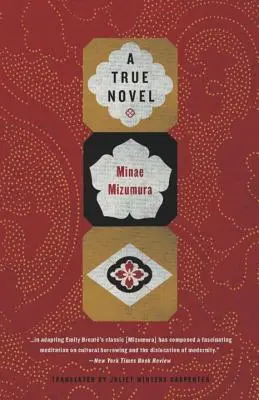
- Название:A True Novel
- Автор:
- Издательство:Other Press
- Жанр:
- Год:2013
- ISBN:нет данных
- Рейтинг книги:4 / 5. Голосов: 1
-
Избранное:Добавить в избранное
- Отзывы:
-
Ваша оценка:
A True Novel: краткое содержание, описание и аннотация
Предлагаем к чтению аннотацию, описание, краткое содержание или предисловие (зависит от того, что написал сам автор книги «A True Novel»). Если вы не нашли необходимую информацию о книге — напишите в комментариях, мы постараемся отыскать её.
A True Novel
The winner of Japan’s prestigious Yomiuri Literature Prize, Mizumura has written a beautiful novel, with love at its core, that reveals, above all, the power of storytelling.
A True Novel — читать онлайн бесплатно полную книгу (весь текст) целиком
Ниже представлен текст книги, разбитый по страницам. Система сохранения места последней прочитанной страницы, позволяет с удобством читать онлайн бесплатно книгу «A True Novel», без необходимости каждый раз заново искать на чём Вы остановились. Поставьте закладку, и сможете в любой момент перейти на страницу, на которой закончили чтение.
Интервал:
Закладка:
When the three sisters left the station and came out onto the street, Harue finally spoke: “A good thing it was the three of us who saw that spectacle,” she started off. “What if it had been Miki or her friends, or her friends’ mothers?” She dragged Miki into it in order to find fault with Yoko. Miki probably wouldn’t have appreciated it, but certainly that was where Yoko was most vulnerable, as the mother of an adolescent daughter. Taro and Yoko might have been together that day in the firm belief that Miki would go straight home from school and the Saegusa sisters would have long since returned home from shopping, but that didn’t make Yoko’s behavior any less outrageous. Natsue chimed in, “That’s right, that’s absolutely true.” But Natsue was blind to other people’s happiness, blind even to the fact that happiness like theirs had never come her way. She surely had no idea what lay behind her sister’s outrage. Harue’s mind seemed to be on something else while she went on complaining. Then she stopped and, tapping her cane, made her way home, preoccupied.
Perhaps she had already made up her mind then. Or did it happen later, when she saw Yoko at the party looking so carefree? Fuyue said she never dreamed that Harue would go so far as to haul Masayuki into it. It happened after dinner when the presents had been opened and people were scattered about the dining room and parlor having cake. All at once Fuyue noticed that Harue wasn’t there. Feeling a sudden foreboding, she searched for Masayuki, but he too was missing. Usually she avoided confronting her sister Harue, but that day, she was ready to stop her if she intended to say something to Masayuki. But she was too late. When she opened the door and hurried out into the hallway, Masayuki was just coming back with a look on his face she had never seen before. He walked past her without registering her presence, took his coat from the closet, and disappeared.
“Harue, you said something completely inappropriate, didn’t you?”
As she came along tapping her cane, Harue answered this accusation excitedly, her face flushed red. “I most certainly did not!”
“Oh, yes, you did. It is none of our business. We have no right to say anything.”
“I have a responsibility to Yoko, as her aunt. She needs to pay attention to what people will think. Her behavior is way out of bounds. Masayuki is a fool to put up with it.” Harue herself ordinarily scoffed at conventional notions of common sense or propriety, but that must have been the tack she took, keeping a close watch on Masayuki’s expression as she described much too vividly the scene she had just witnessed at the station.
“Think of poor Miki,” she added defensively to Fuyue.
“You had absolutely no right. Miki? This isn’t about her.”
What was done was done. There was no point in escalating the confrontation, so Fuyue showed her displeasure but held her tongue.
Sometimes the devil gets into people. That must be what happened to Masayuki then. The poison in what he’d heard must have spread inside him. Ten years had passed since that night he was so terrified that Yoko would leave him, and perhaps his guard was down. Just what he said to her, I don’t know, but whatever words he may have used, when Yoko came back from the Saegusas that night, he confronted her. For all I know he just told her to act a little more like a normal mother for Miki’s sake—the sort of thing that would seem only natural to an outsider.
“I never should have said it.”
His eyes were fixed on the expressway ahead. The car windows showed a dark, wintry sky with not a speck of blue. I glanced at his profile. His eyes were looking far into the distance.
This much was evident: whatever he had said, his comment made it instantly and painfully clear to Yoko that he had stumbled—fatally.
He went on: “ ‘How can you say something like that?’ she said to me in shock. ‘If you say things like that, it’s all over.’ That’s what she said.”
He wore a faint grimace, giving his face the same look of chilly loneliness that was in Noriyuki’s memorial photograph. The contrast with his usual geniality, something he had inherited from both sides of the family, strengthened the impression of coldness.
I could picture Yoko retreating a step, her eyes wide open. How can you say that, Masayuki? How can you say something like that? If you say things like that, it’s all over.
“I should have apologized right then.” He closed his mouth, then opened it again. “But I didn’t. I said, ‘If it’s over, then fine.’ I said it without thinking.”
“And then?”
“That was that. She ran upstairs to her bedroom.”
I had heard before that the couple had separate bedrooms, his on the first floor and hers on the second. Yoko still had trouble sleeping, and Masayuki still read to her at bedtime, but she also had trouble staying asleep. When she woke up in the night she would read for a while before taking a sedative toward dawn and going back to sleep. And so she had the second-floor bedroom to herself.
He should have gone after her and apologized, but he didn’t. For some reason, at the time he thought if it was over, then fine, let it be over. That might be the best thing for her, he’d even thought. Masayuki said all this in a detached tone.
“And the next day I went to work.”
I heard him out in silence. I personally didn’t think he had said anything wrong. “If it’s over, then fine.” If he said that, it was perfectly understandable. And yet deep down I understood the shock Yoko felt.
In any case, with Harue’s poison still circulating inside him, the spell Yoko had cast on him for ten years seemed to wear off, and he saw himself as he appeared in other people’s eyes. All the things he had willingly gone along with for her sake then revisited him in a new light, mocking his lenience. A change in perspective turns everything upside down. Where Taro’s Windrush project on Long Island had seemed to offer him the chance of a lifetime as an architect, perhaps he, the odd man out, had only been given a toy with which to occupy himself. Perhaps there had been an element of pity for his firm, which was short of clients. And the gratitude he had felt toward Taro for buying the land in Karuizawa was just one more sign of what a fool he’d been. Others might have seen it as an unsubtle reminder of his, Masayuki’s, own impotence. Inevitably his thoughts began to run along those lines. Once he started applying an ordinary yardstick to his predicament, nothing made sense anymore, so it was no wonder his mind began a downward spiral.
The next morning Yoko did not get up, but this wasn’t unusual for her after a sleepless night. Masayuki made breakfast for their daughter, who went off to school suspecting nothing. He came to his senses in the middle of a faculty meeting at the university. Suddenly he felt queasy, his fingers and toes turned to ice, and he broke out in a cold sweat. “Are you okay, Shigemitsu?” his colleagues said, and he took the chance to excuse himself and go home. By then Yoko was gone. He felt sure she was on her way to Narita Airport. He couldn’t quite bring himself to contact me and ask me to call New York in his stead, so he sat at home thinking she might call from the airport, and waited by the telephone until nightfall. Fortunately that had been Miki’s last day of school before winter vacation, and after coming home she had gone off on a short skiing trip with her cousins and friends, still unaware that anything was amiss between her parents.
WE ARRIVED AT the Oiwake cottage just past noon. Being so small it took less than a minute to search. I went outside, rustling dry leaves as I walked, and checked the shed, which was of course empty. The bunk bed where Taro had slept long ago was surrounded by crisscrossing spiderwebs, making me feel all the more convinced that Yoko had gone to New York. Beside me, Masayuki seemed to feel the same way, staring tight-lipped at this empty place.
Читать дальшеИнтервал:
Закладка:
Похожие книги на «A True Novel»
Представляем Вашему вниманию похожие книги на «A True Novel» списком для выбора. Мы отобрали схожую по названию и смыслу литературу в надежде предоставить читателям больше вариантов отыскать новые, интересные, ещё непрочитанные произведения.











Обсуждение, отзывы о книге «A True Novel» и просто собственные мнения читателей. Оставьте ваши комментарии, напишите, что Вы думаете о произведении, его смысле или главных героях. Укажите что конкретно понравилось, а что нет, и почему Вы так считаете.