Christian Bök - Eunoia
Здесь есть возможность читать онлайн «Christian Bök - Eunoia» весь текст электронной книги совершенно бесплатно (целиком полную версию без сокращений). В некоторых случаях можно слушать аудио, скачать через торрент в формате fb2 и присутствует краткое содержание. Жанр: Современная проза, Поэзия, на английском языке. Описание произведения, (предисловие) а так же отзывы посетителей доступны на портале библиотеки ЛибКат.
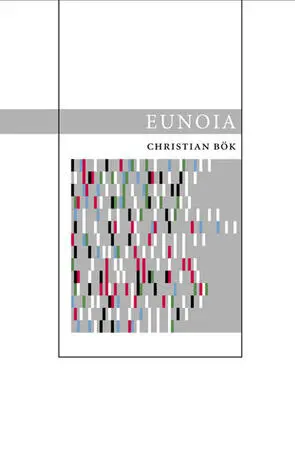
- Название:Eunoia
- Автор:
- Жанр:
- Год:неизвестен
- ISBN:нет данных
- Рейтинг книги:3 / 5. Голосов: 1
-
Избранное:Добавить в избранное
- Отзывы:
-
Ваша оценка:
Eunoia: краткое содержание, описание и аннотация
Предлагаем к чтению аннотацию, описание, краткое содержание или предисловие (зависит от того, что написал сам автор книги «Eunoia»). Если вы не нашли необходимую информацию о книге — напишите в комментариях, мы постараемся отыскать её.
Eunoia — читать онлайн бесплатно полную книгу (весь текст) целиком
Ниже представлен текст книги, разбитый по страницам. Система сохранения места последней прочитанной страницы, позволяет с удобством читать онлайн бесплатно книгу «Eunoia», без необходимости каждый раз заново искать на чём Вы остановились. Поставьте закладку, и сможете в любой момент перейти на страницу, на которой закончили чтение.
Интервал:
Закладка:
When French jewellers embezzle De Beers, the stern execs there never detect the embezzlement; hence, the theft seems perfect. When the embezzlers resell these green gems ( les gemmes vertes ), the lensmen get themselves Fresnel lenses, then recheck the embezzled jewels; next the fences fence them. The resellers even peddle les perles de mer (eleven chests — seventeen pence per pellet). The mercers sell the well-kempt gents les vêtements de Sèvres : felt berets, kemp fezzes, tweed spencers, crewneck vests, serge breeches, cheverel belts. The well-dressed trendsetters set the trends.
When French gemsellers get served les crevettes , these well-heeled gents expect les entrées très excellentes : penne, green peppers, fennel, spelt, fresh cheeses, rennet. When the Frenchmen get fed stewed greens (beets, leeks, herbs), these trenchermen chew the beef stew. The peelers peel twelve eggs; then the chefs pestle the peeled eggshells; next, the blenders blend les entremets éphémères; then the freezers freeze les belles-Hélènes dégelées . The celebs get served crêpe de chèvre et crème de menthe (never pretzels, never seltzers). The sweeteners sweeten les crèmes renversées .
When French jetsetters hedge even bets, the lenders pledge these gents decent fees (three percent); then the tellers tender the checks; nevertheless, the spenders, when lent these shekels, spend, spend, spend (the spree never ends); hence, the feckless welshers never settle the debts. The expenses get deferred. The deferments get extended; nevertheless, the jerks renege; hence, the clerks send letters wherever these lendees dwell (Kent, Essex, Exeter, Bern, Ghent, Bergen — even Chester, even Dresden). The shredders shred the telexes (sent express); then the temps reshelve the emended ledgers.
When French embezzlers flee the scene, these perps rev the Mercedes-Benz, then speed ( beep, beep ). When the speeders veer, then swerve, Edsels, Vettes, even jeeps, get wrecked. When newsmen see the fender-bender, the news reps pre-empt the newsdesk, then retell the event; next, the newsreels present the weekend news. The Chechens secede. The Serbs get shelled. The Jews elect Knesset members, then resettle the Hebrew settlements. The elected Feds get re-elected — then we see the needless segments where the emcees peddle new detergents, new fresheners, even new repellents.
When freshmen get tested next semester, the nerds, the geeks (even the dweebs), reference dense exegeses ( les pensées des esthètes ): Hegel, Engels; Frege, Brecht — even Schlegel (hence, these teens get the best degrees). When presses present the next bestseller (Perec’s Les Revenentes ), the pressmen kern the lettered elements, then emend the text. The meddlers meddle. The spell-checker checks the lexemes, then respells them; hence, we see selected references get deleted (nevertheless, Perec’s creed gets expressed; nevertheless, Perec’s tenet gets preserved): E SERVEM LEX EST — c’est le règlement .
THE END
THE NEW ENNUI
‘The tedium is the message.’ — Darren Wershler-Henry
‘Eunoia’ is the shortest word in English to contain all five vowels, and the word quite literally means ‘beautiful thinking’. Eunoia is a univocal lipogram, in which each chapter restricts itself to the use of a single vowel. Eunoia is directly inspired by the exploits of Oulipo ( l’Ouvroir de Littérature Potentielle ) — the avant-garde coterie renowned for its literary experimentation with extreme formalistic constraints. The text makes a Sisyphean spectacle of its labour, wilfully crippling its language in order to show that, even under such improbable conditions of duress, language can still express an uncanny, if not sublime, thought.
Eunoia abides by many subsidiary rules. All chapters must allude to the art of writing. All chapters must describe a culinary banquet, a prurient debauch, a pastoral tableau and a nautical voyage. All sentences must accent internal rhyme through the use of syntactical parallelism. The text must exhaust the lexicon for each vowel, citing at least 98 % of the available repertoire (although a few words do go unused, despite efforts to include them: parallax, belvedere, gingivitis, monochord and tumulus ). The text must minimize repetition of substantive vocabulary (so that, ideally, no word appears more than once). The letter Y is suppressed.
‘Oiseau’ (the French word for ‘bird’) is the shortest word in French to contain all five vowels. Oiseau pays tribute to the French precedents for Eunoia . ‘And Sometimes’ itemizes every English word that contains only consonants. ‘Vowels’ is an anagrammatic text, permuting every letter in the title. ‘Voile’ is a homophonic translation of the sonnet ‘Voyelle’ by Arthur Rimbaud. ‘W’ is an elegy for the favourite letter of Georges Perec, who (like bpNichol, an idolater of the letter H) admires one of the few consonants that can make a vowel sound. ‘Emended Excess’ exhausts vocabulary unsuitable for use in the retelling of the Iliad.
Eunoia has required seven years of daily perseverance for its consummation. I greatly appreciate the patient encouragement offered by friends who have awaited the outcome of this experiment: Bruce Andrews, Derek Beaulieu, Charles Bernstein, Stan Bevington, Stephen Cain, Craig Dworkin, Kenneth Goldsmith, Neil Hennessy, Carl Johnston, Karen Mac Cormack, Steve McCaffery, Marjorie Perloff, Rick/Simon, Brian Kim Stefans, Alana Wilcox and Suzanne Zelazo. Special thanks to Darren Wershler-Henry (who drove the car while I read Perec), and special thanks to Natalee Caple (who let me work while she slept).
Excerpts from this book have appeared over the years in the following publications: Arras, Big Allis, Blood and Aphorisms (B+A), Open Letter, Queen Street Quarterly, Sulfur and Blues and True Concussions: Six New Toronto Poets (House of Anansi Press, 1996).
Financial assistance has been kindly provided over the years by the Canada Council for the Arts, the Ontario Arts Council and the Toronto Arts Council.
The epigraph by William Hayley owes its presence in this book to the gracious courtesy of Steve McCaffery.
Интервал:
Закладка:
Похожие книги на «Eunoia»
Представляем Вашему вниманию похожие книги на «Eunoia» списком для выбора. Мы отобрали схожую по названию и смыслу литературу в надежде предоставить читателям больше вариантов отыскать новые, интересные, ещё непрочитанные произведения.










Обсуждение, отзывы о книге «Eunoia» и просто собственные мнения читателей. Оставьте ваши комментарии, напишите, что Вы думаете о произведении, его смысле или главных героях. Укажите что конкретно понравилось, а что нет, и почему Вы так считаете.