Keri Hulme - The Bone People
Здесь есть возможность читать онлайн «Keri Hulme - The Bone People» весь текст электронной книги совершенно бесплатно (целиком полную версию без сокращений). В некоторых случаях можно слушать аудио, скачать через торрент в формате fb2 и присутствует краткое содержание. Жанр: Современная проза, на английском языке. Описание произведения, (предисловие) а так же отзывы посетителей доступны на портале библиотеки ЛибКат.
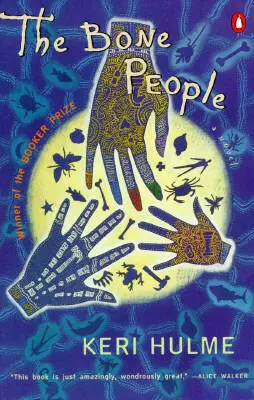
- Название:The Bone People
- Автор:
- Жанр:
- Год:неизвестен
- ISBN:нет данных
- Рейтинг книги:4 / 5. Голосов: 1
-
Избранное:Добавить в избранное
- Отзывы:
-
Ваша оценка:
The Bone People: краткое содержание, описание и аннотация
Предлагаем к чтению аннотацию, описание, краткое содержание или предисловие (зависит от того, что написал сам автор книги «The Bone People»). Если вы не нашли необходимую информацию о книге — напишите в комментариях, мы постараемся отыскать её.
The Bone People — читать онлайн бесплатно полную книгу (весь текст) целиком
Ниже представлен текст книги, разбитый по страницам. Система сохранения места последней прочитанной страницы, позволяет с удобством читать онлайн бесплатно книгу «The Bone People», без необходимости каждый раз заново искать на чём Вы остановились. Поставьте закладку, и сможете в любой момент перейти на страницу, на которой закончили чтение.
Интервал:
Закладка:
He takes it wordlessly.
Centuries ago, people had laboured with great skill on this piece of unflawed jade. Piercing it to make the side decorations, working the stone-tipped drill with precision and painstaking care. Piercing it again, and smoothing the inside circle to an oily fineness. The kaumatua would have rubbed the finished ring against belly and nose to make that shine, for many months. A long time in the making, a long time worn.
"It hasn't got a name," she is saying. "It's a family piece though, and it is guaranteed pre-pakeha."
She touches it one last time.
"It was one of the bits I got when the family gave me the boot." She doesn't say it was the only piece she got of the family inheritance. AH the rest of her collection she has bought.
She had sneered at the hook when she first unwrapped it. Trite contemporary junk, she thought. Look at that diamond hard shine. She stashed it away with the rest of her pieces, still wrapped in the brown paper Joe had given it to her in. She hadn't noticed the engraving or the braid wrapped in a separate piece of tissue.
The second week she took it out, and looked it over with dry-eyed care. Much love from Hohepa and Haimona, aue… the braid is finely-done, five-ply and rounded. Joe has had the jeweller seal the ends with clips of silver, fitted permanently into the hole in the her matau. The braid is just long enough to go over her head-
She slips it on, and the green jewel lies by the cross and the medal and the pendant she always wears.
A hook to his jaw and a hook in his thumb and a kind of a hook in my heart, by God-
Each morning, when Joe goes in to Whangaroa to report according to the terms of his bail, Kerewin goes up to the library circle.
It is stripped entirely bare now, except for the forlorn shelves round the walls. The books are packed in cases, and stowed in the cellar. The swords are greased thickly and laid away on a cellar shelf. The chest of jade and the drawers of shells are locked and sealed into three tin trunks. (Joe had played with the shells like he was a child again. "Anana! I never knew fish made such shapes in all the world!" picking up one spiked and trimmed like a pagoda, while holding another as meticulously curved and sharp as a
carpenter's bit. "And look at these colours!" Lime green snail shell and flamingo pink conch and a cowrie as gold as the setting sun. "Where'd you get these, e hoa?" as he wraps them up carefully. "O, bought them. A lot in Japan, a lot here. They were supposed to be delight and inspiration. They turned out to be the same sort of detritus as everything else. Junk and mathoms and useless geegaws the lot of them, shells, rings, goblets, books and swords… and my pounamu… it was beautiful to have them at first, but all the magic has worn off. Little by little it has all gone away.")
There are three things in the library that were never there before: a packing-case; a cushion; and a lump of clay, swathed in wet cloth. And every morning, she kneels down, toes crossed behind her and chin tucked in, as though she were meditating.
But her fingers begin sliding over the clay, moulding. For the first time in a year, she knows exactly what she wants to make and how to make it.
Beads of clay flattened, beads of clay raised. Day by day, the three faces grow. The blunt blind features become definite, refined, awake.
Back of head to back of head to back of head: a tricephalos.
It's easy to model her own face, and that is finished first.
Joe is there each day: she can pick the detail she requires and grow the clay face next morning to match it.
But remembering the child's face pains her. She has to strip away the vision of how it looked the last two times she saw it. The bloody swollen mask on the floor, broken nose and broken jaw. And the horrible indentation in the side of his skull where he had been smashed against the door frame. Or neatened, whitened, bandaged with care, but looking lifeless. O, his eyes had opened several times, but the seacolour had gone and he didn't see her. He didn't see anyone or anything. His eyes look dead.
(Elizabeth Lachlan said, "We don't know how much damage there is. All we've done is remove the clot and repair the bone. He may not be able to see. It's almost certain he won't be able to hear, and it's likely he has suffered irreversible harm as far as his mental processes are concerned." You mean mind, lady? She had stood impassive, saying nothing. The doctor had shrugged. "But we don't know. We won't know until we've had him over in one of the major hospitals for a head scan. And we won't know fully even then until he's recovered enough for us to ascertain in other ways the sum total of his injuries. If he recovers," she had said finally, "if he ever recovers.")
She concentrates on the way the child was at Moerangi, at the Hamdon pub, out in the boat. By the bonfires, when he sang for them. Peaceful in the firelit bach.
Gradually, his unbroken face is moulded by her hands, small and angular and smiling again.
You were a strange child, Simon gargoyle, an unknown quantity in so many ways. I wonder what you would have turned out like, had you been left to grow up whole?
Smoothing the narrow double point of the cleft chin.
Twisted, with a streak of meanness and sadism in you, as Joe was so plainly afraid? A musician, full of zany fire? The dancer, the sweet singer, the listener to the silence of God on deserted beaches — ae, you had music in you. Ordinary sinner, extraordinary sinner, or some new kind of saint? All too late now-
The clay lips smile as well as the real ones did.
At the end of the fourth week, she has finished it. She lets it dry slowly, so it doesn't crack. She has in mind a wild way to fire it.
Joe saw it once.
His curiosity bettered his sense of privacy, and he turned back the cloth on the draped hump.
The clay faces are still dark and damp.
Simon smiles at him.
Kerewin is gazing off into infinity.
And he has a look of wondering attentiveness, as though some great good news is about to be broken to him.
He circles the triple head again and again, staring at each lifesize face. The hair of their heads is entwined at the top in a series of spirals. Simon's hair curves back from his neck to link Kerewin and Joe to him. Kerewin wears the greenstone hook, he, his Moerangi pendant.
Round and round, and with each circumambulation, the faces become more alive.
Aue! She saw us as a whole, as a set. And soon we'll be parted forever. (Not forever, not forever, not forever.)
He covers it with trembling hands.
The next time he was in the library, when they came up the spiral to start knocking the Tower down, the tricephalos had gone.
His case was stood down: he was remanded on the same terms as when he'd been charged for the next two weeks.
He said in the afternoon, "The lawyer says it's because they're waiting to see what happens. With him."
It's the first time the child has been referred to, even obliquely.
"In case it's murder," he adds shakily.
She grimaced.
"Elizabeth doesn't think it will, will come to that. She went on the plane with him on Friday. She said they didn't learn anything new from the scan. She said it's just a matter of waiting." He shuddered. "E hoa, I don't mind what they do to me, but I hate this waiting."
"So do I," she said sombrely, and she wasn't referring only to the coming trial, or the child's coma. Each day, the pain and pressure in her gut has grown more intense until now it nags like toothache. She dreads the moment when the knife will strike again.
Everything has been packed away now. The livingroom circle is the only room in use, and it is spartanly furnished. Two stretchers for sleeping on (Piri brought them one morning: he said very little, but they joined in hongi for the first time); some cooking gear; one sheepskin mat in front of the fire; Kerewin's black guitar on the wall.
Читать дальшеИнтервал:
Закладка:
Похожие книги на «The Bone People»
Представляем Вашему вниманию похожие книги на «The Bone People» списком для выбора. Мы отобрали схожую по названию и смыслу литературу в надежде предоставить читателям больше вариантов отыскать новые, интересные, ещё непрочитанные произведения.











Обсуждение, отзывы о книге «The Bone People» и просто собственные мнения читателей. Оставьте ваши комментарии, напишите, что Вы думаете о произведении, его смысле или главных героях. Укажите что конкретно понравилось, а что нет, и почему Вы так считаете.