Lydia Davis - The Collected Stories of Lydia Davis
Здесь есть возможность читать онлайн «Lydia Davis - The Collected Stories of Lydia Davis» весь текст электронной книги совершенно бесплатно (целиком полную версию без сокращений). В некоторых случаях можно слушать аудио, скачать через торрент в формате fb2 и присутствует краткое содержание. Год выпуска: 2009, Издательство: Farrar, Straus and Giroux, Жанр: Современная проза, на английском языке. Описание произведения, (предисловие) а так же отзывы посетителей доступны на портале библиотеки ЛибКат.
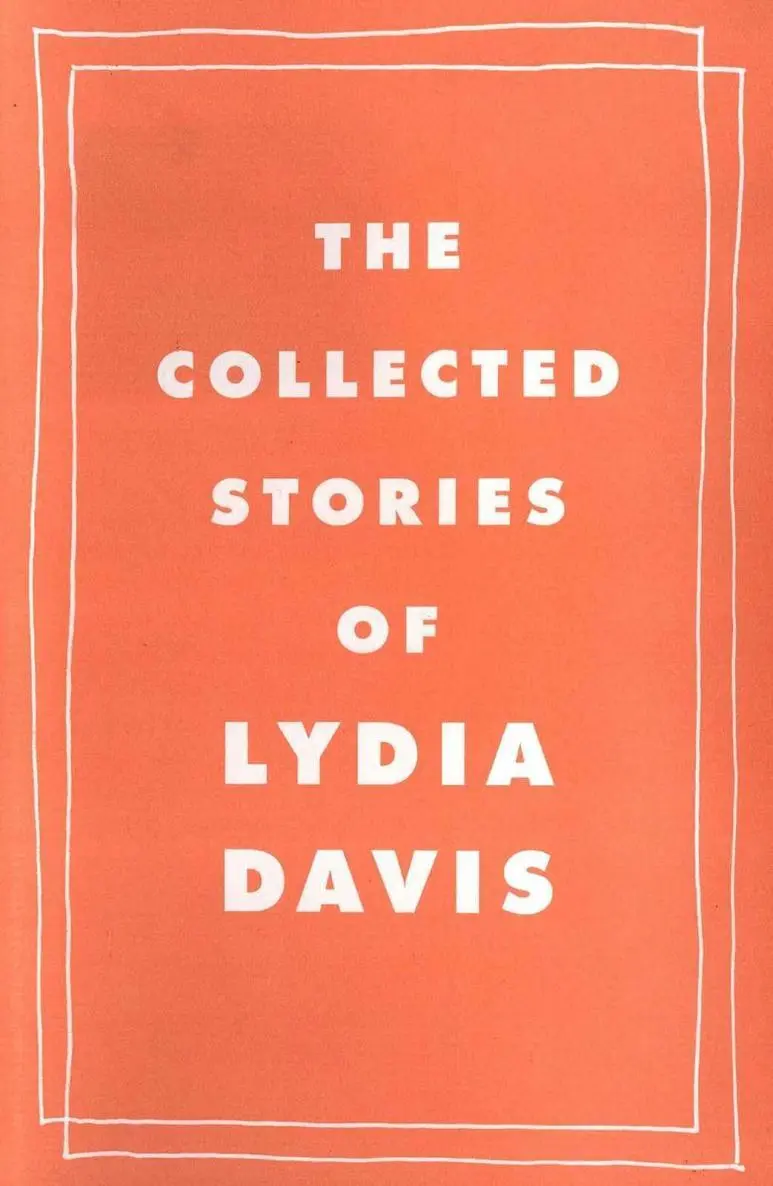
- Название:The Collected Stories of Lydia Davis
- Автор:
- Издательство:Farrar, Straus and Giroux
- Жанр:
- Год:2009
- ISBN:нет данных
- Рейтинг книги:4 / 5. Голосов: 2
-
Избранное:Добавить в избранное
- Отзывы:
-
Ваша оценка:
The Collected Stories of Lydia Davis: краткое содержание, описание и аннотация
Предлагаем к чтению аннотацию, описание, краткое содержание или предисловие (зависит от того, что написал сам автор книги «The Collected Stories of Lydia Davis»). Если вы не нашли необходимую информацию о книге — напишите в комментариях, мы постараемся отыскать её.
The Collected Stories of Lydia Davis is an event in American letters.
The Collected Stories of Lydia Davis — читать онлайн бесплатно полную книгу (весь текст) целиком
Ниже представлен текст книги, разбитый по страницам. Система сохранения места последней прочитанной страницы, позволяет с удобством читать онлайн бесплатно книгу «The Collected Stories of Lydia Davis», без необходимости каждый раз заново искать на чём Вы остановились. Поставьте закладку, и сможете в любой момент перейти на страницу, на которой закончили чтение.
Интервал:
Закладка:
About the first week of December, Stephen, son of Mr. and Mrs. B. of 94 N. Rd., at the corner of Elm and Crescent Streets in the late afternoon, was struck very lightly by a car whose driver got out and looked the boy over and discussed it with him. Then each went on his way.
The parents of the boy would like to get in touch with the driver of the vehicle and are appealing to him to communicate with them.
There was no response to the notice.
After the Christmas holidays were over and his classmates returned to school, the children’s teacher, Miss F., assigned them to write Stephen a get-well letter. She then corrected the letters sparingly but precisely and sent them in a packet to Stephen. This was a school exercise clearly intended, if we may judge from the number of consistent features, to teach certain letter-writing skills.
The school in which these letters were written was a large brick building dedicated to use by classes from kindergarten through eighth grade and situated in the heart of a pleasant residential neighborhood. The streets were lined with mature shade trees, and the houses were for the most part roomy and comfortable but unostentatious middle-class homes with modest or, occasionally, generous yards planted with lawns and a variety of trees, shrubs, and flowers. Most of the children lived in the immediate neighborhood of the school and walked to and from school by themselves or with friends on sidewalks that were well maintained but here and there cracked or buckled by the roots of the large trees. Stephen himself, along with his neighbors Carol and Jonathan, lived one street over from the school. At the corner of the street on which the school stood was a small store owned and presided over by a matronly woman with a rather forbidding manner. It sold candy and a limited range of groceries, and was heavily patronized by the children after school. Across from this store, a street descended steeply toward a broad, shallow river in which the children were not allowed to swim because of effluents from the factories upstream. The school building was surrounded by a large asphalt playground lacking climbing or swinging equipment. The classrooms were well lighted, with natural daylight coming in through large windows.
The letters are written on lined exercise paper of two different sizes, most of them on the smaller, 7″ by 8½″, four of them on the larger, 8″ by 10½″. Although the paper is of a low grade and was manufactured nearly sixty years ago, it has remained supple and smooth in texture, and the letters are still clearly legible, some students in particular having borne down heavily to make very dark and distinct lines. They are all written in ink, though the ink varies, some blue and some black, some dark and some light, some lines thin and some thick.
The penmanship is for the most part quite good, i.e., the script slopes at a fairly consistent angle to the right, most letters touch the line, the letters are evenly spaced, the uprights of the letters do not touch the line above, etc., though the variations in thickness of line and formation of letters, as well as the wavering lines, betray the tremulous hands and labored efforts of the novice script users. Some of the capitals, however, are very elegantly formed, with a handsome flourish.
There are twenty-seven letters altogether, written by thirteen girls and fourteen boys. Twenty-four of the children’s letters are dated January 4, evidently the day on which the teacher set them to work as a group; two are dated January 5, and one January 8, implying that these children were absent on the day the exercise was initiated.
The letters all carry the same heading, obviously prescribed by the teacher, on three lines in the upper-right-hand corner: the name of the school; the town and state; and the date. They are ruled by hand in pencil down the left margin to provide a uniform indented guide for the beginning of each line, with the exception of the January 8 letter — this latecomer evidently was not given the instruction or did not hear it — and those written on the larger sheets of paper, which bear a printed rule down the left margin. The hand-ruled lines vary: some are thin and straight, others thick and slanted, and one trails off at an angle at the bottom, the pupil having evidently reached the end of his ruler before he reached the bottom of the page.
The salutations are all the same: “Dear Stephen.” The closings vary within a narrow range: “Your friend” (5 boys and 10 girls); “Your classmate” (3 girls and 2 boys); “Your pal” (4 boys); “Sincerely yours” (1 boy); “Love” (1 boy); and “Your pal of pals” (1 boy: this was Jonathan, a close friend). It should be noted that only the boys use the colloquial pal, whereas nearly twice as many girls as boys use the more formal friend.
The teacher has inked in corrections on some of the letters, in the darkest ink and a smaller hand. She has added commas where missing (most frequently after the salutation, “Dear Stephen,” the closing, e.g. “Your friend,” and between the name of the town and the state) and question marks where required. She has corrected some misspellings (“happey,” “sleding,” “throught,” “brouther,” and “We are mississ you very much”). In one case she has, surprisingly, had to correct the spelling of a child’s name, reducing “Arilene” to “Arlene.” She has supplied two missing words. Several errors have escaped her notice. On the whole, the letters are spelled and punctuated correctly; the teacher makes, on average, only about one correction per page, and most of these are punctuation corrections. Either the students have learned their lessons very well or, perhaps more likely, these are fair copies of rough, corrected drafts.
Twenty-two children sign their full names, first and last. One signs “Billy J.” and the remaining four sign only their first names. (For reasons of confidentiality, only the initial letter of the children’s last names will be retained here.)
Excluding the salutation and closing, the letters range in length from three to eight lines and from two to eight sentences. None of the boys’ letters is longer than five sentences, whereas, of the girls, one each has a letter containing six, seven, and eight sentences. Although the girls number one fewer than the boys, they are overall more communicative, contributing 84 lines versus the boys’ 66, and 61 sentences versus the boys’ 53.
Not all of the girls, however, are communicative. Two write letters containing only three lines and three sentences. One is the gloomy letter by Sally quoted below. The second brief letter, by Susan B., includes what may be an envious reference to a box of candy. In general, the length and content of the shortest letters appear to connote depressive or apathetic states of mind in their authors, while the content and length of the longest give the impression of being the products of the more cheerful and outgoing temperaments. Those in the midlength range variously express stout realism (broken branches and fallen snowmen), bland formulae (see Maureen’s letter below), or strong feelings and personality (Scott’s “I’d yank you out of bed”).
There is a tendency toward non sequiturs in the letters: one sentence often has little to do with the sentence that follows or precedes it (e.g., “The temperature keeps on changing. I can’t wait until you come back to school”).
Some letters, however, develop one idea with perfect cogency throughout: e.g., Sally’s grim letter, Scott’s enthusiastic, somewhat violent letter threatening to “yank” Stephen out of bed, and Alex’s informative letter about sledding, which names the location of the sledding and notes progress from last year—“We had some fun over at Hospital Hill. We went over a big bump and went flying through the air. This year I went on a higher part than I used to.”
Читать дальшеИнтервал:
Закладка:
Похожие книги на «The Collected Stories of Lydia Davis»
Представляем Вашему вниманию похожие книги на «The Collected Stories of Lydia Davis» списком для выбора. Мы отобрали схожую по названию и смыслу литературу в надежде предоставить читателям больше вариантов отыскать новые, интересные, ещё непрочитанные произведения.






Обсуждение, отзывы о книге «The Collected Stories of Lydia Davis» и просто собственные мнения читателей. Оставьте ваши комментарии, напишите, что Вы думаете о произведении, его смысле или главных героях. Укажите что конкретно понравилось, а что нет, и почему Вы так считаете.