Ruth Prawer Jhabvala - Heat and Dust
Здесь есть возможность читать онлайн «Ruth Prawer Jhabvala - Heat and Dust» весь текст электронной книги совершенно бесплатно (целиком полную версию без сокращений). В некоторых случаях можно слушать аудио, скачать через торрент в формате fb2 и присутствует краткое содержание. Год выпуска: 2011, Издательство: Hachette Digital, Жанр: Современная проза, на английском языке. Описание произведения, (предисловие) а так же отзывы посетителей доступны на портале библиотеки ЛибКат.
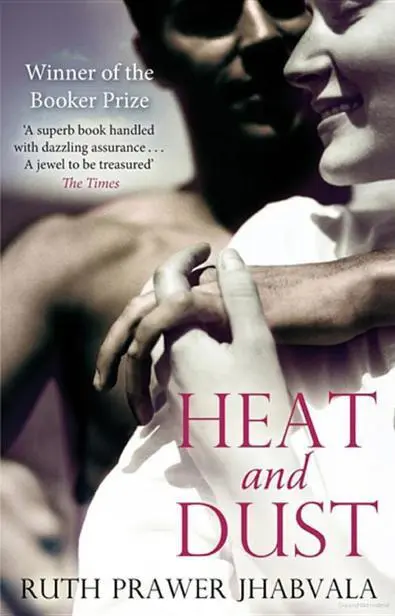
- Название:Heat and Dust
- Автор:
- Издательство:Hachette Digital
- Жанр:
- Год:2011
- ISBN:нет данных
- Рейтинг книги:3 / 5. Голосов: 1
-
Избранное:Добавить в избранное
- Отзывы:
-
Ваша оценка:
Heat and Dust: краткое содержание, описание и аннотация
Предлагаем к чтению аннотацию, описание, краткое содержание или предисловие (зависит от того, что написал сам автор книги «Heat and Dust»). Если вы не нашли необходимую информацию о книге — напишите в комментариях, мы постараемся отыскать её.
Set in colonial India during the 1920s, Heat and Dust tells the story of Olivia, a beautiful woman suffocated by the propriety and social constraints of her position as the wife of an important English civil servant. Longing for passion and independence, Olivia is drawn into the spell of the Nawab, a minor Indian prince deeply involved in gang raids and criminal plots. She is intrigued by the Nawab's charm and aggressive courtship, and soon begins to spend most of her days in his company. But then she becomes pregnant, and unsure of the child's paternity, she is faced with a wrenching dilemma. Her reaction to the crisis humiliates her husband and outrages the British community, breeding a scandal that lives in collective memory long after her death.
Heat and Dust — читать онлайн бесплатно полную книгу (весь текст) целиком
Ниже представлен текст книги, разбитый по страницам. Система сохранения места последней прочитанной страницы, позволяет с удобством читать онлайн бесплатно книгу «Heat and Dust», без необходимости каждый раз заново искать на чём Вы остановились. Поставьте закладку, и сможете в любой момент перейти на страницу, на которой закончили чтение.
Интервал:
Закладка:
But she found the Nawab more tender towards her than she had ever known him. He sent for her every day and made no secret in the Palace of the relations between them. He even began to take her into his own bedroom where she had not been before. She followed him wherever he called her and did whatever he wanted. She too made no secret of anything. She remembered how Harry had once told her "You don't say no to a person like him" and found it to be true.
The Nawab was delighted with Olivia's pregnancy. He often stroked her slender hips, her small flat unmarked abdomen and asked her "Really you will do this for me?" It seemed to strike him with wonder. "You are not afraid? Oh how brave you are!" His surprise made her laugh.
He never for a moment doubted that the child was his. The question simply did not arise for him so that Olivia — for whom it arose constantly — did not even dare to mention it. He became possessive about her and every evening, when it was time for the car to take her back, he did his best to delay her, even begging her to stay with him longer. She hated it when he did that, and then it would be she who would plead with him to let her go. And he said" All right, go" but was so downcast that every time it became more difficult for her. Yet she had no choice. She dreaded the hour when it would be time for her to leave and he would say" No. Stay. "
Once he said "No. Stay with me. Stay always." Then he said "It has to be, very soon now. You have to be here." He was very positive.
She knew that if she asked" And Douglas?" he would answer her with a dismissive gesture: because as far as he was concerned Douglas had already been dismissed.
One Sunday an English chaplain came from Ambala and held a service in the little church. Afterwards Olivia and Douglas lingered behind in the churchyard; they had not visited it since that day they had quarrelled there. It was very different now. Although the sun was still hot, the trees were no longer dusty but damp and dripping green. Showers of rain had also washed the dust off the graves so that the lettering stood out clearer now and tufts of green sprouted from the cracks in the stone.
Douglas, striding between the graves read out the by now familiar inscriptions. He was so engrossed that he went too quickly for Olivia and she had to call out to him. He looked back and saw her come towards him in her pale mauve dress with flounced skirt and matching parasol. He hurried towards her and embraced her right there among the graves. They walked on together arm in arm. He told her about all these young men buried here, and then about other young men, his own ancestors, lying in graveyards in other parts of India. "Great chaps," he called them. There was Edward Rivers who had been one of Henry Lawrence's band of young administrators in the Punjab; John Rivers, a famous pig-sticker, killed in a fall from his horse at Meerut; and a namesake, an earlier Douglas Rivers who had died in the Mutiny. He had been present at the storming of the Kashmere Gate in which the Hero of Delhi, John Nicholson, also fell. Douglas' ancestor died of his wounds just a day after Nicholson and was buried very near him in the Nicholson cemetery at Delhi. The way Douglas said that made Olivia tease him: "You sound as if you envy him. "
"Well," said Douglas, feeling a bit sheepish, "it's not a bad way to go… Better than to drink yourself to death," he said, attempting a lighter tone. "Some of them did that too. It can get very tedious if you're stuck out too long in a district all on your own. "
"With only a few million Indians," Olivia could not refrain from saying — but just then they reached the Saunders' angel and Douglas was very concerned to take her attention off that. He pressed her head against his shoulder and did not release her until they had passed that spot and reached Lt. Edwards. Here he made her stop because that grave was shaded by a tree. They stood under its shelter.
"Kind and indulgent Father, " Douglas read. He turned to kiss Olivia and murmured to her "Would you prefer a soldier or a civilian?"
"How do you know it will be a he?"
"Oh I'm pretty sure… And he'll do something decent too, you'll see." He kissed her again and ran his hands along her slender hips and her flat abdomen. "You're not afraid?" he whispered. "You’ll really do this for me? How brave you are."
He thought she was upset because of the proximity of the Saunders grave. Or perhaps the whole place had a bad effect on her — graveyards were morbid, of course and especially for someone in her condition. As so often in his dealings with her — so much finer frailer he felt, than he or anyone he knew of — he accused himself of being a clumsy oaf and could not get her out of the place fast enough.
* * * *
20 August. Douglas did have a son — not by Olivia but by his second wife, Tessie. This son (my father) was born in India and lived there till he was 12 when he was sent to school in England. He never returned to India: by the time he was old enough to do so, there was nothing for him to return to. Instead he went into the antique business. At the time of Indian Independence Douglas, who had just reached retirement age, went home along with everyone else. He and Tessie had talked it over seriously whether they should go or stay on to spend their years of retirement in India. Several of their acquaintances had decided to stay on — those who, like themselves, had spent the best part of their lives here and loved the place above every other. Tessie's sister Beth and her husband had bought a charming cottage in Kasauli to settle down there, they thought, for the remainder of· their lives. However, after some years they found it was no longer as pleasant for them as it had been. The Indianisation of India was of course highly desirable, said the Crawfords — ever fair-minded and seeing all sides of a question: but it was desirable for Indians rather than for the Crawfords themselves. They too came home and bought a house in Surrey near enough to Douglas and Tessie for frequent visits. After they were both left widows, Grandmother Tessie moved in with Great-Aunt Beth, bringing her own favourite things so that there was some duplication of brass table tops and ivory elephant tusks. For as long as possible they remained in touch with friends in India — the Minnies, for instance, lived in Ooty — but slowly, one by one, everyone died or grew too old to keep up contacts. I would have liked to look some of them up now that I have at last got here, but I don't think there is anyone left.
I tried to tell Chid some of all this, thinking it might interest him, but it doesn't. His own family never had any connection with India, and as far as he knows he is the first member of it ever to come out here. He is now very anxious to leave. But his health doesn't seem to be getting any better, and yesterday I persuaded him to come to the hospital with me. Dr. Gopal, the Medical Superintendent, examined him and said at once he would like to admit him. Chid agreed — I don't know what he had in mind, perhaps he saw himself resting amid cool sheets in a whitewashed room, tended by nuns. The reality turned out different. The doctor called one of his subordinates and questioned him about empty beds. There weren't any but one was expected to be free within an hour as an old man was dying. He did die within that time and I helped Chid to the ward and into the bed.
27 August. I visit Chid every day, both to keep him company and to bring him food. It is impossible for him to eat the hospital food which is doled out by an orderly passing along the ward with a bucket. The patients sit in rows holding out bowls into which are thrown lumps of cold rice and lentils and sometimes some vegetables all mixed up together. Only people who are completely destitute will accept this food, and it is indeed served up with the contempt reserved for those who have nothing and no one.
Читать дальшеИнтервал:
Закладка:
Похожие книги на «Heat and Dust»
Представляем Вашему вниманию похожие книги на «Heat and Dust» списком для выбора. Мы отобрали схожую по названию и смыслу литературу в надежде предоставить читателям больше вариантов отыскать новые, интересные, ещё непрочитанные произведения.





Обсуждение, отзывы о книге «Heat and Dust» и просто собственные мнения читателей. Оставьте ваши комментарии, напишите, что Вы думаете о произведении, его смысле или главных героях. Укажите что конкретно понравилось, а что нет, и почему Вы так считаете.