Sarah Hall - The Electric Michelangelo
Здесь есть возможность читать онлайн «Sarah Hall - The Electric Michelangelo» весь текст электронной книги совершенно бесплатно (целиком полную версию без сокращений). В некоторых случаях можно слушать аудио, скачать через торрент в формате fb2 и присутствует краткое содержание. Год выпуска: 2010, Издательство: Faber and Faber, Жанр: Современная проза, на английском языке. Описание произведения, (предисловие) а так же отзывы посетителей доступны на портале библиотеки ЛибКат.
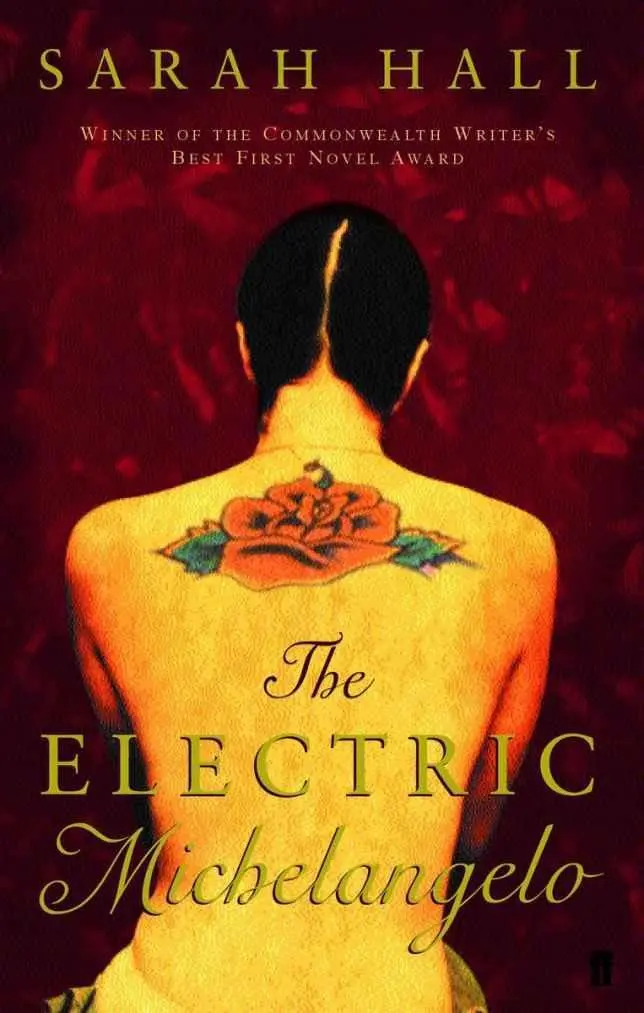
- Название:The Electric Michelangelo
- Автор:
- Издательство:Faber and Faber
- Жанр:
- Год:2010
- ISBN:нет данных
- Рейтинг книги:3 / 5. Голосов: 1
-
Избранное:Добавить в избранное
- Отзывы:
-
Ваша оценка:
The Electric Michelangelo: краткое содержание, описание и аннотация
Предлагаем к чтению аннотацию, описание, краткое содержание или предисловие (зависит от того, что написал сам автор книги «The Electric Michelangelo»). Если вы не нашли необходимую информацию о книге — напишите в комментариях, мы постараемся отыскать её.
The Electric Michelangelo — читать онлайн бесплатно полную книгу (весь текст) целиком
Ниже представлен текст книги, разбитый по страницам. Система сохранения места последней прочитанной страницы, позволяет с удобством читать онлайн бесплатно книгу «The Electric Michelangelo», без необходимости каждый раз заново искать на чём Вы остановились. Поставьте закладку, и сможете в любой момент перейти на страницу, на которой закончили чтение.
Интервал:
Закладка:
— Ask any one of us, lad, the good ones, not these buggers who do it for show, and we’ll all give the same answer. Why do we do it? Don’t fucking know.
No, he could not find the degree of precision that his own hand delivered during the colourful transformation of others, to explain it, to explain his own part in it, though he tried hard with his knuckles on his cheekbone and his hours at the deck rail. His trade was about conveying meaning, about visual abbreviation, an indication of what elements a creature was comprised. Like the red hourglass on the black widow spider. Like the fangs and poison and claws and stripes found in nature. It was a non-verbal language. It had inherent meaning. How many war signs and symbols had he tattooed? A thousand, more? How many predatory markings designed to elicit terror, how much hostile camouflage, how many death banners, daggers, skulls, slogans, how much battle pride?
Then there were the signs of sex, the big-titted women, the kitten girls, the exhibition of body parts, the twists on the spigot of breeding. Rude puns and come-ons. And there was love. Love in all its forms was boiled back to the red heart like beef to stock. All those hearts he had been commissioned to render. Heart after heart after red, red heart. Fat and full with True Love, with Mother, with Anita, with Josephine, with Clara inside, pierced by Cupid’s spindly arrows. Or broken, cut into two, torn open, Deceived written through the separated sections so that there could be no mistake as to why the damage had occurred. Such scars of emotion that would never heal! Or they would heal through his intervention, by being made secondary in ink. Because he could give pain a shape, and he could place it. And always the customers wanted to tell him about it. Their stories that had deserved an indelible memento. He was a funnel through which confidences and lives passed, became pigmented. His was a position of confidentiality, a tailor cutting round the balls of society, he would fashion the essence of a person, their experiences, into quick information or codification on the body where henceforth the public could read it from them. That was it. The tattoo was a jump too far. It was implicit. It was explicit. It was utter intimacy, intimacy with the whole basic fucking, killing, loving world. These were the prime colours of the life, were they not, the original three, and human beings simply mixed them up into civilized hues from there.
Riley had been right. Underneath all the rambling philosophy that went nowhere, that made Cy want to curse at him for such pretension, there was one thing the man had seen. He had seen people stripped bare, he had reduced them down into an essence, to experience, who they really were — angels and demons and lovers and everything strung in between. He cut them back and went from there. He seemed able to do it, to pull a picture off a wall, personalize and tattoo it. Riley had once told him that it was not those big titties on a bare arm that offended, not farting ladies, nor a marked face. Tattooing was on the black side, yes, not because it dealt largely with the rougher working classes, not because it meant that sex and danger and opinion got put about in pictures on people like a rude proclamation. The boldness of it wasn’t liked often, granted; the tattoo might even be considered ugly or primitive in itself. That counted towards their trade’s bad reputation, but it was not solely responsible for it. The matter of public disturbance was not as simple as violated flesh or visual shock. What had the big man said?
— Tattooing distresses those it does, lad, because it’s as generous as a whore on her birthday. It’s human art that you can’t peel back off the human or put away in a dresser drawer. It’s an unselfish trade, is ours. I’ll tell you what it is, it’s personal socialism, lad. Everyone’s included, everyone gets to look in to a person and share them, like what they see or not. It says here I am, shit and come and all. Nationality, how I like my women, what does it for me. Just like a bullet hole into the guts and bowels. Oh aye, and I’ll tell you this, lad: a tattoo says more of a fellow looking at it that it can do of the man who’s got it on his back. And people don’t like each other half the time, they don’t like each other’s opinions or lives, they don’t want to sympathize with each other, they don’t want to share, so what they do is shoot the messenger. You and me. Scapegoats is what we are. What we do is in bad taste, they say, oh, it’s not artistic. When what it really is, is people like to keep each other strangers until they’ve judged. You remember that.
And Cy had not understood it then, thinking it just polite society’s snobbery, and thinking Riley a bag of talking shit, he had not really understood it until now, here, ensconced on F deck of the Adriatic, tattooing perhaps his five-hundredth ruptured heart. And the man on whose shoulder the heart was coming was sitting as silent as stone, with tears running down his face for the woman he had lost and left back in Warsaw or Prague or Moscow. As true to the image as a shadow to any dimensional thing. Suddenly Cy knew what it was all about. He saw past the red ink going into the skin. He saw through to the core of what he was doing, how he bestowed uncompromising communication upon the world, how he brought forth self. How he translated experience and identity into colour and shape. How he caught the echo of a person and engraved it on to them. How he functioned as the artistic hands of others, redundant in choosing subject maybe yet imperative in its delivery. That was the strange and impossible core of it.
Humans had gone well beyond the red hourglass and the simplicity of natural informative markings. They had evolved, complicated life, refined it, and lost touch. They had tried to push back the basics, the cruelty and poison, the seeds and urges, the nurture and beauty. The potential to love and kill, having loved and killed, the need to rut, could not be an initial introduction any more, set on a shoulder like a swarthy badge of life. Yet some would have it that way still, they would have the ordinary speech of identity, the colours of their landscape, that which they had in common with the rest of the human beings of the world, and Cyril Parks was just their scribe.
Eliot Riley was gone. He was contained by death, finished, and his life’s picture had become clear. Who he was, a drunk, a bastard, a master of ink. Blue eyed in Cy’s memory, brilliant and awful, loved and hated. The only flesh-and-blood father he had ever known. He was the definition of Eliot Riley, and he had left his mark. Like a force of nature, like an earthquake bending a river, a volcano scarring mountains with lava or lightning striking tree bark. Like a tattoo on Cy’s life. And only then, with the understanding and realization, through Riley’s own death, of that which the man had tried to convey alive, did Cy’s apprenticeship to him truly end.

— These buggers are open books.
Riley had once said this to Cy as another Ribble bus-load of drunken Scots arrived one September and spewed forth its cargo on to the promenade at Morecambe. The air had been cool that day and the sun seemed hot only when it reached Cy’s bare arms, as if not having done much work in warming up the space between. One of the passengers had clambered down the bus steps and gone to the railing at the edge of the seafront parade. He pissed off the platform as if standing at the public urinal while drinking from a brown bottle at the same time.
— Open books. But they know who they are. They can tell you with a punch or a stiff cock or a few words exactly who they are and where they come from. Take a country away from someone and it firms up their notions. Tells them what they want to be and what they don’t. Makes my job easier, son. A lot easier. No dawdling about deciding on a tattoo. They know what they want and why they want it.
Читать дальшеИнтервал:
Закладка:
Похожие книги на «The Electric Michelangelo»
Представляем Вашему вниманию похожие книги на «The Electric Michelangelo» списком для выбора. Мы отобрали схожую по названию и смыслу литературу в надежде предоставить читателям больше вариантов отыскать новые, интересные, ещё непрочитанные произведения.


Обсуждение, отзывы о книге «The Electric Michelangelo» и просто собственные мнения читателей. Оставьте ваши комментарии, напишите, что Вы думаете о произведении, его смысле или главных героях. Укажите что конкретно понравилось, а что нет, и почему Вы так считаете.