Francisco Jose - The Samsons - Two Novels
Здесь есть возможность читать онлайн «Francisco Jose - The Samsons - Two Novels» весь текст электронной книги совершенно бесплатно (целиком полную версию без сокращений). В некоторых случаях можно слушать аудио, скачать через торрент в формате fb2 и присутствует краткое содержание. Год выпуска: 2013, ISBN: 2013, Издательство: Random House Publishing Group, Жанр: Современная проза, на английском языке. Описание произведения, (предисловие) а так же отзывы посетителей доступны на портале библиотеки ЛибКат.
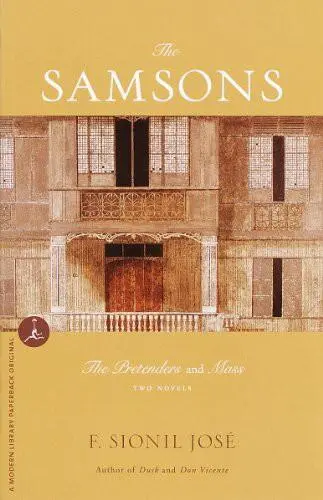
- Название:The Samsons: Two Novels
- Автор:
- Издательство:Random House Publishing Group
- Жанр:
- Год:2013
- ISBN:9780307830326
- Рейтинг книги:4 / 5. Голосов: 1
-
Избранное:Добавить в избранное
- Отзывы:
-
Ваша оценка:
The Samsons: Two Novels: краткое содержание, описание и аннотация
Предлагаем к чтению аннотацию, описание, краткое содержание или предисловие (зависит от того, что написал сам автор книги «The Samsons: Two Novels»). Если вы не нашли необходимую информацию о книге — напишите в комментариях, мы постараемся отыскать её.
Antonio Samson of The Pretenders is ambitious, educated, and torn by conflicting ideas of revolution. He marries well, which leads to his eventual downfall. In Mass, Pepe Samson, the bastard son of Antonio, is also ambitious, but in different ways. He comes to Manila mainly to satisfy his appetites, and after adventures erotic and economic, finds his life taking a surprising turn. Together, these novels form a portrait of a village and a nation, and conclude one of the masterpieces of Southeast Asian literature.
The Samsons: Two Novels — читать онлайн бесплатно полную книгу (весь текст) целиком
Ниже представлен текст книги, разбитый по страницам. Система сохранения места последней прочитанной страницы, позволяет с удобством читать онлайн бесплатно книгу «The Samsons: Two Novels», без необходимости каждый раз заново искать на чём Вы остановились. Поставьте закладку, и сможете в любой момент перейти на страницу, на которой закончили чтение.
Интервал:
Закладка:
The applause brought me back. It was loud and long, as if the auditorium was full, as if they had just heard the most exhortatory of speeches. Toto had this dazed, rapt look and he was applauding madly, too. Reluctantly I started to clap. There were questions, a whole hour for them, and I thought they would never stop. I could have easily disposed of the questions with words like “shit,” or “drop dead,” and when I could not stand the aridity of the questioning anymore I stood up with Toto hissing under his breath about how impolite I was.
“We came to listen to the speech, not to those questions,” I said.
We waited for Father Jess outside. It was dusk and the girls from Holy Spirit and Centro were filing out; they were in white-and-pink uniforms that hid their legs and obscured their good-looks. A short time later Father Jess appeared: “ Hoy , you should have waited inside. There was merienda — pancit and sandwiches.”
Toto introduced me. Father Jess was six feet tall, as swarthy as Idi Amin, and his grip was very tight.
“He tells me you are a very good politician,” Father Jess said affably.
“I don’t like being one, Father.”
“What do you want to be then?”
“I’d like to be the country’s karate champion,” I smiled.
He gave my arm a playful chop. “You should visit us in the barrio. Where do you come from?”
I told him.
“I know the place,” he said. “That is in eastern Pangasinan, isn’t it? You know, they have a lot of faith healers there. And there was an uprising once and some tenants were killed. Are the Colorums still strong?”
It quickly brought to mind my grandfather, who had gone to jail for that uprising. “No, the Colorums are not there anymore,” I said. “But the landlords still are.”
We walked to the corner where they boarded a jeepney. I decided to walk to Quiapo. Even in that crowded evening, in that oozing human flood which Recto’s sidewalks become at this time of day, I was alone and back in Cabugawan again, stoking long-dead memories and giving shape to limpid ghosts of people I never saw, whose names we utter in reverence commingled with shame — grandfather, granduncle, and who else from our village — all the brave and angry men who marched into town a long time ago, burned the municipio and the Rich Man’s house, then killed him, his wife, and children. The Colorums are gone, but the landlords are still with us, leeches beyond satiety. But the landlords are no longer the mestizos of yesteryear — imperious, fair-skinned, and loud of speech. Now they were brown like us, their origins not from Spain but from the village, farmers’ children who had gone to school to be lawyers, had grown fat with the spoils of the land, the children of farmers who had forgotten what their fathers were and therefore were no different from the landlords they had replaced.
Around me, the milling mass of students, puny people loaded with speed dreams, here in Recto to slave for their diplomas from the mills so they could get jobs and eat three times a day. Nothing edifying, nothing lofty. And who knows, some day they would be landlords, too. But to think about the future now was to daydream. We were concerned with jeepney fare, mami and siopao , an occasional movie, clothes. Many of my classmates did not even wear shoes but cheap Japanese rubber slippers. Their blemished skins, their thin bodies showed only too well how badly undernourished they were.
I would have continued in Kuya Nick’s employ. But the niggardly pleasures as I knew them, being able to see, feel, and appreciate the whorl and whirl around me could end in a job such as Kuya Nick’s. I loved being alive, being here in Recto.
I survey the rubble of my past, the excesses I have committed without even really knowing why, and Mother comes to mind again and a sharp pang of regret, of sorrow, courses through me.
What is it that I really want? Certainly not to live in Cabugawan, although I miss the friends with whom I swam the flooded irrigation ditches and caught the silver fish in the shallows; the schoolhouse whose wooden floors I had scrubbed, and those high school dances when I held them close — Letty, whose breasts were small, whose thighs were silky; Marie, whom I often kissed when the boys, on purpose, switched off the lights. All the wonderful confections that are kept stored in the mind to tide one over when there are no coins jingling in the pocket, when the stomach is a yawning pit that contains nothing, none of the rice cakes that Auntie Bettina made, and those things Mother saved, a piece of fried pork, bread with margarine.
What is it that I really wanted? The whole world but no sweating for it, opportunities for which all I would have to do is to appraise them and refuse them. But it was not that way, it would never be that way. I’m walking on a one-way street to perdition.
Excitement, affluence — I craved these. I’ve spent time in thought but not for any ennobling cause, least of all my own betterment. So here I am by myself, alone. I could be blown down by one chill wind, and it is perhaps for the best then that I sleep through it all, the season of thunder and lightning. I had listened to an old lullaby that shut my eyes and dulled my brain, for this, too, was what I wanted: to be lulled into forgetting. But how can I forget that young bird I had picked up, fallen from its nest in the buri palm, unable to fly because it was too young?
I have asked myself how far I should go, what it is that should make me happy, urge me on, and always it has been a full stomach, a sound sleep. Now, I am not too sure anymore of these desires, though they still command my waking hours. All I know is that there should be wings on my feet and light in my mind where once all was darkness and mustiness and age.
What have I really done with my years? I am older than almost all of my classmates. Perhaps I have held on foolishly to the bliss of youth, that there need be no justification for this breathing. Yet in the depths of me I had been perhaps in love with death, not life, because I have not cared for anyone but myself and the self dies as surely as flesh rots, and death, after all, is the boundary. And this selfish, unthinking self had failed to give, not even to Mother and Auntie Bettina, a little of itself.
I would like now to be different?
Will I be permitted this? Will I be strong? I know it will be difficult, for it is the strong who write the laws, make the prisons. Will I be like them? Will I also feed the weak with lies, just as I fed the hogs in Cabugawan with mush so they would fatten easily?
I crossed the underpass to Quezon and headed for Plaza Miranda. My stomach was beginning to churn and I was sorry we had not waited for Father Jess in the auditorium so we could have eaten. The thought of hurrying back to Lucy’s dinengdeng was depressing. It was too late now for the other pleasure, for my aunt and uncle would already be home and Lucy absolutely, resolutely refused once they were there. One night I had gone down on the pretext of going to the toilet, but had detoured to her cot under the stairs. She woke up, and when she realized it was me who was kissing her, she hit me in the stomach so hard I almost screamed. Then she whispered sweetly, softly: “Pepe, they are here.”
I paused before a crummy noodle restaurant, then went in. Nothing like a bowl of steaming noodles. These tasted soapy and the siopao espesyal , God knows what meats were in it. When I was through, I decided on a double feature, a war picture and a bomba —at Life.
I really like movies; I even kept a listing of the films I had seen since I got to Manila and rated them. I was partial to science fiction. They propelled me into another world, real in the mind, plausible to reckon with.
Читать дальшеИнтервал:
Закладка:
Похожие книги на «The Samsons: Two Novels»
Представляем Вашему вниманию похожие книги на «The Samsons: Two Novels» списком для выбора. Мы отобрали схожую по названию и смыслу литературу в надежде предоставить читателям больше вариантов отыскать новые, интересные, ещё непрочитанные произведения.



Обсуждение, отзывы о книге «The Samsons: Two Novels» и просто собственные мнения читателей. Оставьте ваши комментарии, напишите, что Вы думаете о произведении, его смысле или главных героях. Укажите что конкретно понравилось, а что нет, и почему Вы так считаете.