Susan Barker - The Incarnations
Здесь есть возможность читать онлайн «Susan Barker - The Incarnations» весь текст электронной книги совершенно бесплатно (целиком полную версию без сокращений). В некоторых случаях можно слушать аудио, скачать через торрент в формате fb2 и присутствует краткое содержание. Год выпуска: 2014, Издательство: Doubleday, Жанр: Современная проза, на английском языке. Описание произведения, (предисловие) а так же отзывы посетителей доступны на портале библиотеки ЛибКат.
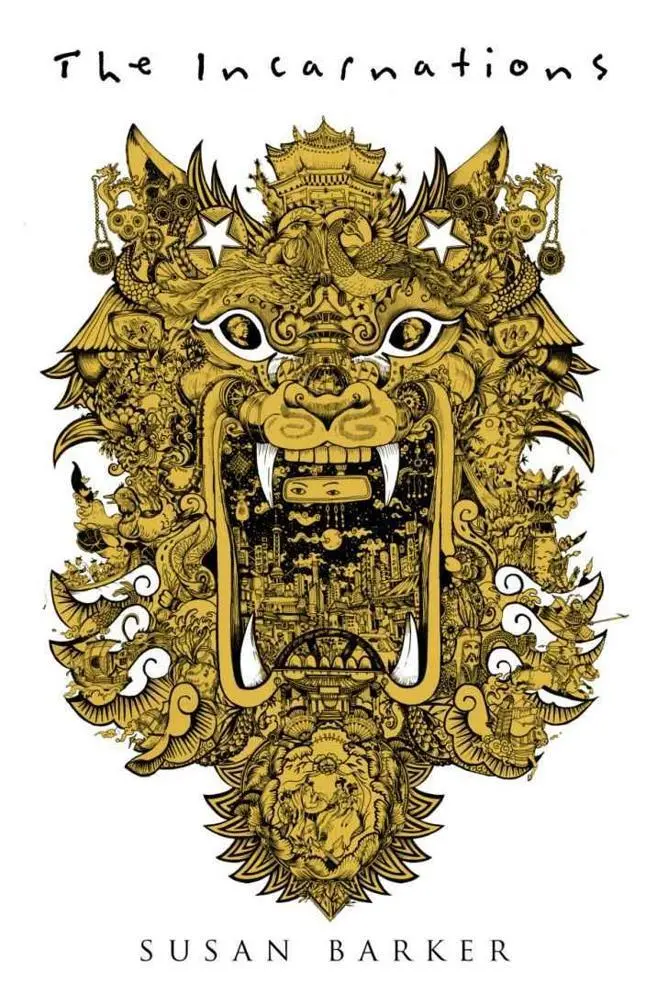
- Название:The Incarnations
- Автор:
- Издательство:Doubleday
- Жанр:
- Год:2014
- ISBN:нет данных
- Рейтинг книги:5 / 5. Голосов: 1
-
Избранное:Добавить в избранное
- Отзывы:
-
Ваша оценка:
The Incarnations: краткое содержание, описание и аннотация
Предлагаем к чтению аннотацию, описание, краткое содержание или предисловие (зависит от того, что написал сам автор книги «The Incarnations»). Если вы не нашли необходимую информацию о книге — напишите в комментариях, мы постараемся отыскать её.
I dream of sixteen concubines, plotting to murder the sadistic Emperor Jiajing.
I dream of the Sorceress Wu lowering the blade, her cheeks splattered with your blood.
I dream of you as a teenage Red Guard, rampaging through the streets of Beijing.
I am your soulmate, Driver Wang and now I dream of you.
You don't know it yet, but soon I will make you dream of me…
A stunning tale of a Beijing taxi driver being pursued by his twin soul across a thousand years of Chinese history, for fans of David Mitchell.
The Incarnations — читать онлайн бесплатно полную книгу (весь текст) целиком
Ниже представлен текст книги, разбитый по страницам. Система сохранения места последней прочитанной страницы, позволяет с удобством читать онлайн бесплатно книгу «The Incarnations», без необходимости каждый раз заново искать на чём Вы остановились. Поставьте закладку, и сможете в любой момент перейти на страницу, на которой закончили чтение.
Интервал:
Закладка:
We hiked through the mud of the Pearl River Bay until sunrise, when we stopped to catch our breath. We could see Wangpo in the distance and, though you were soon to be with your British-devil kin again, you looked miserably at the sun rising over the sea and shimmering on the waves. ‘Are you thirsty, Ah Tom?’ I asked, wondering where we might find some drinking water. You did not respond but dropped the sack you’d been carrying on the muddy ground, reached in and pulled out the flintlock. Then you spun around, and pain cracked in my skull as you hit me with the butt. You cocked the gun and upped the barrel level with my chest.
‘Get back,’ you hissed. Your eyes were possessed by fury, your finger on the trigger. Clutching my head, nearly blinded with pain, I stumbled back a step.
‘What is it, Ah Tom?’ I asked. ‘What have I done?’
You glared and nodded at Ah Jack’s head in the burlap sack. ‘Jack was a good man. Now I have to tell his wife and children that he is dead. That his head was cut off on a pirate ship and his remains are in the South China Sea.’
‘Chief Yang ordered me to,’ I cried. ‘I didn’t want to. I had no choice.’
You shook your head in disgust, and I saw no trace of the kind and decent Ah Tom I’d met seven years ago in Fanqui Town. Not much difference between a civilized man and a savage. A few days at sea and a skirmish with bandits can turn the former into the latter. Even the likes of you.
‘Get back,’ you sneered. ‘You Chinamen are all the same.’ Then you pulled the trigger of the gun.
24. Bruises
THE RUSH-HOUR CROWDS disappear into the subway; the masses, shrieking into cell phones, treading on heels and fighting their way through the scrum. Stalled in traffic, Wang watches them, his head throbbing with the engine. There’s no harmonious society, he thinks, only the chaos of people with crooked teeth and no manners, trampling on each other.
Deciding to call it a day, Wang turns off the for-hire sign and moves with the traffic down Workers Stadium Road. Near the exhaust-blackened iron and concrete of Long Rainbow Bridge, Wang hears screeching brakes, the crunch of metal and a woman’s scream. One by one the cars ahead of him stagger to a halt, and the drivers slam out and hurry over to the intersection. Wang stays behind the wheel, not wanting to run and stare. But it isn’t long before the strange anxiety of missing out has him abandoning his car like everybody else.
A crowd of fifty or so has gathered beside a 707 bus, people at the back standing on toes and straining for a better view. Wang can’t see much, but a report of the accident makes its way through the crowd. The 707 knocked into a cyclist and sent him soaring through the air, to land metres away from the crumpled metal of his bike. The boy’s head has cracked against the asphalt, and those who can see him are certain he is dead. Wang can’t see the cyclist, only the driver of the now-empty 707, a fiftyish man with a deathly pale face, his thin wail of protest rising above the crowd. He flew into me! He wasn’t looking where he was going ! The driver pleads his innocence as though the bystanders are the jury at his trial, and he must prove he is not culpable there and then. But the jury are not convinced. ‘He was driving like a maniac,’ an old man near Wang remarks. ‘He should be locked up.’ Others grumble in agreement.
The epidemic of staring infects more people on their way home from work. Some turn their heads as they walk by, looking casually at the blood-splattered scene without breaking their stride. Others push to the front of the crowd, one man holding up his cell phone to photograph the dead cyclist and his mangled bike. ‘Seventy per cent of people in China are immoral,’ Baldy Zhang had once joked to Wang. ‘The other thirty per cent are screwed over. That’s a fact from the National Bureau of Statistics.’ Watching the jostling crowd, Wang almost believes Baldy Zhang’s statistics, and he goes back to his taxi, wondering if he is part of the seventy per cent too.
When he’s back behind the wheel, the driver of the BMW on his right slams on his horn without letting up. Hooonnnnkk. The honking gets on Wang’s nerves, and he leans out of the passenger-side window and yells, ‘Hey! Cut that out!’ The driver, a teenager in a baseball cap, glances at him, glances away. He blasts the horn again. Hoooonnnnnkk . Leaving the keys in the ignition, Wang gets out. The driver looks up nonchalantly at Wang’s approach. His window is open and, through the heat and traffic fumes, Wang smells new leather upholstery and the perfume of the girl in the passenger seat, who is batting her mascara-clogged lashes at him. Wang sees the contempt in the BMW driver’s eyes. That the scruffy, middle-aged taxi driver isn’t worthy of his respect.
‘What’s your problem?’ the teenager asks.
‘You,’ says Wang. ‘Stop honking on your horn.’
‘Why?’ the boy pretends confusion. ‘There’s no law against it, is there? It’s not illegal.’
Wang points to the intersection. An ambulance has now pulled up, paramedics bringing out a stretcher as several policemen herd the crowd away.
‘Someone has been knocked down and killed,’ Wang says. ‘Show some respect, will you?’
The boy shrugs, his conscience unmoved. The death of a man twenty metres down the road is of no consequence to him, beyond the inconvenience of a traffic jam.
‘Too bad for him. He should’ve looked where he was going.’ Then, ignoring Wang and staring through the windscreen, he slams down on the horn again. Hooonnnnkk . The girlfriend swats his arm and giggles at him to stop. Wang is sick of these Little Emperors, with their bulging wallets and expensive cars Daddy bought them.
‘You’re a piece of shit,’ he says, when the honking stops. ‘You know you’re a shit, deep down. That’s why you act the way you do.’
The teenager laughs.
‘You know nothing about me,’ he says, pressing a button so his window rolls up.
Wang stoops and stares through the rising barrier of glass. When the window is nearly sealed, he hears the teenager mutter, ‘ Loser. ’ Blood rushes in Wang’s ears, and he slams his fist into the tinted, shuddering glass. ‘ Oh my God! ’ squeals the girl, jolting in her seat. The boy sparks the ignition and the BMW lurches forwards a metre or so. The roaring in Wang’s head subsides and he stands there, his knuckles throbbing.
Workers Stadium Road is moving again, and the police are directing traffic around the cordoned-off area. The white van behind Wang’s taxi is beeping and shouting at him to move, and Wang goes back to his car, confused by the driver’s anger. He had confronted the teenager on behalf of everyone there. Why is the van driver acting like he’s in the wrong?
Baldy Zhang hunches over noodles in broth with chopped-up sheep’s intestines, feeding before the long and solitary night shift ahead. Besides the bowl of noodles are Baldy Zhang’s garlic cloves and a half-smoked pack of Dongfanghong, the favourite brand of his hero, Mao Zedong (‘I know millions died because of Mao and his policies. But he’s still the greatest leader China’s ever had!’). The night is sibilant with whirring insect wings. The bug-zapper crackles, electrocuting those lured by its fluorescence to charred carcasses.
‘Your mood’s as foul as a woman with the curse,’ Baldy Zhang remarks through a mouthful of offal. ‘What’s up?’
A Sichuan kitchen girl, hugely pregnant, waddles over with a plate of scallion pancakes. She dumps the plate in front of Wang then arches her lower back, pushing her bump out and sighing before waddling away. Baldy Zhang takes one of Wang’s pancakes with his chopsticks. Tears into it with his teeth and chews.
Читать дальшеИнтервал:
Закладка:
Похожие книги на «The Incarnations»
Представляем Вашему вниманию похожие книги на «The Incarnations» списком для выбора. Мы отобрали схожую по названию и смыслу литературу в надежде предоставить читателям больше вариантов отыскать новые, интересные, ещё непрочитанные произведения.





Обсуждение, отзывы о книге «The Incarnations» и просто собственные мнения читателей. Оставьте ваши комментарии, напишите, что Вы думаете о произведении, его смысле или главных героях. Укажите что конкретно понравилось, а что нет, и почему Вы так считаете.