Susan Barker - The Incarnations
Здесь есть возможность читать онлайн «Susan Barker - The Incarnations» весь текст электронной книги совершенно бесплатно (целиком полную версию без сокращений). В некоторых случаях можно слушать аудио, скачать через торрент в формате fb2 и присутствует краткое содержание. Год выпуска: 2014, Издательство: Doubleday, Жанр: Современная проза, на английском языке. Описание произведения, (предисловие) а так же отзывы посетителей доступны на портале библиотеки ЛибКат.
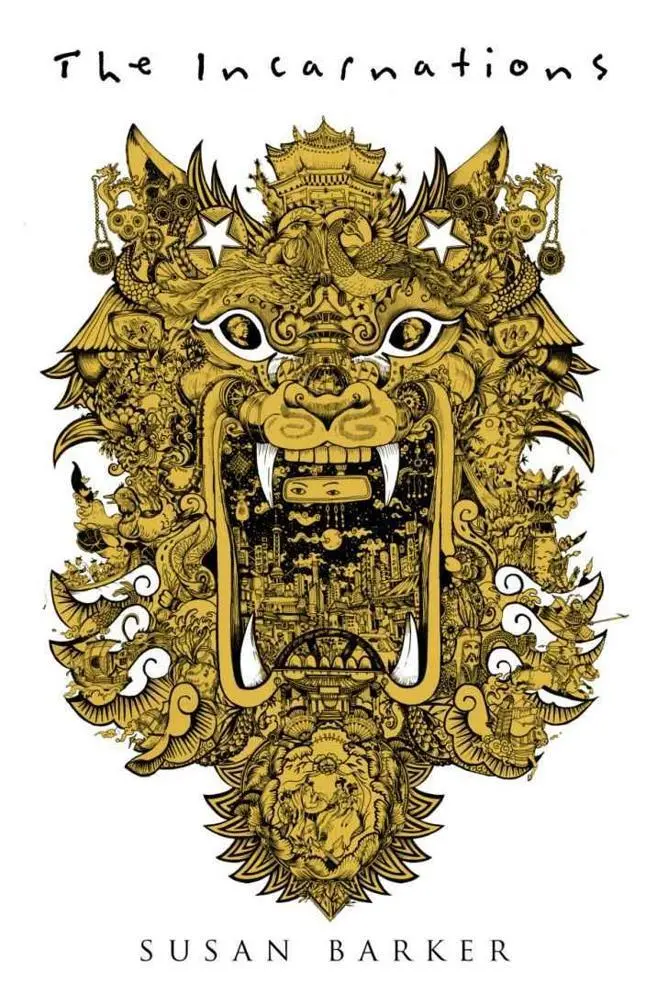
- Название:The Incarnations
- Автор:
- Издательство:Doubleday
- Жанр:
- Год:2014
- ISBN:нет данных
- Рейтинг книги:5 / 5. Голосов: 1
-
Избранное:Добавить в избранное
- Отзывы:
-
Ваша оценка:
The Incarnations: краткое содержание, описание и аннотация
Предлагаем к чтению аннотацию, описание, краткое содержание или предисловие (зависит от того, что написал сам автор книги «The Incarnations»). Если вы не нашли необходимую информацию о книге — напишите в комментариях, мы постараемся отыскать её.
I dream of sixteen concubines, plotting to murder the sadistic Emperor Jiajing.
I dream of the Sorceress Wu lowering the blade, her cheeks splattered with your blood.
I dream of you as a teenage Red Guard, rampaging through the streets of Beijing.
I am your soulmate, Driver Wang and now I dream of you.
You don't know it yet, but soon I will make you dream of me…
A stunning tale of a Beijing taxi driver being pursued by his twin soul across a thousand years of Chinese history, for fans of David Mitchell.
The Incarnations — читать онлайн бесплатно полную книгу (весь текст) целиком
Ниже представлен текст книги, разбитый по страницам. Система сохранения места последней прочитанной страницы, позволяет с удобством читать онлайн бесплатно книгу «The Incarnations», без необходимости каждый раз заново искать на чём Вы остановились. Поставьте закладку, и сможете в любой момент перейти на страницу, на которой закончили чтение.
Интервал:
Закладка:
Then one day the ducks caught a bird sickness and started dying. Pa Qin spent the last of his savings on herbal medicine he forced down their beaks, but he couldn’t stop the duck boat becoming a graveyard of corpses with webbed feet. Pa Qin had lost his living. Grieving over this, he went on to an opium barge to drown his sorrows with wine and ended up having his first ever puff on an opium hookah. And it was that first puff, that first clack of teeth on the ivory mouthpiece, and burbling of opium smoke through water and into his lungs, that marked the death of my father, and the birth of Three Pipes Qin.
I’ve never had any foreign mud before, so don’t know it first-hand. But once, when he’d had a few pipes, Pa Qin told me what it was like.
‘She’s like a lover,’ he murmured, ‘cradling you in her arms. . Or a mother. . protecting you in her womb. .’
Well, if opium’s a lover or a mother, she’s the kind hell-bent on destroying you; on tricking you into thinking you’ve gone to heaven, while your body withers away. The fate of most opium smokers is the fate of drowning, and Three Pipes Qin was no exception to this. Every puff of the opium pipe brought him closer to death. But still he wouldn’t quit.
Three Pipes Qin made promises, of course, but couldn’t bear the fever and chills for more than a day before scurrying back to the opium barges. He stole Ma Qin’s earnings from washing and mending. He sold the few sticks of furniture we had on the wash boat, and our cooking pots and stove. Three Pipes Qin wasn’t ever sorry, not even when Ma Qin wept and raged. Eventually, at her wits’ end, Ma Qin went at him with a boat oar. She chased him off the boat and shouted that he was banned until he was sober. He staggered ashore that night and never returned.
The last time I saw Three Pipes Qin was on Noise of the Tide Street. Scrag and bone, he was shaking his begging bowl at the Manchu-queued commoners. I stooped my head, but he saw me and limped over, rattling his wooden bowl.
‘First-born son,’ he said, ‘spare your old pa some change?’
I handed over what I had. Three Pipes Qin grinned at me and looked so much like a grinning skull I turned and fled.
‘Tell your ma that I’m on the mend,’ he called after me, ‘and I’ll be back on the wash boat soon.’
Three Pipes Qin had no pride. He cared for nothing but opium. That night he’d go to one of the floating opium dens and exchange his beggings for the blackened, once-smoked scrapings from a rich man’s pipe. Just enough to ease Three Pipe Qin’s cravings and allow him a few winks of sleep.
Pa Qin hadn’t been lying about coming back to Ma Qin’s wash boat, though. The day after I saw him on Noise of the Tide Street, two servants from one of the opium barges brought him in a wheelbarrow to the Qin family boat. They’d dragged him out of the Pearl River after he’d fallen in. Ma Qin checked to make sure the drowned man was the father of her three children. Then she told the servants to take Three Pipes Qin away again.
‘Do what you like with him,’ she said. ‘He’s no husband of mine.’
VI
Though Ma Qin had spanked me and warned me not to ‘betray our family’, I still planned to go back to the British factory to see you the next day. You’d saved my throat from being slashed, and I didn’t want to break my word. And, anyway, how would Ma Qin find out? Like most Tanka washerwomen, she never left the Pearl River.
But returning to Fanqui Town wasn’t to be my fate. That night as Ma Qin and my sisters were sleeping, the Goddess of the Sea came and the boat became bright as day. Behind Mazu stood her guards, Ears that Hear the Wind and Eyes that See across the Waves, protecting her from any threat.
‘Ah Qin,’ Mazu said, ‘your fate is to be at sea, not on land. You will meet that gweilo Ah Tom again one day, but first you must go to sea. The sea, remember, is your destiny.’
Then the goddess vanished and the wash boat was in darkness once more. I lay awake for a while, thinking on what the Sea Goddess had said, then drifted back to sleep. Early the next morning I was woken by the sun-and-wind-grizzled Fisherman Po, who’d come by our wash boat. He was in need of a fisherboy, and would Ma Qin offer up her young lad for the job?
So off I went in Fisherman Po’s leaky, two-masted fishing boat, to plough the waters and harvest our crop of fish. Just as Mazu had said.
VII
For the next five years I worked as a fisherboy, sailing out to sea at daybreak and sailing back at sundown. Out on the waves, Fisherman Po handed down to me the wisdom of his thirty years of sea fishing. He taught me how to steer the boat on stormy waters, and where to cast the nets out and trawl for the finest catch. He taught me how to spot a pirate junk from far away, and how to pray to the Gods of wind and rain to ward off typhoons. I soon became a skilled seafarer, sculling and manning the boat, my sea-legs used to the pitch and roll of the roughest waves.
I grew taller, stronger and broader, and had my head shaved and plaited in the Manchu style. I became fond of a cheeky dimpled Tanka girl called Ah Moun, who rowed a sampan up and down the river, selling baskets of fruit. She’d smile and toss me an orange or banana when she passed us by, or splash me with her oar, and when I asked her to marry me she laughed and said, ‘About time, Ah Qin. I thought I’d be throwing oranges at you until we were old and grey.’ We soon had our own boat and within a year her belly swelled with our first child. We had enough money to live on from our fishing and fruit selling, and were happy. By then I was coming up to sixteen years old.
It was around then that war broke out over the foreign mud, and iron-clad British warships, propelled by cartwheels and steam, charged into the Pearl River Bay. Our Emperor’s fleet of ‘avenging dragons’ had colourful streamers flying from the masts, and noisy gongs and bells, but lacking proper guns didn’t stand a chance. The thundering of cannons shook the hills surrounding the Pearl River Bay as the British warships blew our Emperor’s fleet to bits. Smoky blazes poured forth into the sullen darkness of night, and panicking survivors trod water and clung to the shattered fragments of their blown-up junks.
I prayed to Mazu to protect our men and wreck the British men-o’-war. But I didn’t join the Anti-barbarian Army with their pitchforks, scythes and rusty farming tools — useless against the double-barrelled guns of the red-coated barbarians. Why should we low-caste Tankas fight to defend the land we’re forbidden to live on? I was soon to be a father, and wasn’t going to risk my life.
The cannons were booming when Ah Moun got the pains of labour. Ma Qin came to our boat to help with the delivery (snapping at Ah Moun to ‘Stop your hollering. You aren’t the first to push a baby Tanka out of your muckhole.’). The labour was very short, and the baby slipped right out. I could tell by Ma Qin’s eyes that it hadn’t been born right. Ma Qin weren’t the sort to take fright easy, but she turned pale, covered her mouth and said, ‘Oh, you poor thing.’ My heart shrinking, I went round to look at my first-born child, and what I saw sickened me. Our baby had the eyes of a fish, and its legs were welded together like a tail. Our baby son gasped but, like a fish out of water, could not breathe and died.
Ah Moun changed after that, and her dimples went away because she no longer smiled. One day I came home from fishing and she wasn’t there. She didn’t return to our boat the next night or the next, and I heard from my mother-in-law that she’d gone off to work in a laundry in Macao. Fisherman Po offered to sail us over to Macao so I could ‘knock some sense into her, and see she behaves like a proper wife’. But it didn’t seem right to sail to Macao to fetch her back. Ah Moun wasn’t the only one who’d had a change of heart.
Читать дальшеИнтервал:
Закладка:
Похожие книги на «The Incarnations»
Представляем Вашему вниманию похожие книги на «The Incarnations» списком для выбора. Мы отобрали схожую по названию и смыслу литературу в надежде предоставить читателям больше вариантов отыскать новые, интересные, ещё непрочитанные произведения.





Обсуждение, отзывы о книге «The Incarnations» и просто собственные мнения читателей. Оставьте ваши комментарии, напишите, что Вы думаете о произведении, его смысле или главных героях. Укажите что конкретно понравилось, а что нет, и почему Вы так считаете.