Susan Barker - The Incarnations
Здесь есть возможность читать онлайн «Susan Barker - The Incarnations» весь текст электронной книги совершенно бесплатно (целиком полную версию без сокращений). В некоторых случаях можно слушать аудио, скачать через торрент в формате fb2 и присутствует краткое содержание. Год выпуска: 2014, Издательство: Doubleday, Жанр: Современная проза, на английском языке. Описание произведения, (предисловие) а так же отзывы посетителей доступны на портале библиотеки ЛибКат.
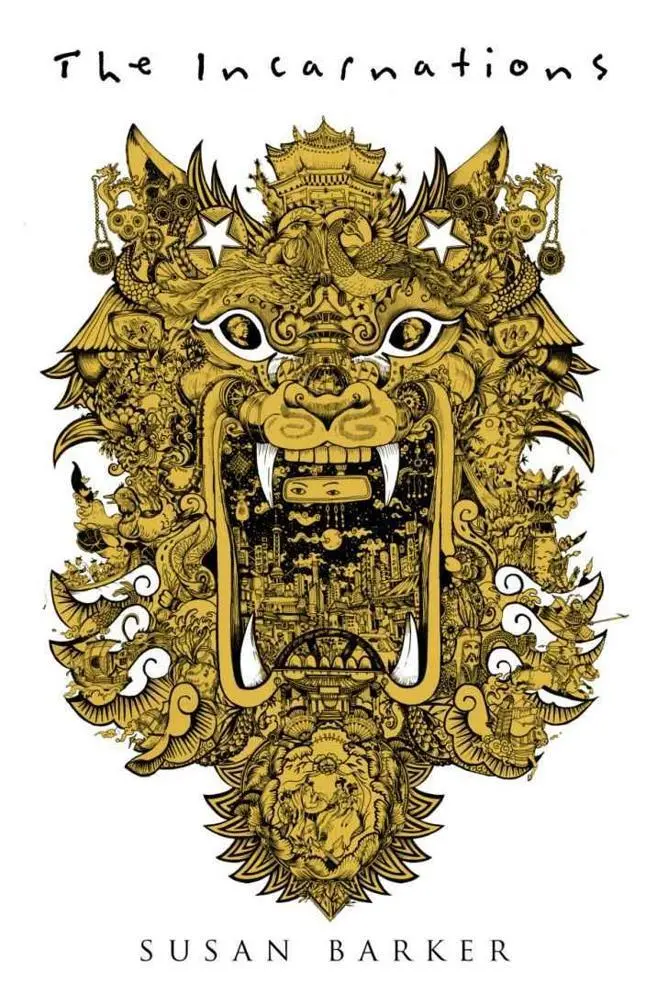
- Название:The Incarnations
- Автор:
- Издательство:Doubleday
- Жанр:
- Год:2014
- ISBN:нет данных
- Рейтинг книги:5 / 5. Голосов: 1
-
Избранное:Добавить в избранное
- Отзывы:
-
Ваша оценка:
The Incarnations: краткое содержание, описание и аннотация
Предлагаем к чтению аннотацию, описание, краткое содержание или предисловие (зависит от того, что написал сам автор книги «The Incarnations»). Если вы не нашли необходимую информацию о книге — напишите в комментариях, мы постараемся отыскать её.
I dream of sixteen concubines, plotting to murder the sadistic Emperor Jiajing.
I dream of the Sorceress Wu lowering the blade, her cheeks splattered with your blood.
I dream of you as a teenage Red Guard, rampaging through the streets of Beijing.
I am your soulmate, Driver Wang and now I dream of you.
You don't know it yet, but soon I will make you dream of me…
A stunning tale of a Beijing taxi driver being pursued by his twin soul across a thousand years of Chinese history, for fans of David Mitchell.
The Incarnations — читать онлайн бесплатно полную книгу (весь текст) целиком
Ниже представлен текст книги, разбитый по страницам. Система сохранения места последней прочитанной страницы, позволяет с удобством читать онлайн бесплатно книгу «The Incarnations», без необходимости каждый раз заново искать на чём Вы остановились. Поставьте закладку, и сможете в любой момент перейти на страницу, на которой закончили чтение.
Интервал:
Закладка:
At daybreak the Mongols lash their whips and we drag our weary bones from the earth. Slave girls ladle rice gruel into our bare hands, and a leather flask of water is passed amongst the herd. The Mongols lash their whips once more and our dark swarm of humanity moves on, the sun beating down and dragging our shadows out from under our feet.
The Mongol caravan journeys north by hoof and wheel and blistered foot, kicking up a storm of dust. I walk by your side, stride for limping stride. The nearness of you, the rhythm of your breath, and your stoic, determined face is a comfort to me.
‘I can’t go on, Tiger. .’ I say, as my skull throbs and the weals from Ogre’s thrashing whip ache on my back. ‘I am at the end of my strength. .’
‘No,’ you say, ‘there’s strength in you yet. Keep going and there will come a time when we are free. Surrender now and you will die a slave.’
I would have fallen down long ago and let the ground drink the blood of my slit throat, were it not for you. So long as you are by my side, I can endure. You ease the stoned-to-death feeling in my soul.
Though the Jin Dynasty has fallen and they stagger in rags, the craftsmen of Zhongdu brag of their former renown.
‘My swords were so sharp they sliced human bone as though it were tofu,’ boasts Swordmaker Fu. ‘Warlords came from thousands of li away for my weapons.’
‘My Lady Mu dolls fetched a hundred silvers each,’ says Doll-maker Wan, whose dolls once lived in the bedchambers of the princesses. ‘Lady Mu Flies a Kite. Lady Mu Plays with a Little Dog. I have crafted thousands over the years. .’
The craftsmen are distinguished indeed. Gem-cutter Hu’s necklaces were worn on the lily-white necks of the Emperor’s concubines. Stone-carver Peng’s fearsome tomb gargoyles protect the dead in the imperial mausoleums. There is a saying, ‘He who stands upright, does not fear a crooked shadow.’ Well, Tiger and Turnip have much to fear. For we are not who we say we are and our shadows are crooked as bent nails. But the craftsmen of Zhongdu don’t tell on us. The Mongols don’t know our language, and to speak to them is to risk aggravating their tempers and fists. So long as we don’t antagonize them, the craftsmen leave us be.
The Mongol in charge of our herd has a name that’s some guttural sound in the throat. We do not call our slave-driver by his name, though. Ogre is what we call him. Ogre rides with his leather boots in stirrups and a coat of dog-skins over his shoulders, and his mare is equipped with a hook-ended lance and a horsehair lasso. Your iron-branded scars are nothing compared to Ogre’s battle scars. One fault line cleaves Ogre’s face in two, from forehead to chin, as though someone once pickaxed his head. His nose has been fractured so many times, it’s hardly worth calling a nose. The only word he knows in our Jurchen dialect is ‘Go!’, which he shouts often, as he is impatient with stragglers. When the elderly Fan-maker Zu fainted in the heat, Ogre reached down from his mare and stuck Fan-maker Zu’s chest with the hook-ended lance. Ogre gurgled with laughter and dragged him through the dirt until he was quite dead. He has a gallows sense of humour, it can be said.
At dusk the Mongols stop and rest. They drink fermented yak’s milk by firelight as captured Jurchen jugglers and acrobats perform for them. The Mongols laugh and jeer, but never applaud.
‘I can’t walk another step. My knees are aching. My heels are weeping blisters. I am dying of thirst. I’ve not had a sip of water all day. .’
Gem-cutter Hu is at the age when humans start to shrink, when the spine buckles and the skin wrinkles and grows slack. He bends over his staff as he grumbles, his hair white and his eyes nearsighted from a lifetime of squinting at precious gems through a magnifying lens. Someone tells the gem-cutter that water-drinking time is near. Master Hu scoffs, ‘Ha! There’s just spittle in that flask by the time it gets to me. I’ll drop dead of thirst in no time, just you wait and see. .’
It’s drizzling and the thousands of hooves and wheels ahead of us have trampled the grasslands to mud that squelches through our shoes and splatters our legs. Staggering by my side, you look daggers at Master Hu. The old man brays on: ‘The Mongols ought not to treat us this way. Don’t these ignorant barbarians know who we are? They are marching us to our deaths. Won’t be long until I fall down and they cut my throat. .’
‘Good,’ you mutter. ‘Fall down dead and spare our ears your whinging.’
Master Hu spins round, squinting accusingly. ‘Who said that? The Tiger Boy? The boy with the branded face? You donkey’s afterbirth! How dare you speak to me like that? You are not one of us. You should have been killed in Zhongdu.’
Shut up now, Tiger, I think. But you laugh in Master Hu’s face.
‘I heard you kept slaves in Zhongdu,’ you say. ‘I heard you beat them, and when they ran away, you caught them and cut off their ears. I heard you imprisoned your slaves in your cellar during the famine. Then you cooked and ate them, one by one.’
Master Hu wheezes as though his heart has seized up.
‘If the Mongols slash your throat, Master Hu,’ you say calmly, ‘then that will be less than what you deserve.’
Gem-cutter Hu shakes his crooked staff at you. ‘You are a liar and imposter! You are not Glassblower Hua! I knew Master Hua, and you are not him. I will tell the Mongols about you!’
‘Tell, and I’ll wring your neck.’
‘Not if I beat you to death with a rock first!’ hisses Swordmaker Fu.
You laugh at the swordmaker. ‘And then will you eat me? Like you ate your own son?’
The herd of old men turns on you. ‘Shut that evil Tiger mouth!’ they curse. ‘Imposter!’ ‘Lowbreed mongrel!’
You open your mouth, to lash your tongue once more, but I grab you and say, ‘Tiger. Shut up .’
You shut your mouth, but your eyes are amused. You won’t be civil to men for whom you have nothing but contempt. You let that be known.
Every slave dreams of escape. Some daring souls flee into the northern wilderness, only to be shot down by Mongol arrows. Two Jurchen princes gallop away one night on stolen mares, only to be recaptured, rolled up in blankets and kicked to death (for the Mongols are superstitious about spilling the blood of royalty on the ground). Suicide is the means of escape for some. They weigh their tunic pockets down with stones and hurl themselves into fast-flowing rivers. Or they goad the Mongols into losing their tempers and beating them to death, and die smiling and satisfied.
Puppetmaker Xia, whose beloved Concubine Sparrow is now a girl slave, is the most suicidal of our herd: ‘After the famine stole my wife and sons away, I prayed to the Lord Buddha to spare Concubine Sparrow. But now I regret that Concubine Sparrow did not die in the famine too, for death would have spared her the yoke of the Mongols.’
The puppetmaker calls for Concubine Sparrow in his sleep, ordering her to bring his slippers and draw his bath, then wakes distraught because she isn’t there. One evening, when the Mongols are setting up camp, he sees Concubine Sparrow crouched behind the hindquarters of a cow, shovelling dung into a bucket. He stumbles over to her.
‘Sparrow,’ he calls. ‘Come here, my love. .’
But before the concubine hears Master Xia, a Mongol warrior strolls up behind her and drags her up by the hair. The bucket rolls sideways and the look on Concubine Sparrow’s face is one of weary resignation as the Mongol throws her over his shoulder like a rolled-up Persian rug and saunters into a yurt. Puppetmaker Xia turns pale as his own ghost.
‘How can she betray me like this?’ he cries. ‘I should’ve carved up her pretty face whilst I had the chance. .’
Читать дальшеИнтервал:
Закладка:
Похожие книги на «The Incarnations»
Представляем Вашему вниманию похожие книги на «The Incarnations» списком для выбора. Мы отобрали схожую по названию и смыслу литературу в надежде предоставить читателям больше вариантов отыскать новые, интересные, ещё непрочитанные произведения.





Обсуждение, отзывы о книге «The Incarnations» и просто собственные мнения читателей. Оставьте ваши комментарии, напишите, что Вы думаете о произведении, его смысле или главных героях. Укажите что конкретно понравилось, а что нет, и почему Вы так считаете.