Marcel Theroux - Strange Bodies
Здесь есть возможность читать онлайн «Marcel Theroux - Strange Bodies» весь текст электронной книги совершенно бесплатно (целиком полную версию без сокращений). В некоторых случаях можно слушать аудио, скачать через торрент в формате fb2 и присутствует краткое содержание. Год выпуска: 2013, Издательство: Faber and Faber, Жанр: Современная проза, на английском языке. Описание произведения, (предисловие) а так же отзывы посетителей доступны на портале библиотеки ЛибКат.
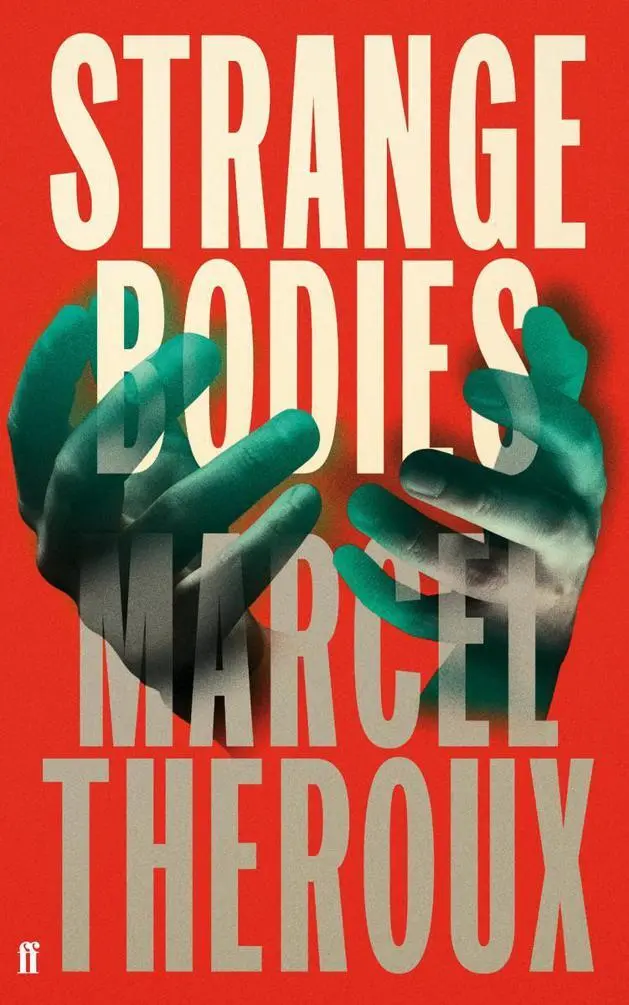
- Название:Strange Bodies
- Автор:
- Издательство:Faber and Faber
- Жанр:
- Год:2013
- ISBN:нет данных
- Рейтинг книги:4 / 5. Голосов: 1
-
Избранное:Добавить в избранное
- Отзывы:
-
Ваша оценка:
Strange Bodies: краткое содержание, описание и аннотация
Предлагаем к чтению аннотацию, описание, краткое содержание или предисловие (зависит от того, что написал сам автор книги «Strange Bodies»). Если вы не нашли необходимую информацию о книге — напишите в комментариях, мы постараемся отыскать её.
Nicholas Slopen has been dead for months. So when a man claiming to be Nicholas turns up to visit an old girlfriend, deception seems the only possible motive.
Yet nothing can make him change his story.
From the secure unit of a notorious psychiatric hospital, he begins to tell his tale: an account of attempted forgery that draws the reader towards an extraordinary truth — a metaphysical conspiracy that lies on the other side of madness and death.
With echoes of Jorge Luis Borges, Philip K. Dick, Mary Shelley, Dostoevsky’s Double, and George Eliot’s The Lifted Veil, Strange Bodies takes the reader on a dizzying speculative journey that poses questions about identity, authenticity, and what it means to be truly human.
Strange Bodies — читать онлайн бесплатно полную книгу (весь текст) целиком
Ниже представлен текст книги, разбитый по страницам. Система сохранения места последней прочитанной страницы, позволяет с удобством читать онлайн бесплатно книгу «Strange Bodies», без необходимости каждый раз заново искать на чём Вы остановились. Поставьте закладку, и сможете в любой момент перейти на страницу, на которой закончили чтение.
Интервал:
Закладка:
The metro was still the same, but above ground the place had changed beyond recognition. Gone was everything that had made Moscow distinctive: the propaganda posters, the battered Soviet cars and the perfumed smoke of the cardboard-tipped cigarettes, papirosy , that had once been ubiquitous. The impoverished, ramshackle city I’d known had turned smart and heartless. There were sushi bars and huge supermarkets where, twenty years earlier, I would have been overjoyed to see an orange. I felt like Rip van Winkle.
Vera had booked me into a refurbished Soviet hotel which overlooked Kazan Station, but she was reluctant to meet me there. Before I left, she’d repeatedly told me how careful we had to be. I remembered this paranoia from my first visit to Moscow, but in this unrecognisable, twenty-first-century city, her fears seemed groundless.
I texted her to say I’d arrived safely. In her reply, she asked me to suggest a meeting place. The only one that sprang to mind was the Exhibition of Economic Achievements, a place at the northern end of one of the metro lines. I knew of it because, in 1989, the foreign currency bar in a nearby hotel had been the only reliable source of beer in the area. I remembered the Exhibition, known by the Soviet acronym VDNKh, being a strange combination of trade fair and Stalinist theme park.
The smell of the metro at least was reassuringly familiar, a distinctive mineral aroma of smoke and damp coal which rises from the long escalators and hits you as soon as you enter.
I was fifteen minutes early. There was a crowd of shabby people waiting by a tram stop. A soft drizzle was falling. Vera Mukhina’s famous sculpted giants, the worker and the farm girl, held their hammer and sickle aloft over the entrance to the park.
It was more disreputable than I remembered. Instead of reverent people paying homage, there was a sense of decay. Garish plastic booths had sprouted along the wide paths, offering a bizarre array of attractions: shooting galleries, punch-bags and karaoke. Russians on Segway scooters and rented rollerblades menaced the handful of pedestrians. The Soviet sculptures looked vulgar and the pavilions which had been intended to vaunt the achievements of the USSR and its fifteen constituent republics were falling apart.
Vera was on time. We met by an installation of an enormous Sputnik rocket, the type that had taken Gagarin into space. She was dressed in black and looked very pale, but I was struck by how relaxed and animated she seemed. She kissed me on both cheeks. ‘I congratulate you on your choice of rendezvous,’ she said, with heavy irony.
‘I’m sorry,’ I said, ‘I didn’t remember it being so …’ I gestured at the plastic beer tents, the shashlik vendors, the fairground sideshows, and I fumbled for a word.
‘Yes,’ she said. ‘ Poshlyi .’ The word means ‘vulgar’ or ‘common’, but when Vera used it, it expressed a special kind of revulsion, encapsulating a sense of aesthetic and intellectual inauthenticity.
‘How are you feeling?’ I asked.
She shrugged. ‘I tire easily. I am still too weak to fly.’
I suggested we sit down. We walked a few yards to a bench that was sheltered from the drizzle. I watched her check that there was no one in earshot. Above us the rocket stretched up into the thunderous sky.
On the far side of the plaza, a sale of cheap fur coats was taking place in the pavilion that had been built to exhibit the achievements of the Soviet people in the sphere of electricity.
‘Were you followed?’ she asked.
‘Are you serious?’
‘Of course. We are not in London now.’
‘No, I don’t think so.’
‘You said you had questions.’
‘I don’t understand why you left Jack with me. I don’t believe I was your only resource.’
‘You’re right,’ she said. ‘You know the Tyutchev poem?’ She quoted its famous first line: ‘ Umom Rossiyu ne ponyat ”. It’s the one where he talks about the eternal enigma of Russia: it can’t be comprehended with the mind … it can only be believed. ‘What am I trying to show you has the same quality. You have to experience this truth to believe it.’
I felt an uncanny chill at her words. Tyutchev had been describing a mystery that was ineffably glorious. This, on the other hand, seemed to be shrouded in an obscurity like the fog round a graveyard.
She took a manila envelope from her handbag. ‘I have some things for you.’
Inside was a crumpled mimeograph of an old Soviet research paper, dated 1946, with the text in faded violet ink. Its author was one Yurii Olegovich Malevin.
‘A relative of Sinan’s?’
‘He is Sinan’s father.’ She saw my eyebrows rise at her use of the present tense. ‘He is still alive.’
At the bottom of the envelope I found another piece of paper, soft like old money from repeated foldings. Its age and fragility demanded gentle handling.
It was a photocopy of the identification page from a Kazakh passport. The holder was a Kazakh citizen of Russian origin called Vladimir Efraimovich Trikhonov. He had been born in Baku, Azerbaijan, in 1960. I laid it across my knee.
‘You understand?’ said Vera.
The photograph in the passport had been coarsened by the photocopier that had been used to make it, but it was plain that Trikhonov bore a strong likeness to Jack.
‘Physically, he was Trikhonov,’ she said. ‘In all other ways …’ She paused. ‘He had no recollection of Trikhonov’s identity.’
‘How is that possible?’
‘He underwent … a procedure.’
‘But the language, his mannerisms? The handwriting?’
‘Epiphenomena. By-products of this procedure.’
I told her it was impossible.
She shrugged. ‘You knew him as well as I.’
‘Knew him?’ I said. ‘ Knew him?’
‘He is certainly dead by now.’
I don’t recall feeling anything at all. An elderly lady was laying plastic sheets over the racks of cheap Chinese clothes outside the Belorussian Pavilion. My last memories of Jack, sitting up in bed, gripping my arm fiercely and telling me to destroy his journal, seemed more real and more solid than the scene in front of me. I found it impossible to believe Vera, never mind grieve for Jack. ‘How can you be so sure?’ I asked.
‘Nicholas, I am sure,’ she said.
‘I want to be clear about this,’ I told her. ‘You’re saying that Jack was not your brother?’
‘Correct. He was not of my blood.’
Not of my blood. I had a chilling recollection of the cruel needle Bykov had used to sedate him and the drop of blood that had hung from its point.
‘He was this man?’ I held up the photocopy.
‘Yes. Trikhonov was an experimental subject. He volunteered to undergo the Malevin Procedure.’
‘For money?’
‘No. He was a zek . He was serving a life sentence in a penal colony. This was presented to him as an alternative.’
‘So he consented?’
‘This issue of consent is one of many differences I have with Hunter and Sinan. The short answer is yes.’
‘What’s the long answer?’
Vera sighed deeply. ‘Nicholas, suppose I offer you a contract in which you, for a million dollars, agree to sell me your soul? Only superstition would prevent you, correct? You would say, it’s impossible for them to take it, I don’t believe I have a soul, I will take the money. But then you take the money, and I say, “I define the soul as a portion of your limbic system, which I will now remove and you will no longer have your old identity.” Now, you vanish and a totally new person comes into being, with no legal identity of its own, with ill-defined rights, and subject to obligations agreed by someone who no longer exists. Was that contract fair?’
Читать дальшеИнтервал:
Закладка:
Похожие книги на «Strange Bodies»
Представляем Вашему вниманию похожие книги на «Strange Bodies» списком для выбора. Мы отобрали схожую по названию и смыслу литературу в надежде предоставить читателям больше вариантов отыскать новые, интересные, ещё непрочитанные произведения.




Обсуждение, отзывы о книге «Strange Bodies» и просто собственные мнения читателей. Оставьте ваши комментарии, напишите, что Вы думаете о произведении, его смысле или главных героях. Укажите что конкретно понравилось, а что нет, и почему Вы так считаете.