Paul Theroux - The Black House
Здесь есть возможность читать онлайн «Paul Theroux - The Black House» весь текст электронной книги совершенно бесплатно (целиком полную версию без сокращений). В некоторых случаях можно слушать аудио, скачать через торрент в формате fb2 и присутствует краткое содержание. Год выпуска: 1996, Издательство: Penguin Books, Жанр: Современная проза, на английском языке. Описание произведения, (предисловие) а так же отзывы посетителей доступны на портале библиотеки ЛибКат.
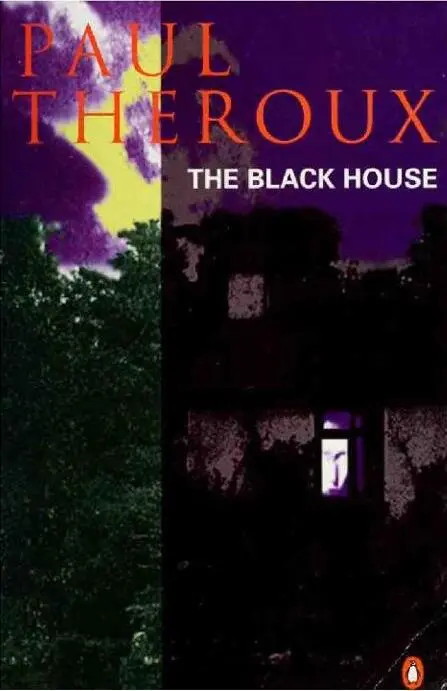
- Название:The Black House
- Автор:
- Издательство:Penguin Books
- Жанр:
- Год:1996
- ISBN:нет данных
- Рейтинг книги:4 / 5. Голосов: 1
-
Избранное:Добавить в избранное
- Отзывы:
-
Ваша оценка:
The Black House: краткое содержание, описание и аннотация
Предлагаем к чтению аннотацию, описание, краткое содержание или предисловие (зависит от того, что написал сам автор книги «The Black House»). Если вы не нашли необходимую информацию о книге — напишите в комментариях, мы постараемся отыскать её.
The Black House — читать онлайн бесплатно полную книгу (весь текст) целиком
Ниже представлен текст книги, разбитый по страницам. Система сохранения места последней прочитанной страницы, позволяет с удобством читать онлайн бесплатно книгу «The Black House», без необходимости каждый раз заново искать на чём Вы остановились. Поставьте закладку, и сможете в любой момент перейти на страницу, на которой закончили чтение.
Интервал:
Закладка:
“We’ better eat something or we’ll both be under the table.”
Alec had the macaroni and cheese, Munday the hot-pot—the barman shoveled and clapped the meals to the plates, cracking the spoon against their edges to clear it—and both men sat, jammed together on the wooden bench, balancing their plates on their knees and raising their forks with great care. Alec reminisced about the five-bob lunch at the Uganda hotel, but in each reminder of the place Munday saw a new aspect of the ritual he had invented for himself there, and he wanted to be away from Alec, to return to the black house with Emma and verify his fear. Pehaps he had imagined the panic; much of his Africa seemed imaginary, and distant and ridiculous.
“I’ll tell you who I did see,” said Alec. “It was over in Shepherd’s Bush. I was waiting for a bus by the green. Bloke walked by and I thought to myself, I know him. It was Mills.”
“Ah, Mills,” said Munday. But he was thinking of Alec, in the grayness of Shepherd’s Bush, waiting for a bus—the tea planter with four hundred pickers, who had employed a driver, when few did, for his new Peugeot sedan.
“The television man,” said Alec. “Education for the masses.”
“I remember Mills.”
“He remembered you,” said Alec. “We had a natter, he said to drop in sometime. I said fine, but I doubt that I will. I never liked him. I liked her, though.”
“So did I.”
“I should say you did!” Alec gave Munday a nudge. He narrowed his eyes and said, “He never knew, did he?”
“I hope not. It doesn’t matter. It wasn’t what you’d call an affair. But she meant a lot to me. I wondered what happened to her.”
“Like everyone else,” said Alec. “They’re all here, bleeding to death.”
“Did he say he lived in Shepherd’s Bush?”
“No, I think he said Battersea. He works in Shepherd’s Bush—that’s where the studios are. You thinking of paying him a visit?”
“Not him,” said Munday. “But I’d like to see Claudia.”
“Drinking still makes me randy, too,” said Alec, and he laughed.
“I had thought I might go over to the British Museum. And I was planning to leave a message for a Bwamba chap in Mecklenburg Square. I don’t know,” said Munday, pausing. “If Claudia’s home—”
“They’re in the book, and the phone’s over there,” said Alec. “Give her a ring. I’ll get the next round#” He stood up and gave Munday’s shoulder a friendly push. “Get on with it.”
When Munday came back to the bench, Alec said, “I watched you phoning. It reminded me of that night at the hotel—remember?—when Emma was in Kampala and old Mills on safari. ‘Who’s he ringing?’ I wondered—you were so damned secretive! And then I saw your car parked in the Mills’s driveway that Sunday morning.”
“She’s home,” said Munday. “She invited me over for tea.”
“Are you going?”
“I’d like to see her again.”
“I remember that night so well.”
“That was the first time,” said Munday. “There weren’t many others.”
“Mind what you do.” There was pleasure in Alec’s face. “It’s like old times,” he said. “Wish I had Rosie here.”
“I won’t do much,” said Munday. “She said her daughter’s due home from school—little Alice.”
“Jesus, now I remember the story. She saw you in bed with the old lady and said, ‘You’re not my daddy!’ ”
“Where are you off to?” asked Munday quickly.
“Notting Hill Gate for me. Dusky Islander, I expect,” said Alec jauntily. “Some bitch in white garters in an unmade bed in a basement flat to insult my body—you should try it sometime, Alfred old man.” He sighed. “Then I’ll go back to my room in the monkey house and watch television. That’s all I do. I’m getting more like them every day.”
“I’d better be off,” said Munday.
“How are things up-country?” Alec was stabbing his umbrella into the carpet. “Emma her old sketching self?”
“She’s fine, sends you her regards,” said Munday, but he thought, up-country: it was the way Alec had always referred to the Yellow Fever Camp on a Saturday night. But this time they would part in a cold London drizzle, Alec to his bedsitter, Munday to Four Ashes.
Outside the pub Alec held his collar together at his throat and looked at the street and the dripping brown sky. He said, “This fucking city, and none of them know it.”
“You should come down and see us some time," said Munday.
“No fear,” said Alec. “But give Emma my love—I still have her picture of my estate. The pluckers. The gum trees. That hill.”
“She’ll be pleased.”
Alec leaned closer, breathing beer; he said with feeling, “Tea’s a lovely crop, Alfred.”
The walked in different directions, but met again by accident a few minutes later near the Leicester Square tube station. Alec was walking up Charing Cross Road. He smilied at Munday and called out, “Kwaheri!”—and people turned—and then stooping in the rain and still gripping his collar he continued on his way, trudging into the raincoated crowd of shoppers.
Munday walked by the house several times, preparing himself to meet her by calling up her face and rehearsing a conversation. He almost went away. His interest in seeing her, encouraged by Alec, had dwindled as soon as Alec had left him; now it had nearly vanished and there was moving him only a youthful muscle of curiosity. In the taxi he had felt a jumping in his stomach, that pleasurable tightness that precedes sex, but he had stopped the taxi on the other side of Chelsea Bridge so that he could cut across the park, and the pleasure left him. He saw two black boys, running through the trees, chasing each other with broom handles, skidding over a landscape where they didn’t belong. Their flapping clothes annoyed him. His feet were wet. He resented his fatigue; the speed of the taxi, the noise and fumes of the city had tired him, he was unused to those assaults on his senses, and already he felt that the trip to London was wasted. His mid-afternoon hangover drugged him like a bad meal. He wanted to lie down somewhere warm and sleep.
It had not been hard for him to find the house. It was prominent, announcing its color in a long terrace of bay-windowed three-story brick houses on a road just off the south side of the park. The road stretched to a lighted corner, where more blacks, whose idleness he instantly resented, lingered under a street lamp. The conversion of the Mills’s house reproached the other gloomy house fronts. The brick had been painted white, there was a yellow window box, and the door was bright yellow; the iron gate was new and so was the brass knocker and the mat on the top step. In the little plot in front there was a square of clipped grass and a small bare tree: on one limb a florist’s tag spun.
He tapped the knocker and waited. He was trembling; his heart worked in troubled thumps—he always heard it when he was nervous, and hearing it increased his nervousness.
The door opened on a woman’s thin face. “Yes?”
“Is Mrs. Mills at home?” Munday spoke sharply to the stranger.
The question bewildered the woman. She said, “What is it you want?” And then she smiled and said, “Alfred?” and flung open the door.
“Claudia,” he said in a weak expression of surprise. He did not dare to look closer. He almost said, Is that you?
He could not hide his embarrassment, his kiss was ungainly, he bumped her chin. He wanted to stare at her, to compare her with his memory, she was so thin and sallow, and her hair was brown. It had been blond. He was disappointed—in her, in himself; was deeply ashamed, a shame so keen he heard himself saying, “I’m sorry—” Then he was moving into the lounge and talking, apologizing for being early, explaining the train he had to catch, complimenting her on the decoration, the bookshelves, the chrome and marble coffee table. She was naming stores, Liberty, Heals, Habitat, as he named objects of furniture. He avoided her eyes and now he was talking about the carpet—it was orange—but his eyes were fixed on the narrow bones showing in her feet. He wished he had not come; he wanted to go.
Читать дальшеИнтервал:
Закладка:
Похожие книги на «The Black House»
Представляем Вашему вниманию похожие книги на «The Black House» списком для выбора. Мы отобрали схожую по названию и смыслу литературу в надежде предоставить читателям больше вариантов отыскать новые, интересные, ещё непрочитанные произведения.









Обсуждение, отзывы о книге «The Black House» и просто собственные мнения читателей. Оставьте ваши комментарии, напишите, что Вы думаете о произведении, его смысле или главных героях. Укажите что конкретно понравилось, а что нет, и почему Вы так считаете.