Christopher Beha - Arts & Entertainments - A Novel
Здесь есть возможность читать онлайн «Christopher Beha - Arts & Entertainments - A Novel» весь текст электронной книги совершенно бесплатно (целиком полную версию без сокращений). В некоторых случаях можно слушать аудио, скачать через торрент в формате fb2 и присутствует краткое содержание. Год выпуска: 2014, Издательство: Ecco, Жанр: Современная проза, на английском языке. Описание произведения, (предисловие) а так же отзывы посетителей доступны на портале библиотеки ЛибКат.
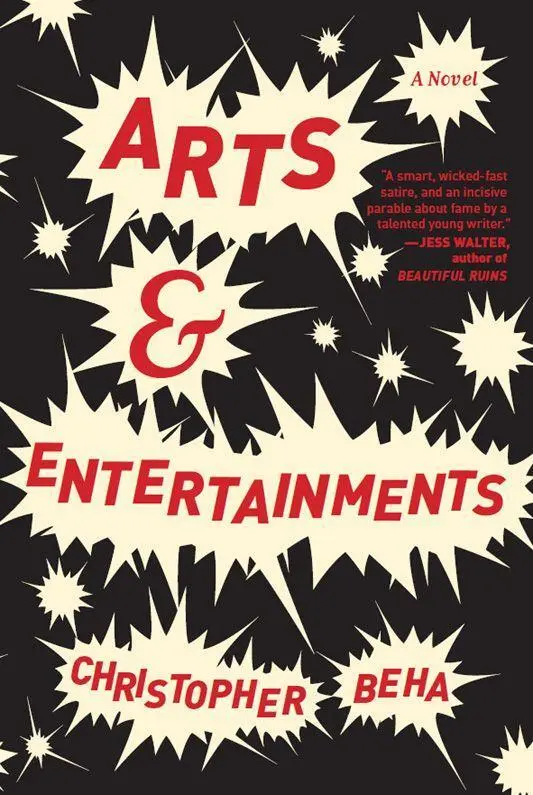
- Название:Arts & Entertainments: A Novel
- Автор:
- Издательство:Ecco
- Жанр:
- Год:2014
- ISBN:нет данных
- Рейтинг книги:4 / 5. Голосов: 1
-
Избранное:Добавить в избранное
- Отзывы:
-
Ваша оценка:
Arts & Entertainments: A Novel: краткое содержание, описание и аннотация
Предлагаем к чтению аннотацию, описание, краткое содержание или предисловие (зависит от того, что написал сам автор книги «Arts & Entertainments: A Novel»). Если вы не нашли необходимую информацию о книге — напишите в комментариях, мы постараемся отыскать её.
Weighted down with debt, Susan's mounting unhappiness, and his own deepening sense of failure, Eddie is confronted with an alluring solution when an old friend-turned-Web-impresario suggests Eddie sell a sex tape he made with an ex-girlfriend, now a wildly popular television star. In an era when any publicity is good publicity, Eddie imagines that the tape won't cause any harm — a mistake that will have disastrous consequences and propel him straight into the glaring spotlight he once thought he craved.
A hilariously biting and incisive takedown of our culture's monstrous obsession with fame,
is also a poignant and humane portrait of a young man's belated coming-of-age, the complications of love, and the surprising ways in which the most meaningful lives often turn out to be the ones we least expected to lead.
Arts & Entertainments: A Novel — читать онлайн бесплатно полную книгу (весь текст) целиком
Ниже представлен текст книги, разбитый по страницам. Система сохранения места последней прочитанной страницы, позволяет с удобством читать онлайн бесплатно книгу «Arts & Entertainments: A Novel», без необходимости каждый раз заново искать на чём Вы остановились. Поставьте закладку, и сможете в любой момент перейти на страницу, на которой закончили чтение.
Интервал:
Закладка:
THE CALLS BEGAN BEFORE the credits were over. Some didn’t surprise him. He’d been hoping to hear from his parents, and despite their tone he was glad that they’d watched the show. They asked what on earth was going on with this little kid, when he was going to straighten things out with Susan, how their unborn granddaughters were coming along. Eddie tried to answer all these questions in a fashion that would reassure them while also providing usable footage for the show. The conversation took place on speakerphone, with the crew listening. After his parents hung up, Kara called them back to get permission to air their voices.
The next call came from an unrecognized number. After a moment’s consideration, Dell told Eddie to pick up. Eddie said hello, and a voice he didn’t recognize replied.
“Who is this?” Eddie asked.
“C’mon, Handsome Eddie,” the voice answered with some embarrassment. “You know who this is. It’s John Wilkins.”
“Wilky,” Eddie said. “Sorry about that. How have you been?”
“I’ve been great. Ever since our reunion I’ve been thinking that we ought to get together more often. Like old times.”
“That would be nice.”
“My wife and I were just saying how we’d love to have you and Melissa over for dinner.”
“I’ll have to check our schedule. Things are pretty busy right now.”
“Just let me know a night that works for you, and we’ll sort things out on our end. I don’t know if you remember, but my wife does interior design. In all modesty, I’ve got to say, our apartment looks great. I think it would really work on camera.”
When Eddie got off the phone, Dell came out from the other room.
“Who was that?”
“A guy I went to school with. We weren’t even friends, really.”
“What does he do? What’s he like?”
“He’s a lawyer,” Eddie said. “He’s got a couple of kids, I think.”
“Don’t bother calling him back,” Dell said.
Other calls came — from St. Albert’s classmates, from cousins, from actors he’d worked with on student films and tiny plays, from seemingly anyone he’d ever met who still had his cell phone number and wanted to be on TV.
Shortly after the next episode aired, Eddie opened a copy of CelebNation to find an article with the headline “Handsome Eddie’s First Kiss.” There was a full-page photo of a woman with short blond hair sitting on a couch with two young boys in her lap. It was the dimples — not on her face, but on the kids — that gave her away.
She’d acted with him in The Crucible, his first play at St. Albert’s. Eddie was Giles Corey — not a starring role, but big for an eighth grader. While his friends formed layup lines on the court in the St. Albert’s basement, Eddie and a sophomore from Melwood named Karen sat Indian-style backstage, reading lines with knees touching. Karen was pretty in a pudgy, dimply way, and she sat with her uniform skirt hiked up to show gym shorts beneath. She smelled of something chalky and floral. Eddie didn’t know whether all girls smelled this way, since he hadn’t been that close to one for any length of time. The other boys in his class knew girls in the natural course of things. Over the summer they sailed and took tennis lessons with girls in Bridgehampton, and they came back to school with stories obviously embellished but rooted in some kind of fact. Once a week Blakeman and some half dozen others went to dancing school, where they learned with these same girls to foxtrot and to waltz. (Eddie had thought this was a joke the first time he’d heard about it, but it was true.) These experiences in hand, they walked unembarrassed on free afternoons the few blocks uptown to Spence or down to Melwood and waited outside for school to let out. Meanwhile, Eddie took the train home with his mom.
Back in Queens the boys knew girls for the simple reason that they went to school with them. Despite the odd anachronism of its separate, single-sex entrances, the parochial school that Eddie would have attended in the absence of his St. Albert’s scholarship mingled the genders completely, and the few neighborhood boys he was friendly with were sexually precocious in ways that would have shocked the swagger out of his ultimately sheltered classmates. When Tommy Lanetti told Eddie about cutting school to finger Jennifer Minovic in the back of the Sunnyside Center movie theater during a lunchtime screening of Turner & Hooch , Eddie could tell by his style of recounting that every word was true.
Around Karen, Eddie was quiet and shy, and she responded teasingly. After the third or fourth rehearsal, she invited him to walk her home. In the lobby of her building on Fifth, she introduced Eddie to the doorman and the elevator operator, calling each by his first name. It thrilled Eddie to refer to grown men in this way. Upstairs the apartment was empty. Karen fetched cans of Coke from the kitchen, and they sat drinking them on the living room couch.
“You’re kind of hot,” Karen said. “You know that, right?”
Eddie wasn’t sure whether she expected an answer, but he told her, “I guess.”
Karen laughed.
“You’re going to be starring in these plays by the time you’re my age.”
She said this as though they were of an entirely different generation. Her attitude implied a hard-won knowledge she wished to convey to him but knew could only be had by subjecting one’s soul to the smithy that was ninth grade. When she’d finished her Coke, she set the can down and calmly kissed him. They went on for half an hour, until Eddie told her he had to be home for dinner.
So it had been for the remaining five weeks of rehearsal. They always messed around right out in the living room, suggesting to Eddie that there was no risk of an adult coming home. Perhaps Karen’s parents wouldn’t have been bothered by discovering him on their couch, his hand beneath their daughter’s uniform skirt. The whole thing was so strange to Eddie that he couldn’t know.
The arrangement only lasted as long as the play. When Karen’s father brought a bouquet of flowers backstage at the last performance, she didn’t introduce him to Eddie. When he casually brought up the possibility of seeing each other over Christmas break, Karen explained that her family was going to Jamaica. Eddie wasn’t sure she would have appreciated an eighth grader waiting unannounced outside her school, so he made no effort to track her down in the spring. What had already happened was enough. He had confidence for the first time in his life, and that confidence was bound intimately to the belief that he could act. And Karen was right: by sophomore year, he was the star of the show.
All of this had retreated to a dark corner of his memory until he picked up the magazine that day. But he recognized Karen on the page, and it came flooding back. Perhaps she was really the one to blame for setting him on the disastrous path toward acting. Though it didn’t seem so disastrous anymore. This article more than anything else made Eddie realize something he’d been too busy to understand sooner: he was a regular on a television show. He’d gotten what he’d always wanted.
Karen worked in finance now. She was divorced and raising her sons on her own. She described rehearsing The Crucible with Eddie. “He was younger than me,” she said. “But he was kind of a wild one. He talked me into taking him home after rehearsal. I have to say I wasn’t too surprised when I saw that tape. I could have told you back then he had it in him.”
TWENTY
“WHAT ARE WE DOING this morning?” Eddie asked over breakfast a few weeks later.
Melissa worked a bit of egg from a corner of her square hotel plate.
“I’ve got class,” she answered. “You’re on your own.”
Читать дальшеИнтервал:
Закладка:
Похожие книги на «Arts & Entertainments: A Novel»
Представляем Вашему вниманию похожие книги на «Arts & Entertainments: A Novel» списком для выбора. Мы отобрали схожую по названию и смыслу литературу в надежде предоставить читателям больше вариантов отыскать новые, интересные, ещё непрочитанные произведения.









Обсуждение, отзывы о книге «Arts & Entertainments: A Novel» и просто собственные мнения читателей. Оставьте ваши комментарии, напишите, что Вы думаете о произведении, его смысле или главных героях. Укажите что конкретно понравилось, а что нет, и почему Вы так считаете.