Ben Stroud - Byzantium - Stories
Здесь есть возможность читать онлайн «Ben Stroud - Byzantium - Stories» весь текст электронной книги совершенно бесплатно (целиком полную версию без сокращений). В некоторых случаях можно слушать аудио, скачать через торрент в формате fb2 и присутствует краткое содержание. Год выпуска: 2013, Издательство: Graywolf Press, Жанр: Современная проза, на английском языке. Описание произведения, (предисловие) а так же отзывы посетителей доступны на портале библиотеки ЛибКат.
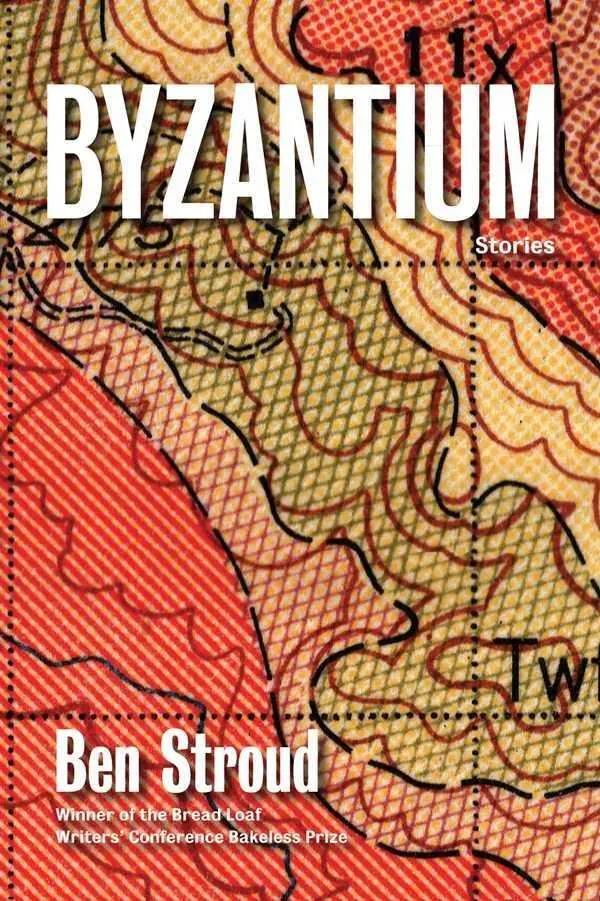
- Название:Byzantium: Stories
- Автор:
- Издательство:Graywolf Press
- Жанр:
- Год:2013
- ISBN:нет данных
- Рейтинг книги:3 / 5. Голосов: 1
-
Избранное:Добавить в избранное
- Отзывы:
-
Ваша оценка:
Byzantium: Stories: краткое содержание, описание и аннотация
Предлагаем к чтению аннотацию, описание, краткое содержание или предисловие (зависит от того, что написал сам автор книги «Byzantium: Stories»). Если вы не нашли необходимую информацию о книге — напишите в комментариях, мы постараемся отыскать её.
makes us believe that these are accounts we haven’t heard yet. As the chronicler of Burke’s exploits muses, “After all, where does history exist, except in our imagination? Does that make it any less true?”
Byzantium: Stories — читать онлайн бесплатно полную книгу (весь текст) целиком
Ниже представлен текст книги, разбитый по страницам. Система сохранения места последней прочитанной страницы, позволяет с удобством читать онлайн бесплатно книгу «Byzantium: Stories», без необходимости каждый раз заново искать на чём Вы остановились. Поставьте закладку, и сможете в любой момент перейти на страницу, на которой закончили чтение.
Интервал:
Закладка:
The Bainbridge farm lay in the remoter, southern quarter of the island, beyond the village of New Nazareth. I found the cabin at the end of a track that led first through a birch wood and then into a clearing planted with potatoes. As I walked I had assured myself of victory, but now that I approached the Bainbridge cabin I grew nervous. What if Dorothea’s father refused me? I considered methods for clandestine courtship. Secret meetings, a hollowed tree for depositing notes.
These imaginings proved unnecessary: though he received me coldly, Bainbridge let me in.
“Mr. Ames,” he said upon opening the door. He led me to the cabin’s crude parlor, where Dorothea sat working on a stocking. A paperboard screen and blankets slung over strings were all that divided the cabin into rooms. On the walls hung a few newspaper illustrations of Mexican scenes, from the recent war. A glass hutch filled with dull china stood across from the door, and the rest of the furniture took the form of trunks, save for the chairs gathered around the hearth. I was offered the one next to Dorothea while Bainbridge sat across from us, beside his wife. Dorothea glanced up, then returned to her stocking, and Bainbridge stared at the two of us while his wife poked at the fire. Every attempt I made at a pleasantry — on the weather, on the last Sabbath’s sermon — was met with a “hmph” by Bainbridge and silence by Dorothea and her mother.
This continued for some time, and I despaired. Was my love to founder so quickly? Then Bainbridge rose to visit the privy, and, at a nod from her mother, Dorothea spoke. “I’m glad you came,” she said, putting down the stocking and grinning up at me. “I was worried you wouldn’t.”
“I had to.” With that I offered her the wooden hand and made my speech. Her cheeks reddened, and she took the hand and gave me hers in return. Dorothea’s mother had focused her eyes on the small fire and was pretending to ignore us. I wondered then if she had argued for me. For a full five minutes I clutched Dorothea’s hand. She pulled it away only when the scrape of the back door announced her father’s return.
Once a week, all through the rest of May and into June, I called on Dorothea. Each of my visits followed the same pattern. We would sit in silence as her father watched us, me with my hands folded, Dorothea working on a stocking. Then, once Bainbridge absented himself, her mother would turn away, pretending to contemplate some particular coal, and I would present my gift — another hand, so that I might hold both, and after that a piece of polished burl I called her cheek, which I gave Dorothea in exchange for a kiss of its original. In those rare free minutes we would talk of our days or play teasing games with one another. Once she read me a poem, and another time she made me keep silent while she searched my face. The moment I left her I ached as if fevered, and with each visit it seemed our souls were being knit together.
At our sixth meeting, though, I found her altered.
As before, she worked on a stocking while her father sat with us, but when he left, rather than wake into the girl I had come to know, she stared into her lap. Her mother, sitting across from us as always, ignored the fire and twisted a handkerchief in her fingers.
“Dory,” I said. But she didn’t look up. “Dory, what is it?”
Then came the scraping of the back door — her father returning sooner than usual. In a moment he was standing over me and telling me it was time to leave.
“I hope you got to say your good-byes,” he said once we were outside. “That’s the last of your calls, Mr. Ames.”
“I don’t understand,” I said. “My intentions are honorable.” I wondered if this was what concerned him. “I hope to marry Dorothea.”
“I won’t permit it,” he said.
His flat refusal surprised me. I stood there more flabbergasted than hurt.
“Sir,” I said, “there must be something I can do.”
“Nothing,” he said.
“But, Mr. Bainbridge,” I protested, “surely—”
“You’ll get my permission the day you’re raised to the Order!” he shouted, and his face grew fiery. He meant to say I had no hope. The Order of Maccabaeus was the highest honor ordained by Josiah. It had as yet no members. I could not understand Bainbridge’s stubbornness, and to distract my sick heart — for with each passing moment hurt pumped in — I spent my long walk home cursing him and his arrogance.
IT WAS SOME WEEKS AFTER that last meeting with Dorothea — lost weeks, despairing weeks — that Josiah summoned everyone to the Temple. For four days he had kept himself shut in the Chamber of the Most Holy. While I had been courting Dorothea doubts had been spreading across the island. According to The Book of Truths, with the passing of spring we were to have left the Years of Preparation and entered the Years of Manifestation. By now thousands were supposed to be arriving each week. Instead there had been only a trickle of new converts. And where were the promised wonders, the signs of the New Age? Why hadn’t angels appeared on Mount Nebo, or fire broken the sky to devour the homes and stores of those sliding into apostasy? Some were saying our faith had fallen short, that we need only trust more in the Lord. Others whispered that Josiah and the elders were in secret taking new wives, like the Mormons of Utah, and the Lord was displeased. Still others, couching their words in the claim that they were merely repeating what they’d heard, accused Josiah of fooling us all with humbuggery. The doubts could no longer be ignored, and at the most recent Sabbath Josiah had announced he was going into the Chamber of the Most Holy to beseech the Lord to show him where we had erred. Each day I had prayed for him. My faith had never wavered.
As I entered the Temple that day, my eyes sought Dorothea and soon found her raven braids peeking from beneath her bonnet. She sat with her father and mother near the front. In the last weeks I had felt as if part of me had sickened and died. There was little more than a cool emptiness left within my chest. Pickle had been solicitous, warning me of destruction and praying I’d return to reason and moderation. Now if I saw Dorothea it was only from a distance, here in the Temple or when she came to town with her mother to Teague’s store or with her father during his visits to Josiah. It was rumored Bainbridge was being considered for eldership. Always she would bow her head rather than meet my eyes. I still had not learned the reason for the breaking of our courtship, and the letter I had left for her at Teague’s went unanswered. I tried to keep from looking at her, to stare at the rafters or out the windows, but it was impossible. With her back to me I could study her without consequence: her shawl-wrapped shoulders, her bare neck, her bonneted head. Was she happy?
Once everyone was settled, Josiah stepped through the door at the front of the sanctuary, bowed his head as he walked through the Arch of the Blood, and mounted the pulpit. He looked out over us, and an even deeper quiet fell upon the pews.
“There has been confusion and uncertainty,” he began, his voice calm. “I’ve shared it myself. We have come to the site of Zion, we have begun building the city, and yet we look around us and wonder, Where are the multitudes? Last night, the fourth night of my vigil, the Lord put me into a deep sleep, then took me up and showed me a vision of our island. I saw Port Hebron, I saw the forest and the farms, I saw the lake around us, wide as a sea.” Now his voice began to rise. His hands gripped the pulpit’s sides. His eyes flashed. “The Lord made me to look at the lake and, lo, fire appeared on the horizon, blazing toward our shores. The Lord said, ‘This unholy fire you must quench.’ Then the fire fell away, and in the middle of the island a pit opened and out of the pit came a cloud of pestilence. The Lord showed me the pestilence spreading among us. It killed everybody it touched. The Lord’s voice said, ‘This unholy plague you must cure.’ I said to the Lord, ‘The fire I understand, the traders who circle our island. But the plague? The plague I do not understand.’”
Читать дальшеИнтервал:
Закладка:
Похожие книги на «Byzantium: Stories»
Представляем Вашему вниманию похожие книги на «Byzantium: Stories» списком для выбора. Мы отобрали схожую по названию и смыслу литературу в надежде предоставить читателям больше вариантов отыскать новые, интересные, ещё непрочитанные произведения.








Обсуждение, отзывы о книге «Byzantium: Stories» и просто собственные мнения читателей. Оставьте ваши комментарии, напишите, что Вы думаете о произведении, его смысле или главных героях. Укажите что конкретно понравилось, а что нет, и почему Вы так считаете.