Howard Norman - Next Life Might Be Kinder
Здесь есть возможность читать онлайн «Howard Norman - Next Life Might Be Kinder» весь текст электронной книги совершенно бесплатно (целиком полную версию без сокращений). В некоторых случаях можно слушать аудио, скачать через торрент в формате fb2 и присутствует краткое содержание. Год выпуска: 2014, Издательство: Houghton Mifflin Harcourt, Жанр: Современная проза, на английском языке. Описание произведения, (предисловие) а так же отзывы посетителей доступны на портале библиотеки ЛибКат.
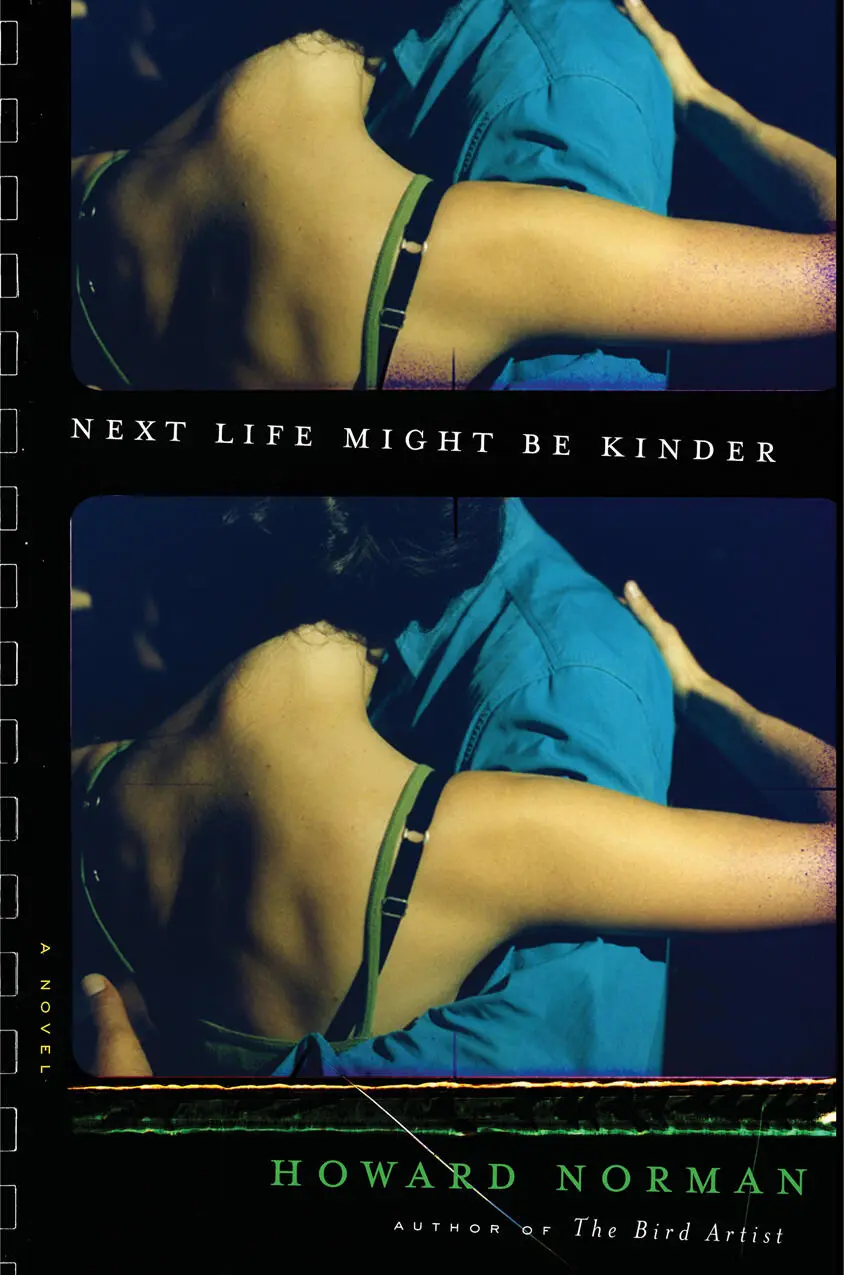
- Название:Next Life Might Be Kinder
- Автор:
- Издательство:Houghton Mifflin Harcourt
- Жанр:
- Год:2014
- ISBN:нет данных
- Рейтинг книги:5 / 5. Голосов: 1
-
Избранное:Добавить в избранное
- Отзывы:
-
Ваша оценка:
Next Life Might Be Kinder: краткое содержание, описание и аннотация
Предлагаем к чтению аннотацию, описание, краткое содержание или предисловие (зависит от того, что написал сам автор книги «Next Life Might Be Kinder»). Если вы не нашли необходимую информацию о книге — напишите в комментариях, мы постараемся отыскать её.
Sam Lattimore meets Elizabeth Church in 1970s Halifax, in an art gallery. The sparks are immediate, leading quickly to a marriage that is dear, erotically charged, and brief. In Howard Norman’s spellbinding and moving novel, the gleam of the marriage and the circumstances of Elizabeth’s murder are revealed in heart-stopping increments. Sam’s life afterward is complicated. For one thing, in a moment of desperate confusion, he sells his life story to a Norwegian filmmaker named Istvakson, known for the stylized violence of his films, whose artistic drive sets in motion an increasingly intense cat-and-mouse game between the two men. For another, Sam has begun “seeing” Elizabeth — not only seeing but holding conversations with her, almost every evening, and watching her line up books on a small beach. What at first seems simply hallucination born of terrible grief reveals itself, evening by evening, as something else entirely.
Next Life Might Be Kinder
Next Life Might Be Kinder — читать онлайн бесплатно полную книгу (весь текст) целиком
Ниже представлен текст книги, разбитый по страницам. Система сохранения места последней прочитанной страницы, позволяет с удобством читать онлайн бесплатно книгу «Next Life Might Be Kinder», без необходимости каждый раз заново искать на чём Вы остановились. Поставьте закладку, и сможете в любой момент перейти на страницу, на которой закончили чтение.
Интервал:
Закладка:
My agitation seemed to increase tenfold. “Know what? I study your bookshelves and I see a copy of I Apologize for the Late Hour right in plain sight. A copy of my one novel. I asked you not to bring my writing into our sessions.”
“As far as I know, I haven’t referred to your book. My bookshelves are where I keep my books. The fact is, I was given your novel as a gift, before we began our work together. Let me remind you: you’ve asked that I not mention two books, your own and The Victorian Chaise-Longue. You’ve asked me not to read Marghanita Laski’s, which, as I’ve said, restricts my ability to put things in context. Still, I’ve honored your request.”
“You’re probably trying to be an ethical person.”
“Professionally, you mean.”
“I have a terrible headache. It’s probably the worst headache I’ve ever had. It’s hammers — no, it’s more like those jackhammers out on Barrington Street these days.”
“It’s ironic, isn’t it? They fix the sidewalks, but it doesn’t change the basic grid of the city in the least. It strengthens our familiar paths, or at least reinstates their surfaces. Makes it easier to navigate them.”
“Are you saying something about my life, here, by any chance?”
“Actually, Sam, I was talking about streets. Besides, if I was saying something about your life, it wouldn’t be by chance.”
“This headache is killing me.”
“I have some aspirin and something stronger.”
“The something stronger, is it over-the-counter?”
“Do you mean ethical to dispense? No. But let’s sidestep that, shall we? Unethically.”
He reached into a drawer and took out a vial of pills, tapped one onto the palm of his hand, and held it out to me. I took the pill and swallowed it with some water.
“That should take about ten minutes to kick in,” he said. “Possibly fifteen.”
“I might be less truthful if the headache disappears.”
“That very same thought occurred to me. That truth is a byproduct of pain. You’ve said that physical pain helps you think clearly, because you have to think against the pain.”
I said, “No, you have that wrong. I told you that’s what Elizabeth said, relating to a time she herself suffered a headache and was working on her dissertation.”
“My apologies.”
“Except — I know how you think. You think that my seeing Elizabeth all these months keeps me connected to the pain of losing her, and therefore distracts me from the truth — that she isn’t really there.”
“May I suggest you not put words in my mouth?”
“Fair enough.”
“Sam, we don’t talk about fairness in here, do we? We don’t even want to be hospitable to the notion of fairness. I think, as a basic premise, fairness does not apply to what happened to Elizabeth, and to you. Fairness cannot be allowed into consideration. What happened was hardly fair.”
Pages from Elizabeth’s Dissertation Notebook
I took in your critique of the novel you have just read. Allow me to respond. At the hand of a conscientious writer, synchronicity of incident might contribute to an indispensable sense of verisimilitude in a work of fiction. In the hand of a less conscientious writer, it may seem too much contrivance, meaning less original. The only question is, does the work as a whole allow one to taste the bitterness and sweetness of life. If the answer is a resounding yes, then to point out examples of so-called contrivance strikes me as prosecutorial, carping and undignified.
— Chekhov, in a letter to a friend in the theater
I can see two people being swept up by an atmosphere.
— Myrna Loy to William Powell, in Double Wedding
My friend Astrid said, “I envy people with repressed memories.” (Of course, she lived through the Blitz.) But I said, too bad we can’t choose which to repress. We had a good laugh. But her expression belied her laughter.
— Marghanita Laski
Good Lord, I simply cannot recall Stephen’s face, my great love. I can’t remember it. It is driving me mad. But I refuse to rely on photographs. And now all these autumn leaves are falling. How can they? How can they abandon their trees like that? This is all too much for me. I’m taking to my bed.
— Oleander Martin, British artist and writer
After my shell-shock during the war, the way I defeated concussion and amnesia was at an excruciating slow pace to piece together, like a jig-saw puzzle the size of a gymnasium floor, everything I remembered about the life of my trench-mate those many weeks, Robert Meyers-Brittman. What a gift, then, that Bobby was such a talker. In the trenches we stood apart at a distance no more than three meters. One morning, on a charge through barbed wire, Bobby was blown to pieces by artillery in the mud. Yet still I feel him at that former proximity now. I hear the exact timbre of his voice. Quite clearly hear it, drumming of rain on his helmet and mine notwithstanding.
— Michael Hoyd, World War I soldier and memoirist
On ward rounds I saw a fellow banging his head against a wall. “Stop it! Stop it! Stop it!” I think he was trying to banish a memory that wouldn’t allow it.
— Stewart Plate, hospital orderly, Washington, D.C., during the American Civil War
To travel all one needs to do is close one’s eyes.
— Emily Dickinson, American poet
In this remote and strange place, sometimes it is close to overwhelming, how deep my desire for my old life; though perhaps not for all of it.
— Marcus Densmore, Canadian diarist, 1866
Today I fell to the ground at the pull of memory. There quite seemed a permanence to my defeat. And here I thought, in their profound tug-of-war, present and future would, by sheer shouldering force of will and superior numbers, win out over the past. How wrong I was.
— Marghanita Laski
The Masquerade Party
AFTER RECORDING THE final episode of Mr. Keen, Tracer of Lost Persons, there was a masquerade party held at the CBC offices. It was the brainstorm of the series’ director, Martha Bellevance, who’d worked in radio for decades, that everyone dress up as characters from the episodes. Four of the crew who worked for Martha — a writer, a producer, a technician, and an actor — obviously hadn’t been consulted in advance, because they all arrived dressed as Mr. Keen. They took as a model the portrait of Mr. Keen in the original publicity materials (who in fact was modeled on a night janitor in the old NBC radio studios in New York; he was dapper in an expensive suit with wide lapels and had an expression of skeptical curiosity and very kind eyes). The rest of us were dressed as various characters who had been tracked down by Keen. We each wore a name tag identifying the title of the episode and the name of the character. I dressed as Bobo the clown, from “The Case of the Missing Clown.”
Though Elizabeth had followed the radio series faithfully (it scored high ratings!), she dressed as a bellman. She had her hair tucked up under a bellman’s cap. “I can’t really look like a man, I know,” she’d said. “But I like the outfit.” Looking back on this, I wonder if she was at all conscious of inhabiting her fear. Or was she courageously facing it down? She’d asked Derek Budnick for the uniform, and he’d provided her with a moth-bitten one from the hotel’s basement storage. At the party her costume was a big hit, though Martha Bellevance came over and said, “I don’t remember a bellhop in any of the episodes. Which one was it?”
“I’m afraid I’ve dressed wrongly,” Elizabeth said.
Martha wanly smiled and left us be.
Читать дальшеИнтервал:
Закладка:
Похожие книги на «Next Life Might Be Kinder»
Представляем Вашему вниманию похожие книги на «Next Life Might Be Kinder» списком для выбора. Мы отобрали схожую по названию и смыслу литературу в надежде предоставить читателям больше вариантов отыскать новые, интересные, ещё непрочитанные произведения.






Обсуждение, отзывы о книге «Next Life Might Be Kinder» и просто собственные мнения читателей. Оставьте ваши комментарии, напишите, что Вы думаете о произведении, его смысле или главных героях. Укажите что конкретно понравилось, а что нет, и почему Вы так считаете.