Stuart Dybek - Paper Lantern - Love Stories
Здесь есть возможность читать онлайн «Stuart Dybek - Paper Lantern - Love Stories» весь текст электронной книги совершенно бесплатно (целиком полную версию без сокращений). В некоторых случаях можно слушать аудио, скачать через торрент в формате fb2 и присутствует краткое содержание. Год выпуска: 2014, ISBN: 2014, Издательство: Farrar, Straus and Giroux, Жанр: Современная проза, на английском языке. Описание произведения, (предисловие) а так же отзывы посетителей доступны на портале библиотеки ЛибКат.
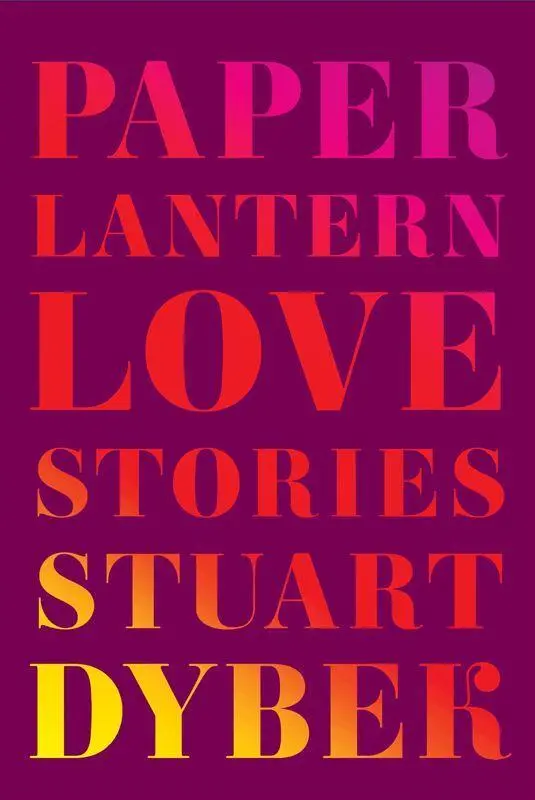
- Название:Paper Lantern: Love Stories
- Автор:
- Издательство:Farrar, Straus and Giroux
- Жанр:
- Год:2014
- ISBN:9780374710545
- Рейтинг книги:5 / 5. Голосов: 1
-
Избранное:Добавить в избранное
- Отзывы:
-
Ваша оценка:
Paper Lantern: Love Stories: краткое содержание, описание и аннотация
Предлагаем к чтению аннотацию, описание, краткое содержание или предисловие (зависит от того, что написал сам автор книги «Paper Lantern: Love Stories»). Если вы не нашли необходимую информацию о книге — напишите в комментариях, мы постараемся отыскать её.
Ready!
Paper Lantern
Aim!
On command the firing squad aims at the man backed against a full-length mirror. The mirror once hung in a bedroom, but now it’s cracked and propped against a dumpster in an alley. The condemned man has refused the customary last cigarette but accepted as a hood the black slip that was carelessly tossed over a corner of the mirror’s frame. The slip still smells faintly of a familiar fragrance.
Some of Dybek’s characters recur in these stories, while others appear only briefly. Throughout, they—and we—are confronted with vaguely familiar scents and images, reminiscent of love but strangely disconcerting, so that we might wonder whether we are looking in a mirror or down the barrel of a gun. “After the ragged discharge,” Dybek writes, “when the smoke has cleared, who will be left standing and who will be shattered into shards?”
brims with the intoxicating elixirs known to every love-struck, lovelorn heart, and it marks the magnificent return of one of America’s most important fiction writers at the height of his powers.
Paper Lantern: Love Stories — читать онлайн бесплатно полную книгу (весь текст) целиком
Ниже представлен текст книги, разбитый по страницам. Система сохранения места последней прочитанной страницы, позволяет с удобством читать онлайн бесплатно книгу «Paper Lantern: Love Stories», без необходимости каждый раз заново искать на чём Вы остановились. Поставьте закладку, и сможете в любой момент перейти на страницу, на которой закончили чтение.
Интервал:
Закладка:
Lise took her literature seriously, although she’d probably say not seriously enough. She was a self-described ABD—All But Dissertation—initials she likened to those indicating a disease, or a social stigma like a welfare mother on ADC. She was kidding, but before I caught myself, the comparison between an ADC mother and an ABD from the University of Chicago reminded me of the lack of proportion in those few poems by Sylvia Plath that used Holocaust imagery to convey the pain of a young woman from Smith.
“Actually, ABD is a minor epidemic at the U of C,” Lise said. “There should be a graveyard in old Stagg Stadium, not under the stands where the atom bomb was hatched, but right out on the playing field where Jay Berwanger dodged tackles, little crosses marking all the dissertations that suffered and died there.”
Her unfinished dissertation was titled One City, One Love: Endless Becoming in the Work of Dawn Powell. Its three-hundred-plus pages awaited completion behind a closed door in a sewing room she called Limbo in the apartment she rented over a dry cleaner in Hyde Park. To pay the rent, Lise augmented a small trust fund by teaching freshman comp at a couple of community colleges in the Chicago area. One was near Arlington, and sometimes, when I’d drive in from Michigan to see her, we’d meet at the Thoroughbred track there. Our first time at the races we won big—for us, anyway—$687 on a horse we couldn’t not bet on named Epiphany. The following night at a French restaurant overlooking an illuminated Lake Shore Drive, we blew our winnings on a four-course meal washed down with a magnum of a champagne from a village fittingly called Bouzy. After the waiter had ceremoniously buried the empty bottle neck-down in the ice bucket, Lise said, “You have to promise we’ll run away to Bouzy together.” She pronounced it boozy.
“Tonight?” I asked, checking my watch.
“Tonight’s too late, Jack. It’s already tomorrow in France,” she said, and then, leaning in to be kissed, knocked over the flute with the last of her wine.
Lise was a self-described “promiscuous kisser,” though that didn’t keep her from regarding a kiss as deeply intimate—especially, she added, if it’s my tits being kissed. After a few drinks, she had a way of releasing from a kiss with her mouth still open, shaped as if the kiss continued, a facial expression that her good looks allowed her to get away with, as they allowed her to get away with sounding a little breathless on the subject of sex. The restaurant was closing, the chefs, sans toques, leaned in the doorway of the kitchen, drinking red wine and watching what Lise called our PDAs. We joked that night about calling it quits as high rollers while we were ahead, but over the racing season we returned to the track in Arlington hoping for another score. This time we’d invest in tickets to Bouzy.
We’d been drinking the night we first met, too, though it was pitchers of Rolling Rock, not champagne. I’d driven into Chicago for a reading and book signing by a friend who’d been a teacher of mine when I was in a graduate program in American studies there. After his reading, a small group, Lise among them, adjourned to a Hyde Park neighborhood pub. I’d noticed her in the audience at the bookstore. It was bitterly cold, and I’d taken a chance driving in but thought I could make it back to Michigan before the predicted lake-effect snow. She was wearing a furry Russian hat à la Doctor Zhivago that accentuated her cheekbones and the green of her eyes. There should be a word for a flair for looking stylish in hats. For Lise that included baseball caps, bathing caps, rain hoods, bicycle helmets, headbands, and probably tiaras and babushkas—anything that swept her hair up and bared her delicate face. Tendrils of auburn hair kept straggling out from under the fur hat and she’d tuck them back with the unconscious self-consciousness of a girl tugging up her swimsuit.
Later, when we’d tell each other the story of how we met, the word we’d use was effortless . We found ourselves seated directly across the table from each other in the pub and discussing our mutual friend’s new book. Then, looking for things in common, we went on to talking about books that had changed us, movies that had swept us away, music we loved, food, travel, all the while refilling each other’s beer steins, until inevitably we reached the subject of our personal lives.
Lise brought it up in the spirit of recounting what changed her, what had swept her away. I hadn’t drunk anywhere near enough to tell her about the ill-advised relationship I’d had after I’d quit my job as a city caseworker, with a woman named Felice, who had once been on my caseload. She’d managed to get off welfare by working as a cocktail waitress in a mob bar. Her dream was to go to law school. At the time we met, her daughter, Starla, was in remission from leukemia. When the disease returned, Felice turned to drugs. We’d go together to the children’s wing of County Hospital to read to Starla. She loved stories about cats, especially a series about Jenny Linsky, a black cat who wore a red scarf. I bought Starla a red scarf she took to wearing, which was as close as we could get to bringing her the cat that Felice was determined to sneak into the hospital. Starla’s death after months of wasting away left Felice inconsolable. It wasn’t numbness or escape she was after; she wanted to hurt herself, and I couldn’t find a way to help her. Talking about her like that sounded wrong, though—psychologized, abstracted, factual, but also censored, sanitized, and less than honest. I didn’t know how to tell what had happened, even to myself, and felt too guilty to try. After Felice disappeared, I had lucked into a teaching job in Michigan on the strength of my newly published first book. A few threatening letters from Felice were forwarded to me—letters threatening herself. They arrived with a Chicago postmark but no return address. I never knew where she was living or with whom, and felt braced for worse to come. That night in the pub with Lise, back in the city from which I felt exiled, was the first time in a long while that it seemed natural to share a drink with a woman. When Lise asked me directly, I simply told her I wasn’t seeing anyone.
Lise said that she was involved, off and on, with an older man who was a collector.
“A what?” I asked.
She laughed. “Whenever I say what Rey does, people do a double take.”
“Tax collector? Butterfly collector? Juice loan collector?”
“An everything and anything collector. He’s got a great eye! That’s the name of his business: Great Eye Enterprises. He has this talent for stuff. This stein—he could give you a disquisition on beer steins that would make you have to have a set of them. It’s sexy. He’s sexy. It’s partly smell—I don’t think anything indicates sexual attraction more than smell. It’s the sense most directly linked with memory. With Rey it was love at first sniff. The first time I met him, I literally started to tremble and had to hide in the Ladies’. Even when we’re apart I keep one of his undershirts in my closet for a fix.”
“So, is this an off or an on cycle?”
“Sort of in between. He’s starting a business in Denver. We talk on the phone at least twice a day. There’s so much history between us, and we deserve to be together, but I don’t know. I need my doctorate, and though he gets me, he doesn’t get that. He’s a salesman, not a scholar. He made a half a million dollars last year and wants to support me, but he’s getting tired of waiting. He says he needs a woman in his bed every night, which sounds hot, but he’s major needy, and in the culture he was raised in I’m not sure ‘in his bed’ doesn’t extend to ‘in the kitchen.’”
Читать дальшеИнтервал:
Закладка:
Похожие книги на «Paper Lantern: Love Stories»
Представляем Вашему вниманию похожие книги на «Paper Lantern: Love Stories» списком для выбора. Мы отобрали схожую по названию и смыслу литературу в надежде предоставить читателям больше вариантов отыскать новые, интересные, ещё непрочитанные произведения.







Обсуждение, отзывы о книге «Paper Lantern: Love Stories» и просто собственные мнения читателей. Оставьте ваши комментарии, напишите, что Вы думаете о произведении, его смысле или главных героях. Укажите что конкретно понравилось, а что нет, и почему Вы так считаете.