Ali Smith - How to be both
Здесь есть возможность читать онлайн «Ali Smith - How to be both» весь текст электронной книги совершенно бесплатно (целиком полную версию без сокращений). В некоторых случаях можно слушать аудио, скачать через торрент в формате fb2 и присутствует краткое содержание. Жанр: Современная проза, на английском языке. Описание произведения, (предисловие) а так же отзывы посетителей доступны на портале библиотеки ЛибКат.
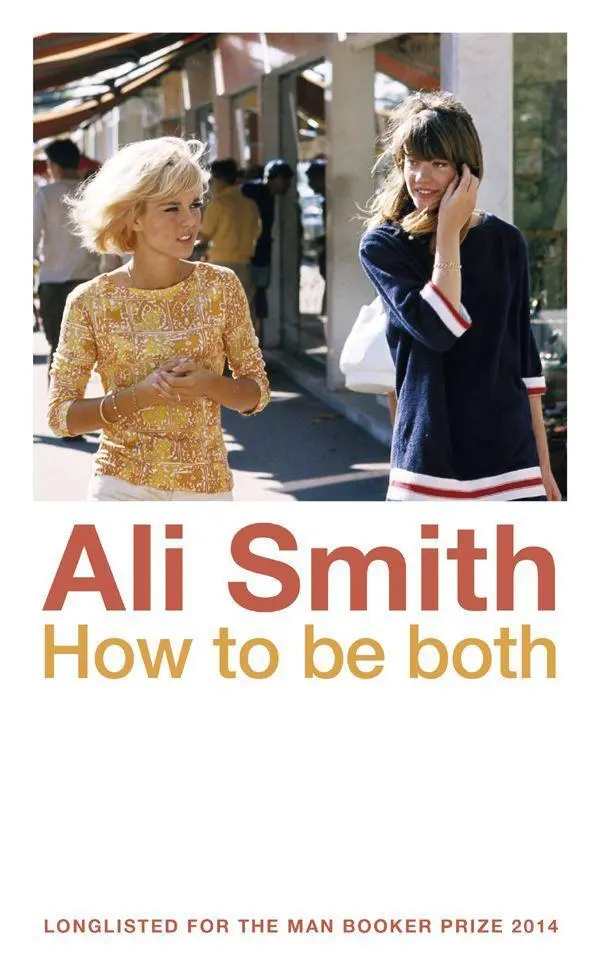
- Название:How to be both
- Автор:
- Жанр:
- Год:неизвестен
- ISBN:нет данных
- Рейтинг книги:4 / 5. Голосов: 1
-
Избранное:Добавить в избранное
- Отзывы:
-
Ваша оценка:
How to be both: краткое содержание, описание и аннотация
Предлагаем к чтению аннотацию, описание, краткое содержание или предисловие (зависит от того, что написал сам автор книги «How to be both»). Если вы не нашли необходимую информацию о книге — напишите в комментариях, мы постараемся отыскать её.
How to be both is a novel all about art’s versatility. Borrowing from painting’s fresco technique to make an original literary double-take, it’s a fast-moving genre-bending conversation between forms, times, truths and fictions. There’s a Renaissance artist of the 1460s. There’s the child of a child of the 1960s. Two tales of love and injustice twist into a singular yarn where time gets timeless, structural gets playful, knowing gets mysterious, fictional gets real — and all life’s givens get given a second chance.
A NOTE TO THE READER:
Who says stories reach everybody in the same order?
This novel can be read in two ways and this book provides you with both.
In half of all printed editions of the novel the narrative EYES comes before CAMERA.
In the other half of printed editions the narrative CAMERA precedes EYES.
The narratives are exactly the same in both versions, just in a different order.
The books are intentionally printed in two different ways, so that readers can randomly have different experiences reading the same text. So, depending on which edition you happen to receive, the book will be: EYES, CAMERA, or CAMERA, EYES. Enjoy the adventure.
How to be both — читать онлайн бесплатно полную книгу (весь текст) целиком
Ниже представлен текст книги, разбитый по страницам. Система сохранения места последней прочитанной страницы, позволяет с удобством читать онлайн бесплатно книгу «How to be both», без необходимости каждый раз заново искать на чём Вы остановились. Поставьте закладку, и сможете в любой момент перейти на страницу, на которой закончили чтение.
Интервал:
Закладка:
Mrs Rock breathed out slowly. She leaned forward. She told George she was glad George had told her the truth about saying that word and pretending she hadn’t. Then she settled back into her chair, because George had stayed silent so far at least, and started on about the Greek notion of the truth-teller.
This, Mrs Rock said, was a very important figure in Greek life and philosophy, usually someone with no power, no social status to speak of, who’d take it upon themselves to stand up to the highest authority when the authority was unjust or wrong, and would express out loud the most uncomfortable truths, even though by doing this they would probably even be risking their life.
Upon himself or herself, George said. He or she. His or her life. And, just to say, I find this second allusion, or example or illustration, much more effective than your minotaur one.
Mrs Rock put her pencil down on the desk with a click. She shook her head. She smiled.
Georgia, she said. As I’m sure you’re aware. You can be a little draconian at times.
I’ll take that as a compliment, Mrs Rock, George said.
Yes, Georgia, you may. Same time next Tuesday, Mrs Rock said. See you then.
George opens her notebook. It’s nearly noon.
This is the point in this story at which, according to its structure so far, a friend enters or a door opens or some kind of plot surfaces (but which kind? the one that means the place where a dead person’s buried? the one that means the place where a building’s to be built? the one that means a secret stratagem?); this is the place in this book where a spirit of twist in the tale has tended, in the past, to provide a friendly nudge forward to whatever’s coming next.
George is ready and waiting.
She plans to count the people and how long and how little time they spend looking or not looking at a random picture in a gallery.
What she doesn’t know yet is that in roughly half an hour or so, while she’s collating final figures (a hundred and fifty seven people will have passed through the room altogether and out of this number twenty five will have looked or glanced for no longer than a second; one woman will have stopped to look at the carving of the frame but not looked at the picture for longer than three seconds; two girls and a boy in their late teens will have stopped and made amused comments about St Vincent’s knot of monk hair, the growth like a third eye at the front of his forehead, and stood there looking at him for thirteen full seconds), this will happen:
[Enter Lisa Goliard]
George will recognize her immediately even from having seen her only once in an airport.
She will walk into this room in this gallery, glance round for a moment, see George, not know George from Adam, then come and stand in front of George between her and the painting of St Vincent Ferrer.
She’ll stand right in front of it for several minutes, far longer than anyone except George herself.
Then she’ll shoulder her designer bag and she’ll leave the room.
George will follow.
Standing close to the woman’s back, so long as there are enough people to camouflage her (and there will be), she will say the name like a question (Lisa?) on the stairs, just to make sure it’s her. She will see if the woman turns when she hears the name (she will), and will pretend when she does by looking away and making herself as much like an ordinary disaffected teenage girl as possible that it wasn’t her who said it.
George will surprise a talent in herself for being surreptitious.
She will track the woman, staying behind her and aping the ordinary disaffected teenage girl all the way across London including down into the Underground and back up into the open air, till that woman gets to a house and goes in and shuts its door.
Then George will stand across the road outside the house for a bit.
She will have no idea what to do next or even where she is in London any more.
She will see a low wall opposite the house. She will go and sit on it.
Okay.
1. Unless the woman is some kind of early renaissance specialist or St Vincent Ferrer expert (unlikely, but possible) there is no way she’d ever know about or think to make the journey specially to see this painting out of all the paintings in the whole of London. This will suggest that for her to have known anything about it, including the basic fact of its existence, she must still have been tailing, one way or another, George’s mother — unless she’s tracking George right now — at the time they went to Ferrara.
2. George’s mother is dead. There was a funeral. Her mother is rubble. So why is this woman still on the trail? Is she tracking George? (Unlikely. Anyway, now George is tracking her.)
3. (and George will feel her own eyes open wider at this one) Perhaps somewhere in all of this if you look there’s a proof of love.
This thought will make George furious.
At the same time it will fill her with pride at her mother, right all along. Most of all she will wonder at her mother’s sheer talent.
The maze of the minotaur is one thing. The ability to maze the minotaur back is another thing altogether.
Touché.
High five.
Both.
Consider for a moment this moral conundrum. Imagine it. You’re an artist.
Sitting on the wall opposite, George will get her phone out. She will take a picture.
Then she will take another picture.
After that she will sit there and keep her eye on that house for a bit.
The next time she comes here she will do the same. In honour of her mother’s eyes she will use her own. She will let whoever’s watching know she’s watching.
But none of the above has happened.
Not yet, anyway.
For now, in the present tense, George sits in the gallery and looks at one of the old paintings on the wall.
It’s definitely something to do. For the foreseeable.

one
Consider this moral conundrum for a moment, George’s mother says to George who’s sitting in the front passenger seat.
Not says. Said.
George’s mother is dead.
What moral conundrum? George says.
The passenger seat in the hire car is strange, being on the side the driver’s seat is on at home. This must be a bit like driving is, except without the actual, you know, driving.
Okay. You’re an artist, her mother says.
Am I? George says. Since when? And is that a moral conundrum?
Ha ha, her mother says. Humour me. Imagine it. You’re an artist.
This conversation is happening last May, when George’s mother is still alive, obviously. She’s been dead since September. Now it’s January, to be more precise it’s just past midnight on New Year’s Eve, which means it has just become the year after the year in which George’s mother died.
George’s father is out. It is better than him being at home, standing maudlin in the kitchen or going round the house switching things off and on. Henry is asleep. She just went in and checked on him; he was dead to the world, though not as dead as the word dead literally means when it means, you know, dead.
This will be the first year her mother hasn’t been alive since the year her mother was born. That is so obvious that it is stupid even to think it and yet so terrible that you can’t not think it. Both at once.
Anyway George is spending the first minutes of the new year looking up the lyrics of an old song. Let’s Twist Again. Lyrics by Kal Mann. The words are pretty bad. Let’s twist again like we did last summer. Let’s twist again like we did last year. Then there’s a really bad rhyme, a rhyme that isn’t, properly speaking, even a rhyme.
Читать дальшеИнтервал:
Закладка:
Похожие книги на «How to be both»
Представляем Вашему вниманию похожие книги на «How to be both» списком для выбора. Мы отобрали схожую по названию и смыслу литературу в надежде предоставить читателям больше вариантов отыскать новые, интересные, ещё непрочитанные произведения.




Обсуждение, отзывы о книге «How to be both» и просто собственные мнения читателей. Оставьте ваши комментарии, напишите, что Вы думаете о произведении, его смысле или главных героях. Укажите что конкретно понравилось, а что нет, и почему Вы так считаете.