Tatyana Tolstaya - White Walls - Collected Stories
Здесь есть возможность читать онлайн «Tatyana Tolstaya - White Walls - Collected Stories» весь текст электронной книги совершенно бесплатно (целиком полную версию без сокращений). В некоторых случаях можно слушать аудио, скачать через торрент в формате fb2 и присутствует краткое содержание. Город: New York, Год выпуска: 2007, ISBN: 2007, Издательство: New York Review Books Classics, Жанр: Современная проза, на английском языке. Описание произведения, (предисловие) а так же отзывы посетителей доступны на портале библиотеки ЛибКат.
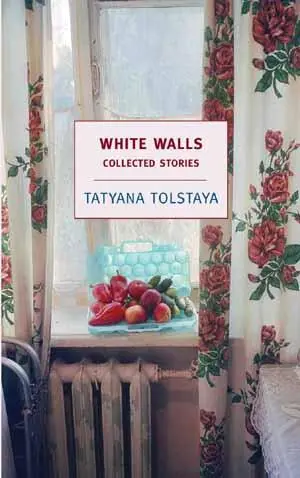
- Название:White Walls: Collected Stories
- Автор:
- Издательство:New York Review Books Classics
- Жанр:
- Год:2007
- Город:New York
- ISBN:978-1-59017-197-4
- Рейтинг книги:4 / 5. Голосов: 1
-
Избранное:Добавить в избранное
- Отзывы:
-
Ваша оценка:
White Walls: Collected Stories: краткое содержание, описание и аннотация
Предлагаем к чтению аннотацию, описание, краткое содержание или предисловие (зависит от того, что написал сам автор книги «White Walls: Collected Stories»). Если вы не нашли необходимую информацию о книге — напишите в комментариях, мы постараемся отыскать её.
White Walls
On the Golden Porch
Sleepwalker in a Fog A New York Review Books Original “Tolstaya carves indelible people who roam the imagination long after the book is put down.”
—
White Walls: Collected Stories — читать онлайн бесплатно полную книгу (весь текст) целиком
Ниже представлен текст книги, разбитый по страницам. Система сохранения места последней прочитанной страницы, позволяет с удобством читать онлайн бесплатно книгу «White Walls: Collected Stories», без необходимости каждый раз заново искать на чём Вы остановились. Поставьте закладку, и сможете в любой момент перейти на страницу, на которой закончили чтение.
Интервал:
Закладка:
“Oh, I’m so sorry,” the charming Alisa said. “How can I eat them now? I’m always so sorry for the last of anything…. My mother had a brooch before the war….”
“The last one, an accidental one!” sighed Filin and took another pirozhok.
“The last storm cloud,” Galya entered the game.
“The last of the Mohicans,” added Yura.
“No, my mother had this pearl brooch before the war….”
“Everything is transitory, dear Alisa,” Filin said, chewing in satisfaction. “Everything ages—dogs, women, pearls. Let us sigh over the fleeting nature of existence and thank the creator for giving us a chance to taste this and that at the feast of life. Eat and wipe your tears.”
“Perhaps he’ll regain consciousness, that Ignaty?”
“He can’t,” the host assured them. “Forget about it.”
They chewed. Music sang overhead. It was good.
“What new pleasures do you have?” Yura asked.
“Ah… I’m glad you reminded me. Wedgwood—cups and saucers. Creamer. See, blue on the shelf. Why I’ll just… Here…”
“Ah…” Galya touched the cup carefully with her finger— white carefree dances on a blue foggy meadow.
“Do you like it, Alisa?”
“Nice… Now before the war my mother had…”
“Do you know where I got it? Guess… From a partisan.”
“In what sense?”
“Just listen. It’s a curious story.” Filin made a tent with his fingers and looked lovingly at the shelf where the captive service sat cautiously, afraid of falling. “I was wandering around villages this fall with a rifle. I stopped by one hut. A man brought out some fresh milk for me. In a cup. I look—it’s real Wedgwood. How could it be? Well, we got to talking, his name is Uncle Sasha, I have the address somewhere… well, it doesn’t matter. Here’s what I learned. During the war he was a partisan in the woods. Early morning. German plane flying over. Bzzzzzzz,” Filin added an imitation. “Uncle Sasha looked up just when the pilot spat—right in his face. An accident, of course. But Uncle Sasha’s temper flared, naturally, he went bang with his gun—and hit the German. Also accidentally. The plane fell, they looked inside—five crates of cocoa, and the sixth had these dishes. He must have been delivering breakfast. I bought the set. The creamer is cracked, but that’s all right. Considering the circumstances.”
“Your partisan is a liar.” Yura was delighted, he looked around and slapped his thigh. “What a great liar. Fantastic!”
“Nothing of the sort.” Filin was not pleased. “Of course, I can’t rule out that he’s no partisan at all but just a vulgar little thief, but you know… somehow I prefer to believe.”
He grew huffy and took the cup back.
“Of course, you have to believe people.” Galya stepped on Yura’s foot under the table. “An amazing thing happened to me, too. Remember, Yura? I bought a wallet, brought it home, and inside were three rubles. No one believes it.”
“Why not, I believe it. It happens,” Alisa mused. “Now, my mother…”
They talked about the amazing, about premonitions, and dreams. Alisa had a girlfriend who had predicted her entire life ahead of time—marriage, two children, divorce, division of the apartment and property. Yura told in great detail how a friend’s car was stolen and how the police cleverly figured the thief’s identity and caught him, but the real trick was—he couldn’t remember it right now. Filin described a dog he knew that unlocked the door with its own key and heated up dinner for its masters.
“Really, how?” the women gasped.
“Easily. They have a French oven, electric, with a control panel. Push a button, everything goes on. The dog looks at the time: goes to the kitchen, works there; well, warms something up for itself, too. The owners come home from work and the soup is on the boil, the bread sliced, the table set. Convenient.”
Filin talked, smiled, turned his ankle, glanced over at satisfied Alisa, the music died down, and the city made itself heard through the windows. Dark tea steamed in their cups, sweet cigarette smoke curled upward, the roses gave off their scent and beyond the window the Sadovoye Ring Road quietly squealed beneath tires and people cheerfully plowed through the streets, the city glowed in wreaths of golden street lamps, frosty rainbow rings, multicolored crunchy snow, while the capital’s sky sowed new charming snow, fresh, just made. And just think, this entire feast, this evening of miracles was created especially for this completely unspecial Allochka, extravagantly renamed Alisa—there she sat in her vegetable dress, mustached mouth open, delightedly staring at the all-powerful gentleman who with a wave of the hand, the flicker of an eyebrow can transform the world to the point of unrecognizability Soon Galya and Yura would leave, crawling back to their outskirts, and she would stay, she was allowed…. Galya grew depressed. Why, oh, why?
Filin’s tower nestled in the middle of the capital, a pink mountain, ornamented here and there in the most varied way—with all sorts of architectural doodads, thingamajigs, and whatnots: there were towers on the socles, crenels on the towers, and ribbons and wreaths between the crenellations, and out of the laurel garlands peeked a book, the source of knowledge, or a compass stuck out its pedagogic leg; or, if you looked, you’d see a puffy obelisk in the middle, and standing firmly on it, embracing a sheaf, a firm plaster woman with a clear gaze that rebuffs storms and night, with flawless braids and an innocent chin…. You kept expecting trumpets to sound and drums to play something governmental and heroic.
And the evening sky above Filin and his curlicued palace plays with light—brick, lilac—a real Moscow, theatrical sky.
While back in their outskirts… oh my God it’ll be nothing but thick oily cold darkness, empty in the cool abysses between houses, you can’t even see the houses, they’ve blended into the night sky weighted down by snow clouds with an occasional window burning in an uneven pattern: gold, green, red squares struggling to push aside the polar murk…. It’s late, the stores are locked and bolted, the last old lady has rolled out, carrying a packet of margarine and an eggbeater, no one is walking along the streets just for the fun of it, no one is looking around, strolling; everyone has slipped into his own door, drawn the curtains, and is reaching for the TV knob. If you look out the window, you see the boundary road, an abyss of darkness marked by doubled red lights and the yellow beetles of someone’s headlights…. Something big drove by, its lights nodding in a pothole…. Here comes a stick of light—the headlights in the bus’s forehead, a trembling nucleus of yellow light, live roe of people inside…. And beyond the regional road, beyond the last weak strip of life, on the other side of the snow-filled ravine, the invisible sky slipped down, resting its heavy edge on a beet field—right there, on the other side of the ravine. It was impossible, unthinkable, unbearable to realize that the thick darkness extended farther, over the fields that blended into a white roar, over badly constructed fences, over trees pressed into the cold earth where a doomed dull light quivers as if held in an indifferent fist… and farther once again, the dark white cold, a crust of forest where the darkness is even thicker, where perhaps a pathetic wolf is forced to live: it comes out on a hill in its rough wool coat smelling of juniper and blood, wildness, disaster, gazes grimly and with disgust at the blind windy vistas, clumps of snow hardening between its cracked claws, and its teeth are gritted in sadness, and a cold tear hangs like a stinking bead on the furry cheek, and everyone is the enemy and everyone is the killer….
Читать дальшеИнтервал:
Закладка:
Похожие книги на «White Walls: Collected Stories»
Представляем Вашему вниманию похожие книги на «White Walls: Collected Stories» списком для выбора. Мы отобрали схожую по названию и смыслу литературу в надежде предоставить читателям больше вариантов отыскать новые, интересные, ещё непрочитанные произведения.



Обсуждение, отзывы о книге «White Walls: Collected Stories» и просто собственные мнения читателей. Оставьте ваши комментарии, напишите, что Вы думаете о произведении, его смысле или главных героях. Укажите что конкретно понравилось, а что нет, и почему Вы так считаете.