Jay Fox - THE WALLS
Здесь есть возможность читать онлайн «Jay Fox - THE WALLS» весь текст электронной книги совершенно бесплатно (целиком полную версию без сокращений). В некоторых случаях можно слушать аудио, скачать через торрент в формате fb2 и присутствует краткое содержание. Год выпуска: 2011, Издательство: Stay Thirsty Press, An Imprint of Stay Thirsty Publishing, A Division of Stay Thirsty Media, Inc., Жанр: Современная проза, на английском языке. Описание произведения, (предисловие) а так же отзывы посетителей доступны на портале библиотеки ЛибКат.
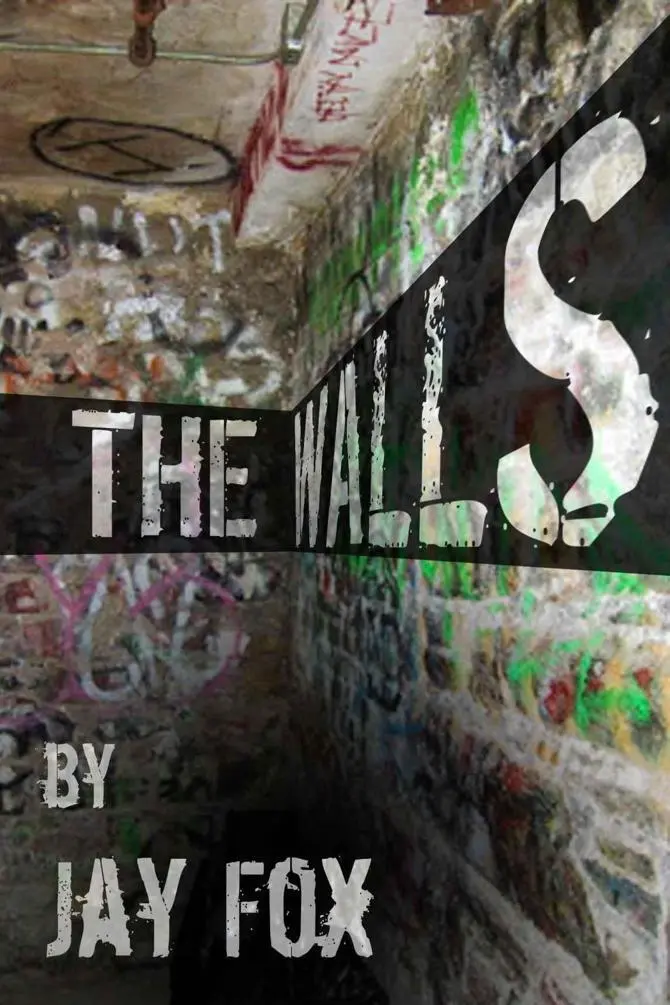
- Название:THE WALLS
- Автор:
- Издательство:Stay Thirsty Press, An Imprint of Stay Thirsty Publishing, A Division of Stay Thirsty Media, Inc.
- Жанр:
- Год:2011
- ISBN:нет данных
- Рейтинг книги:4 / 5. Голосов: 1
-
Избранное:Добавить в избранное
- Отзывы:
-
Ваша оценка:
THE WALLS: краткое содержание, описание и аннотация
Предлагаем к чтению аннотацию, описание, краткое содержание или предисловие (зависит от того, что написал сам автор книги «THE WALLS»). Если вы не нашли необходимую информацию о книге — напишите в комментариях, мы постараемся отыскать её.
Set in Brooklyn during the opening decade of the 21st century, Fox has captured the heartbeat, the zeitgeist, the essence of the echo boomers as they confront an uncertain future built upon a rapidly receding past.
The search, the hunt, the motivation to discover the truth presses Fox’s eclectic cast as they deal with their own lives, one day at a time. Certain to resonate now and in the rearview mirror of history, THE WALLS is a book, a story, a time capsule that snapshots and chronicles the quest to find a famous, elusive New York City graffiti artist whose greatest works can only be found in restrooms of underbelly dive bars in contemporary Brooklyn.
THE WALLS — читать онлайн бесплатно полную книгу (весь текст) целиком
Ниже представлен текст книги, разбитый по страницам. Система сохранения места последней прочитанной страницы, позволяет с удобством читать онлайн бесплатно книгу «THE WALLS», без необходимости каждый раз заново искать на чём Вы остановились. Поставьте закладку, и сможете в любой момент перейти на страницу, на которой закончили чтение.
Интервал:
Закладка:
“Now,” he begins, “Where was I?”
“I don't remember.”
“Let's see…Freda. Freda the poet. Whitman. Ah, yes, Freda is introduced to a man in publishing, who takes her under his wing and manages to get her work into the hands of some very powerful individuals.” He has not missed a beat. “And once she starts making some money from her poetry, she starts trying to push it on her father — the money, that is, not the poetry. Unfortunately, the man's too stubborn to take any of it. Remember the era with which we are dealing. But Freda, intransigent even in her youth, starts planting the majority of her earnings in her father's coat. He doesn't notice at first because she's not really making enough to bother about. And she takes this to be a silent acceptance, a proverbial wink of the eye; she believes the act is permissible so long as the family and the neighbors don't know about it. This turns out to be far from the case.
“When Freda catches a relatively big break, she decides to take things a step further.”
“What? Did she buy them a new house or something?” Tomas asks.
“No. She pays the rent. Now, her father is a very traditional man. His wife doesn't work out of the house, his daughters marry before the age of eighteen, his sons stay under his roof until they find a wife of their own — you know, traditional. Suffice to say, Freda's father does not appreciate the gesture. In fact, he sees it as an act of emasculation. And when a reactionary man feels as though he's been humiliated like that, he does not typically respond with clemency or, in this case, mercy. So, as you both can probably imagine, a violent argument ensues, which results in a rather ferocious beating, and ends with Freda being exiled from the house. The man of tradition was too pious to drink on a Sunday— pro pudor ! — , but he was apparently fine with pummeling and disowning his teenage daughter because she simply wanted to help.
“Her situation, luckily, was not as dire as one would presume, though I hardly wish to make light of what transpired. She was of course devastated, but she had established something of a network of friends who were willing to take her in. She also had a reputation as a very capable poet, so she was able to publish her work fairly consistently. Not that you could tell. While her lyricism is exquisite, she never spoke of what transpired between her and her father — and, as far as I know, she never reconciled with her family. I do know that her oldest brother was killed during the conscription riots of eighteen sixty-three, but this, of course, took place before she was banished from the home.
“Anyway, she continued writing and ended up taking a job at some school for women somewhere around Fort Greene Park, though I believe it — the park — went by another name back then. She never became particularly famous, but she was introduced to a number of well-known writers from the day. She led a comfortable and industrious life: she was active in the church, she traveled quite a bit, and most of her poetry continued to find its way into publications.
“Now, if you were to read her poems in chronological order, you would probably not see any severely socialist undertones in her early work. After eighty-five or so, however, it becomes extremely leftist in theme and content. As a consequence of this, the work ceases to appear anywhere besides radical newsletters. But this was fine with her. She even started writing essays for these publications, and eventually founded her own weekly, the Brooklyn Worker , which, as I'm sure you can imagine, was overtly Marxist. As a side note, she was somewhat close with Kennan; she republished some of the essays he had written concerning the exile system to galvanize American support for the Nihilist movement. Yes, my friends, gone were the days of poems about bucolic America and the anticipation of a lover’s caress; Freda Keens was concerned only with revolution. I've even heard that she was a pen pal of Mother Jones, though I've never seen any evidence of this.
“What caused this massive change, you may ask? Well, turns out Freda had gotten herself knocked up by an organizer for…I think the Brooklyn Central Labor Union. I’m not sure, though. Regardless, as you may well know, a union organizer back then had the life expectancy of a housefly. And so, before the baby was born, the father found himself on the wrong side of a pistol. I don't remember if Freda blamed Gould or if she thought Rockefeller had a hand in it, but she never accepted it as a robbery, which was the conclusion the police came to. Not that you could blame her. His flat was broken into, but nothing was stolen. He was just dead, shot execution style. As you can imagine, the majesty of the Brooklyn Bridge and the autumn leaves in the Berkshires failed to be all that interesting.
“She worked with radicalized unions, though the only one I know of by name was the Wobblies — the Industrial Workers of the World, who, ironically enough, now appear to spend most of their time attempting to unionize corporate coffee houses in a few American cities. This was to be her calling for pretty much the rest of her life, though she was active behind the scenes. I mean, she had a daughter to raise, and the last thing she wanted was to be responsible for having that kid locked away in some orphanage while she rotted in jail. Once her daughter came of age, however, she became far more active on the street-side of things, and eventually did go to jail for protesting Wilson's decision to enter into the Great War. She died before that absurd chapter in history closed.” Before either Tomas or I can ask, he responds: “Cholera — one of the few things today's incarcerated don't have to worry about…unless they live in Maricopa County, of course.
“Beatrice, her daughter, grew up to be quite beautiful. She was radical like her mother — as I said before, she worked as an organizer for the stevedores and all of the other workers along the shores of Brooklyn. She wasn't particularly popular in terms of the media — in the sense that she was not well known; she wasn't famous and she certainly wasn't infamous. I think there are a few pictures of her from the Times . She was certainly known within more than a few circles, but the public at large had no idea who she was. Dick said it was because union women were supposed to be old maids, you know, real hags. Think Eleanor Roosevelt.”
“Yikes,” from Tomas.
“Speaking of which, Beatrice later came to know Mrs. Roosevelt quite well — and not 'came to know' as a euphemism for sex — though the two had a falling out in the late-forties. But we'll get to that in a little bit. As I was saying, however, Beatrice was something else. Absolutely gorgeous. Between you and me, she was a real—”
“Just get on with it, Pat,” Tomas says as he begins to regain some semblance of sobriety.
“Well,” Patrick almost pouts, “This is where the other Balaguez comes into the picture — not Jose, of course, but his son Raphael. Raphael was a playboy, really liked to stroll the boulevard to exhibit his foppery. He courted the most illustrious ladies of the day, frequented the poshed clubs — you know, he was a real dandy. Well, I don't know exactly how it all came about, but something about Beatrice really called to the young-ish man. He was really quite taken by her. Maybe it was some romanticism that materialized out of a novel or a film — you know, that he could be her knight in shining armor. But, for all I know, he may have just been a young man drawn to a beautiful woman.
“He probably thought it'd be easy enough to seduce her; whatever plans he had after that…well, that's anyone's guess. Problem was, she didn't think too much of him. I won't go into the details, but, like any aristocratic progeny, he was under the impression that some, if not most, of the nation’s laws didn't apply to him. Rape, unfortunately, fell into this category.”
Читать дальшеИнтервал:
Закладка:
Похожие книги на «THE WALLS»
Представляем Вашему вниманию похожие книги на «THE WALLS» списком для выбора. Мы отобрали схожую по названию и смыслу литературу в надежде предоставить читателям больше вариантов отыскать новые, интересные, ещё непрочитанные произведения.








Обсуждение, отзывы о книге «THE WALLS» и просто собственные мнения читателей. Оставьте ваши комментарии, напишите, что Вы думаете о произведении, его смысле или главных героях. Укажите что конкретно понравилось, а что нет, и почему Вы так считаете.