Jay Fox - THE WALLS
Здесь есть возможность читать онлайн «Jay Fox - THE WALLS» весь текст электронной книги совершенно бесплатно (целиком полную версию без сокращений). В некоторых случаях можно слушать аудио, скачать через торрент в формате fb2 и присутствует краткое содержание. Год выпуска: 2011, Издательство: Stay Thirsty Press, An Imprint of Stay Thirsty Publishing, A Division of Stay Thirsty Media, Inc., Жанр: Современная проза, на английском языке. Описание произведения, (предисловие) а так же отзывы посетителей доступны на портале библиотеки ЛибКат.
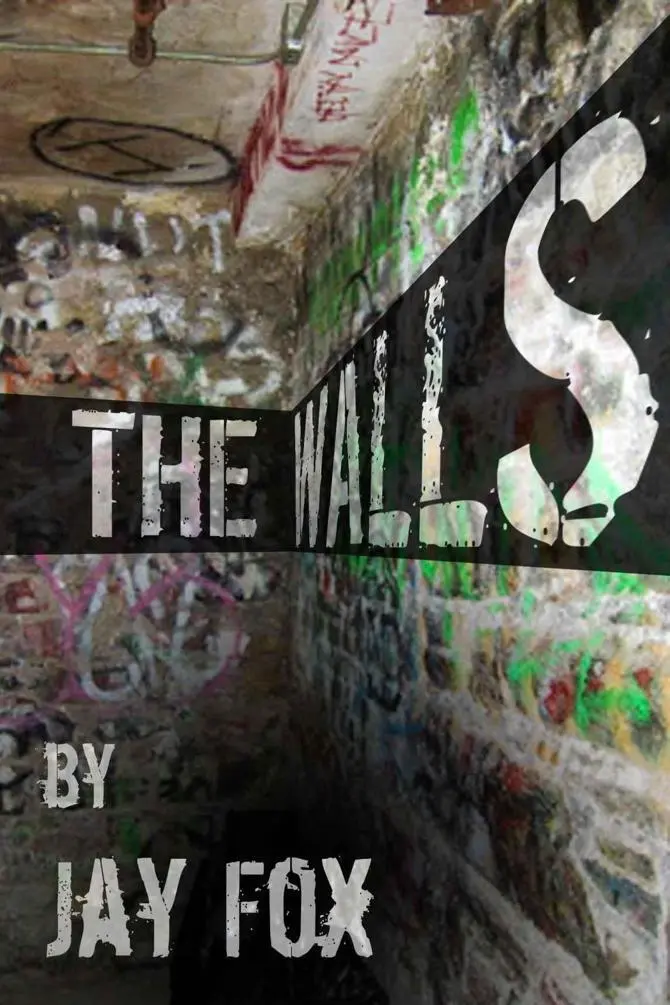
- Название:THE WALLS
- Автор:
- Издательство:Stay Thirsty Press, An Imprint of Stay Thirsty Publishing, A Division of Stay Thirsty Media, Inc.
- Жанр:
- Год:2011
- ISBN:нет данных
- Рейтинг книги:4 / 5. Голосов: 1
-
Избранное:Добавить в избранное
- Отзывы:
-
Ваша оценка:
THE WALLS: краткое содержание, описание и аннотация
Предлагаем к чтению аннотацию, описание, краткое содержание или предисловие (зависит от того, что написал сам автор книги «THE WALLS»). Если вы не нашли необходимую информацию о книге — напишите в комментариях, мы постараемся отыскать её.
Set in Brooklyn during the opening decade of the 21st century, Fox has captured the heartbeat, the zeitgeist, the essence of the echo boomers as they confront an uncertain future built upon a rapidly receding past.
The search, the hunt, the motivation to discover the truth presses Fox’s eclectic cast as they deal with their own lives, one day at a time. Certain to resonate now and in the rearview mirror of history, THE WALLS is a book, a story, a time capsule that snapshots and chronicles the quest to find a famous, elusive New York City graffiti artist whose greatest works can only be found in restrooms of underbelly dive bars in contemporary Brooklyn.
THE WALLS — читать онлайн бесплатно полную книгу (весь текст) целиком
Ниже представлен текст книги, разбитый по страницам. Система сохранения места последней прочитанной страницы, позволяет с удобством читать онлайн бесплатно книгу «THE WALLS», без необходимости каждый раз заново искать на чём Вы остановились. Поставьте закладку, и сможете в любой момент перейти на страницу, на которой закончили чтение.
Интервал:
Закладка:
“But these articles were not the most important element to Balaguez’s scheme. To him, it was critical that he not only praise the regime for dealing harshly with the nihilists; he also sought to relegate the status of the nihilists to that of a small group of bandits. It was a brazen lie, no less egregious than calling a wasp a gnat, but the truth was difficult to come by. Russian dissenters were unable to vocalize their opinions, as the practice of samizdat or any form of journalistic freedom was nil. Just like anyone with something to prove, the regime was not about to let the rest of the world know just how chaotic things had become, and Balaguez was happy to accommodate such tripe because of his desire to see the Trans-Siberian built.”
“And that was the lynchpin of this whole endeavor. The Trans-Siberian. His spin on the matter was simple: Oriental Manifest Destiny — though this ignored the fact that the vastness of the American West was often perceived in an optimistic light by colonists, whereas their Russian counterparts viewed the expansive Asian steppes with despair and pessimism, especially since most of the people out there had been sent against their will. Regardless, people knew that the Russians were making a strong effort to populate the rather dismal area. Furthermore, Balaguez made sure to note that there was a vast store of not only arable land, but of gold and other precious metals, too. It was the conquest of yet another hinterland for the sake of its unused resources, and he followed the process, or progress,” derisively, “with a tenacity that a war might not even get in today's press. You may ask why, and this is certainly a good question.
“The Russians were obviously paying for the bulk of the Tran-Siberian's construction, but they were hungry for foreign investment. They needed unthinkable funds not only to advance the project, but also to finish it sometime before the twenties. Furthermore, they needed American engineers to assist them — Americans, after all, had conquered the intractable wilderness of their West.
“Now, though there is no proof of this, it seems as though Balaguez put in a lot of his own money by making a deal with the Russian government, which was very simple: I give you a great deal of capital to build your railroad and encourage other Americans to help you out, you give me a cut of the profits made off of the mines. He certainly did not publicize the fact that he had a vested interest in the railroad, let alone such a lucrative understanding with the Russians — he had established something of an 'in' with the tsar because he had befriended Alexis when the prince came to the States back in seventy-one or so—, but he did let it be known, albeit tacitly, that the Russian were willing to pay special favors to those who helped them out. Yeah, quick history lesson: without American capital, the main line of the Trans-Siberian probably wouldn't have been completed until the Stalin years.
“As an aside, it's even said that Balaguez and the Russians tried to finance a tunnel under the Bering Straight, but every engineer who surveyed the area came back and told them that the endeavor was suicide. Still, he publicized the tunnel as a possibility, and it played to investors, as well as all of the Positivists in New York still captivated by the Brooklyn Bridge.
“Now, you may ask, how did Balaguez clandestinely encourage American capitalists to invest in the project? Very simple. In fact, I've already told you: he emphasized, if not exaggerated, Siberia's vast mineral wealth, in particular its vast store of gold. When these investors came to see him, he explained to them the deal with the Russians: if you invest in the railroad, you can invest in the mines.
“That's all well and good, you may say, but you probably want to know why the American capitalists didn't just invest in the mines and leave the construction of the railway to the Russians. This is very simple: The mines were the property of the tsar, and, until the early twentieth century, the tsar only allowed one the privilege of investing in one of his mines by personal favor. Furthermore, the incentive to invest in the mines was not particularly strong — until the railroads got built, the costs of mining, processing, and transporting the gold, which were all very inefficient processes, were going to outweigh the price the gold went for on the market.
“So there arose something of a standoff. Even with the potential boon of the gold mines, investors didn't want to finance the construction of the railroad — not because they were worried about the system never being completed or being repeatedly sabotaged by nihilists or even being socialized by the communist regime to follow the inevitable revolution, a revolution many did not think all that likely because of the lies being spread in Balaguez's papers; no, their primary concern was the fact that their money would be tied up in a venture that would take several decades to bring about a substantial return. This is where Balaguez's true brilliance came in.
“He anticipated the South African War — or, as it is commonly known, the Second Anglo-Boer War. This is now the middle of the nineties. As you may or may not know, South Africa exported more gold during the late-nineteenth century than any other country, and back then, as you two surely know, every industrialized country was still operating on the gold standard. If the flow of gold dried up, the world economy did, too. Consequently, Balaguez pressured his writers to focus on the instability of South Africa, the ensuing war, and the disastrous effects it would have on the gold market. Imagine his solution to the problem of how to deal with this potentially catastrophic situation while allowing the plutocrats of the country to make even more money.”
“He told people to invest in Siberia.”
“Exactly. Other papers followed suit, too. If you read the articles published in the New York Times between say eighteen eighty and nineteen hundred, you'll see a substantial shift in the manner in which journalists discuss Siberia. First it's a desolate wasteland, then it's a giant penitentiary, and then it's referred to, and I've seen this with my own eyes, 'the next California'.
“By the turn of the century, South Africa is being torn apart by one of the most gruesome civil wars in history…” he begins. He then turns to Tomas. “Not to go too far off topic here, but did you know that the concentration camp was invented by the British during this war?”
“No,” he responds.
“Fucked up, huh? Ah, well, I guess it's true that history is written by the victors — that's why the redacted chapters always make you remember that war is nothing more than, as Sorely said, the blind fighting the blind. Anyway, by the turn of the century, the war is raging in South Africa, the tsar is allowing Americans to buy into his mines, and the Trans-Siberian is operational, but only from the Pacific into the Siberian purlieus. Oh, and yet another windfall comes of this — for whom else but the Americans. Their goods, particularly their farming machinery, come to dominate the markets of Eastern Siberia. Not only were they of higher quality when compared to their Russian counterparts — they were actually cheaper due to the railroad.
“Why do you think that was? Why would an empire build a railroad that connects its hinterlands to a port more than six thousand kilometers away from the capital? Why do you think the Americans took the Philippines and Hawaii right around the same time? Why do you think America invaded Siberia after World War One? They said it was because a few thousand Austrian POWs were running amok, but that's silly, transparent. It was all for control of Siberian, and, to a lesser extent, Manchurian, gold. And none of this would have happened had it not been for Balaguez, who, as you can imagine, made a pretty penny from all of this. Some have said that he got Walter Murray Gibson in on it, too, but I'm rather skeptical on the matter. Still, I will have to concede that there is a possibility, however unlikely, that the Bayonet Constitution was written to attract wealthy Americans to Hawaii, and that this colony was established to be a base of operations to more effectively galvanize and augment their sphere of influence in the Amur region, Manchuria, Korea, China, and the rest of Southeast Asia, but I can't award credence to a theory that is reliant on so many unverifiable conditions.”
Читать дальшеИнтервал:
Закладка:
Похожие книги на «THE WALLS»
Представляем Вашему вниманию похожие книги на «THE WALLS» списком для выбора. Мы отобрали схожую по названию и смыслу литературу в надежде предоставить читателям больше вариантов отыскать новые, интересные, ещё непрочитанные произведения.







Обсуждение, отзывы о книге «THE WALLS» и просто собственные мнения читателей. Оставьте ваши комментарии, напишите, что Вы думаете о произведении, его смысле или главных героях. Укажите что конкретно понравилось, а что нет, и почему Вы так считаете.