Ma Jian - The Noodle Maker
Здесь есть возможность читать онлайн «Ma Jian - The Noodle Maker» весь текст электронной книги совершенно бесплатно (целиком полную версию без сокращений). В некоторых случаях можно слушать аудио, скачать через торрент в формате fb2 и присутствует краткое содержание. Год выпуска: 2006, Издательство: Farrar, Straus and Giroux, Жанр: Современная проза, на английском языке. Описание произведения, (предисловие) а так же отзывы посетителей доступны на портале библиотеки ЛибКат.
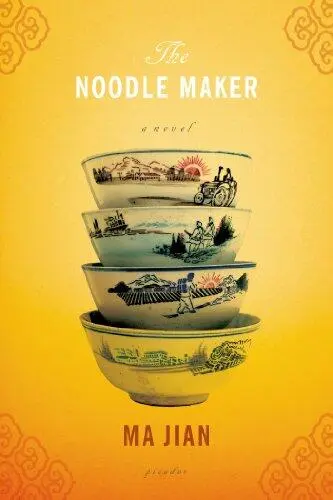
- Название:The Noodle Maker
- Автор:
- Издательство:Farrar, Straus and Giroux
- Жанр:
- Год:2006
- ISBN:нет данных
- Рейтинг книги:3 / 5. Голосов: 1
-
Избранное:Добавить в избранное
- Отзывы:
-
Ваша оценка:
The Noodle Maker: краткое содержание, описание и аннотация
Предлагаем к чтению аннотацию, описание, краткое содержание или предисловие (зависит от того, что написал сам автор книги «The Noodle Maker»). Если вы не нашли необходимую информацию о книге — напишите в комментариях, мы постараемся отыскать её.
From the highly acclaimed Ma Jian comes a satirical and powerfully written novel-excerpted in The New Yorker-about the absurdities and cruelties of life in post-Tianamen China.
Two men, a writer of political propaganda and a professional blood donor, meet for dinner every week. During the course of one drunken evening, the writer recounts the stories he would write, had he the courage: a young man buys an old kiln from an art school and opens a private crematorium, delighting in his ability to harass the corpses of police officers and Party secretaries while swooning to banned Western music; a heartbroken actress performs a public suicide by stepping into the jaws of a wild tiger, watched nonchalantly by her ex-lover. He is inspired by extraordinary characters, their lives pulled and pummeled by fate and politics, as if they were balls of dough in the hands of an all-powerful noodle maker.
Ma Jian's masterpiece allows us a humorous yet profound glimpse of those struggling to survive under a system that dictates their every move.
The Noodle Maker — читать онлайн бесплатно полную книгу (весь текст) целиком
Ниже представлен текст книги, разбитый по страницам. Система сохранения места последней прочитанной страницы, позволяет с удобством читать онлайн бесплатно книгу «The Noodle Maker», без необходимости каждый раз заново искать на чём Вы остановились. Поставьте закладку, и сможете в любой момент перейти на страницу, на которой закончили чтение.
Интервал:
Закладка:
When Old Hep sauntered in through his front door that evening, after abandoning the textile worker in the ruined factory, he was met by a flying thermos. Fortunately it struck his chest, not his head. Bowing his head in shame, he could see his wife’s tie-dye skirt printed with pictures of ancient philosophers. (This garment was for export only — no one else in town had one like it.) As it approached him, he searched his mind for a way to handle the situation. But before he had time to reach a decision, a slender leg sheathed in a transparent nylon stocking (also imported) popped out from under the skirt and kicked him in the groin. Old Hep shrieked with pain, and cowered on the floor just like the textile worker had done a few hours earlier. The pain was excruciating. He saw a sea of gold stars dart before his eyes. The female novelist kicked him again and Old Hep’s tired shoulders caved in. Then the novelist dragged him into the light, seated herself in her armchair, handed him his pink exercise book and told him to read from it the passages she had underlined in red pencil.
Everything that happened after that had vanished from his mind by the time he was lying in bed, apart from his tearful confession, and his wife’s demand that he apologise officially to his work unit and submit himself to investigation. ‘If you don’t do as I say, I will take you to court,’ she threatened before dozing off.
Now she was sleeping like a log, and Old Hep was lying awake beside her, miserably counting the hours until dawn. In the past the night had belonged to him, but now everything was finished and all that remained for him was fear. This fear coursed through his blood, then spread to his bones and nerve channels. He felt like the dead rat he had once seen lying on a cold street corner. It had lain there for three days. In his mind, he always connected the rat with a female colleague, because she had dared walk up to within a step of it and stand over it with her legs wide open. When she dragged him over to take a look, he shrieked with terror and felt as though his head were about to explode. It was the same fear he felt when the Red Guards dragged his father to their front door and pulled him into the baying crowds outside. He knew that in these moments of terror, he was naked and alone. The face of the rotting rat flashed once more before his eyes. The Red Guards were pushing him into a well of darkness, the tigress was baring her teeth, ready to devour him. No one was coming to his rescue. He and his father were surrounded. The voices of the crowd were so deafening that all he could hear was the rage thundering through his body. He knew that they — the crowd outside — were one great mass, and that he was on his own. For a moment, he could see his own eyes grafted onto the dead rat’s face. They were dirty and motionless, but alive. They could see everything.
What he had appreciated most after he got married was the security of living under the tigress’s benevolent protection. He could hide quietly behind her while she dealt with any problem that turned up. She was tall and sturdy, a wall he could lean against. Had she not been swept up by the Open Door Policy, permed her hair, glossed her lips and been included in The Great Dictionary of Chinese Writers , his life would still be worth living now. Her strict and inflexible attitude suited him well; he had grown accustomed to it. She was a mother to him and he enjoyed living under her wing. He had hoped that his life would continue like this for ever.
In the early hours of the morning, her breathing grew deeper and louder, and once again he was seized by the recurring terror of being swamped by a baying crowd. He sensed his wife seize his arm and shove him outside the door. Immediately he was surrounded by a hostile mob. There was nothing for him to grab hold of, he was alone and powerless. His eyes were open like his father’s, like the dead rat’s, but he couldn’t see a thing.
An idea suddenly came to him. ‘I must escape!’ he muttered. ‘Make sure they never catch me.’ He thought about a divorcee he’d been seeing on the side. She lived on her own. Perhaps he could stay with her. Although she wore lipstick and painted her nails like his wife, and even read the same books as her, at least she didn’t have a bad temper. Her main fault was that she always burst into tears after a couple of drinks. But lying in his bed, he could no longer remember her name. He thought of all the women listed in his ‘Compendium of Beauties’, but couldn’t put names to any of them either. Then he thought about the textile worker, and how her lips had trembled with fear the first time he kissed her.
His thoughts were suddenly interrupted by a sense of impending doom. The feeling seemed as real as his daydreams. He turned round to look at the undulating tigress, and his body went cold. He realised that the dead rat was in fact himself.
Terrified that his wife might find out his true identity, he slipped under the bed. Everything seemed larger underneath. He wondered why the dead rat’s eyes had been so wide open, and he hoped his own weren’t open so wide. He crawled into the kitchen. From the ground, everything looked familiar, yet strange. He glimpsed parts of the kitchen he’d never seen before. Underneath the sink he found a large web with two spiders sleeping in the centre, locked in an embrace. Between two empty bottles he saw an old sprouting potato and a jar of mustard he thought he’d thrown away months ago. The sky outside the window was getting lighter. He tried to decide on a plan of action. The tigress would be waking up soon. He rose to his feet and set to work on making breakfast. When he realised he must first tackle the pile of dirty plates, he slipped into a daydream, as he always did before starting the washing-up.
He climbed into the control cabin of the steamship and grabbed hold of the wheel. But instead of letting the ship fly into the sky, he steered it down into the deep blue sea. A maintenance worker ran over and told him to stop. He said the ship had sprung a leak and was sinking fast. ‘Why are you still steering?’ the worker asked, glaring at him sternly.
A few months later, the professional writer saw the editor creeping through the corridors of the People’s Cultural Centre. He seemed to move like a ball of dough that was being pulled by invisible hands. His wife had thrown him out of the flat, and he was spending his nights on a fold-up bed in the corner of his office. Without a woman to lean on, he had lost his bearings and developed all the characteristics of an old man. He had become dirty, slow-witted, forgetful. His body gave off an indefinable odour that made one’s stomach turn. His fashionable clothes looked out of place on his now withered and hunched frame. At noon he would walk down to the Cultural Centre’s forecourt to play chess with the old pensioners who gathered there. The writer was taken aback by his transformation. Looking at him then, no one would have believed that this grubby old man had served as editor of the town’s most prestigious literary magazine for fourteen years.
The writer’s mind turns to the female novelist, a woman he slept with once. Immediately he remembers the smell of make-up and tobacco on her face. He still bumps into her sometimes outside the Writers’ Association or at some literary event, and is taken aback by her haggard appearance. It always amazes him how some women seem to turn old overnight. He holds her responsible for their moment of intimacy. One night two years ago, he went to her flat to offer advice on her latest novel. When he arrived, he found the lights were dimmed, there were candles burning, and Old Hep was out of town. He fell into her trap without resistance, but regretted it almost at once. He found her shallow, and resented what he saw as her undeserved literary success.
Читать дальшеИнтервал:
Закладка:
Похожие книги на «The Noodle Maker»
Представляем Вашему вниманию похожие книги на «The Noodle Maker» списком для выбора. Мы отобрали схожую по названию и смыслу литературу в надежде предоставить читателям больше вариантов отыскать новые, интересные, ещё непрочитанные произведения.










Обсуждение, отзывы о книге «The Noodle Maker» и просто собственные мнения читателей. Оставьте ваши комментарии, напишите, что Вы думаете о произведении, его смысле или главных героях. Укажите что конкретно понравилось, а что нет, и почему Вы так считаете.