David Bezmozgis - The Free World
Здесь есть возможность читать онлайн «David Bezmozgis - The Free World» весь текст электронной книги совершенно бесплатно (целиком полную версию без сокращений). В некоторых случаях можно слушать аудио, скачать через торрент в формате fb2 и присутствует краткое содержание. Год выпуска: 2011, Издательство: Farrar, Straus and Giroux, Жанр: Современная проза, на английском языке. Описание произведения, (предисловие) а так же отзывы посетителей доступны на портале библиотеки ЛибКат.
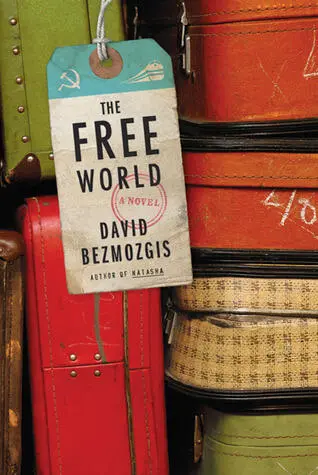
- Название:The Free World
- Автор:
- Издательство:Farrar, Straus and Giroux
- Жанр:
- Год:2011
- ISBN:нет данных
- Рейтинг книги:4 / 5. Голосов: 1
-
Избранное:Добавить в избранное
- Отзывы:
-
Ваша оценка:
The Free World: краткое содержание, описание и аннотация
Предлагаем к чтению аннотацию, описание, краткое содержание или предисловие (зависит от того, что написал сам автор книги «The Free World»). Если вы не нашли необходимую информацию о книге — напишите в комментариях, мы постараемся отыскать её.
There is Samuil, an old Communist and Red Army veteran, who reluctantly leaves the country to which he has dedicated himself body and soul; Karl, his elder son, a man eager to embrace the opportunities emigration affords; Alec, his younger son, a carefree playboy for whom life has always been a game; and Polina, Alec's new wife, who has risked the most by breaking with her old family to join this new one. Together, they will spend six months in Rome — their way station and purgatory. They will immerse themselves in the carnival of emigration, in an Italy rife with love affairs and ruthless hustles, with dislocation and nostalgia, with the promise and peril of a new life. Through the unforgettable Krasnansky family, David Bezmozgis has created an intimate portrait of a tumultuous era.
Written in precise, musical prose,
is a stunning debut novel, a heartfelt multigenerational saga of great historical scope and even greater human debth. Enlarging on the themes of aspiration and exile that infused his critically acclaimed first collection,
establishes Bezmozgis as one of our most mature and accomplished storytellers.
The Free World — читать онлайн бесплатно полную книгу (весь текст) целиком
Ниже представлен текст книги, разбитый по страницам. Система сохранения места последней прочитанной страницы, позволяет с удобством читать онлайн бесплатно книгу «The Free World», без необходимости каждый раз заново искать на чём Вы остановились. Поставьте закладку, и сможете в любой момент перейти на страницу, на которой закончили чтение.
Интервал:
Закладка:
— Don’t spout nonsense. What a fool you are, their uncle growled. And turning to Samuil and Reuven, he commanded: You two heroes of the revolution, go to your commissar and have him remove Yankl’s name from the list.
— It’s not possible, Reuven said.
— You have no idea what is possible, their uncle countered. You think these people are pure as the driven snow? I fought with them and I fought against them, remember. For a liter of spirits they would denounce their own mothers.
He removed his wedding band and held out his hand for his wife’s. Their mother volunteered hers as well.
— Here, their uncle said, offer these. Tell them it’s a contribution to the revolutionary cause.
— If we said that, we would be shot. And with good reason, Reuven said.
— Then I’ll do it myself, their uncle said.
— Then you’ll be shot. And Yankl will have to say kaddish for you on the train.
— Can’t you do anything? their mother asked.
— We can help him pack.
Their cousin observed the conversation as if it involved someone who was not him.
— Monsters, their aunt hissed, we took you into our home!
— Mama, stop it, please, their cousin said, and moved to console her.
At that moment, Samuil had felt his resolve weaken. Sympathy grabbed him as if by the lapels and thrust him toward his family. It was possible that their uncle was right, and that a word from him or Reuven to the appropriate person could spare their cousin. The temptation was immense. Samuil knew that he had to master it. Not in great battles or debates was the fate of the revolution determined, but in moments like these. The revolution’s success or failure depended upon thousands upon thousands of tiny, individual moral dilemmas. To resolve them properly, clearly, and bloodlessly was the challenge facing every Soviet person.
Samuil presumed that Reuven was waging the same battle and arriving at the same conclusion, but his brother looked at their uncle, aunt, and cousin and said, They will come for him tonight. If he’s here, they’ll grab him.
Nobody mistook his meaning.
— What’s the use? Yaakov said. Where will I go? The Germans are one way, the Russians the other. And in the woods, the Aizsargi and other nationalists.
— Never mind that about the nationalists, their uncle said. I fought side by side with them in 1919. We embraced each other like brothers.
— It’s no longer 1919, Yaakov said.
That evening, they helped him pack his things. Their mother and aunt stripped the shelves bare and also appealed to the neighbors for dried fruit, tinned fish, and bread. Samuil and Reuven made a bundle of their warmest clothes — a wool sweater, a hat, gloves, and Samuil’s one pair of sturdy boots. Whatever money was in the house they turned over to Yaakov, much of it sewn into the lining of his summer jacket.
Once they were finished, nobody went to sleep. They sat and waited for the guards to arrive.
— I leave you my phonograph and records, Yaakov said to Reuven, and added wryly, Play them at your peril.
Around three in the morning they heard footfalls on the stairs and then the knock on the door. Two comrades, a man and a woman, vaguely familiar to Samuil, delivered the order. They showed no surprise to find everyone awake, and their quarry packed and ready to go. After a brief exchange, Reuven succeeded in gaining their permission to accompany Yaakov to the rail depot.
— He is ours; we will take him, Reuven said.
That night, as the first tint of color seeped into the sky, they drew up to the railway depot, where the goods wagons stood waiting. Even before they reached the site they heard the susurrus of countless, unintelligible voices. At the depot, they saw a horde of thousands, massed together in disarray. Dozens of armed NKVD guards and members of the local Communist militia encircled them. Occasionally, there was the bark of an order. Samuil and Reuven watched carefully to make sure that their mother, aunt, or uncle did not get lumped together with the condemned. Samuil knew it could easily happen. There were, among the thousands, many women, children, and old people. If one looked, one could find many mild and careworn faces. The uninitiated might presume them to be innocent. Their cousin also appeared mild and innocent, yet he was a Zionist, a dangerous element. The same applied to the others. Latvian nationalists, capitalists, bourgeoisie, members of the former government, priests, rabbis, Hebrew teachers: every one a potential threat.
Because their aunt and uncle refused to leave while the train remained in the station, Samuil, Reuven, and their mother also stayed. They lost sight of Yaakov immediately after he took leave of his parents, and they didn’t see him again until shortly before the train was set to move. As people were being forced up into the wagons, there was a loud confrontation at one of the doors. Samuil looked over in time to see Vasserman protesting something to an NKVD officer. Swinging his rifle butt, the officer knocked Vasserman down. Standing beside the fallen Vasserman was Yaakov. Samuil watched his cousin help Vasserman to his feet, and then into the wagon. When Vasserman was on board, Yaakov pulled himself up behind him. The NKVD officer bolted the door and Samuil never saw his cousin again.
15
On her first day at work, Giovanni and Carla, his wife, gave her posterboard and multicolored markers and gestured at the assorted merchandise. She composed signs in Russian and arranged them in the window display. That same afternoon she made her first sale to a young man from Mogilev. He and his wife came into the shop and wandered cautiously between the narrow aisles.
— His whole life he’s had one dream, the wife said.
— A brown suede blazer, the man said.
Polina barely knew her way around the store, but she found a rack of suede blazers, some of which were brown, and one of which fit the man from Mogilev. They went through the motions of haggling; Polina conferred with Giovanni and Carla; the Italians wrote a figure on a piece of paper; and the man from Mogilev realized his life’s ambition.
— That’s it, now he can die, his wife said.
— If I die, bury me in it, he said.
She made her second sale not long after to an older Italian man, squarely built, dressed like a laborer. Carla greeted him familiarly and Giovanni saluted him from behind the cash register, but the man explained that he wished to speak with Polina. Polina didn’t immediately understand what was being asked of her. There was an uncomfortable moment when everyone seemed ill at ease, but then the man addressed Polina in Russian and relieved the tension. He apologized for imposing upon her, and for his shaky Russian. Twenty-five years earlier he had been a university student in Leningrad. Since then, he’d had few opportunities to practice the language.
— I was there a long time ago, the man said. I was there when Stalin died.
He recalled the ranks of people in the street, old women and schoolchildren in tears. For the modest privilege of speaking to her in Russian, the man bought a belt and a pair of sandals.
Before he left, the man shook hands firmly with Giovanni, and Polina noticed two things that had previously escaped her. One was the collage of photographs and newspaper clippings that Giovanni had tacked onto the wall behind the cash register: a posed photo of a soccer team, above a small maroon and orange banner; newspaper clippings showing the faces of smiling men, whom Polina took to be politicians; other clippings showing grainy snapshots of younger men, whom Polina took to be either criminals or victims; and framed portraits of historical eminences. Of all these, Polina recognized only MarxEngels, the stern two-headed deity of her girlhood imagination.
Читать дальшеИнтервал:
Закладка:
Похожие книги на «The Free World»
Представляем Вашему вниманию похожие книги на «The Free World» списком для выбора. Мы отобрали схожую по названию и смыслу литературу в надежде предоставить читателям больше вариантов отыскать новые, интересные, ещё непрочитанные произведения.












Обсуждение, отзывы о книге «The Free World» и просто собственные мнения читателей. Оставьте ваши комментарии, напишите, что Вы думаете о произведении, его смысле или главных героях. Укажите что конкретно понравилось, а что нет, и почему Вы так считаете.