Robert Butler - The Hot Country
Здесь есть возможность читать онлайн «Robert Butler - The Hot Country» весь текст электронной книги совершенно бесплатно (целиком полную версию без сокращений). В некоторых случаях можно слушать аудио, скачать через торрент в формате fb2 и присутствует краткое содержание. Год выпуска: 2012, Издательство: Mysterious Press, Жанр: Современная проза, Триллер, на английском языке. Описание произведения, (предисловие) а так же отзывы посетителей доступны на портале библиотеки ЛибКат.
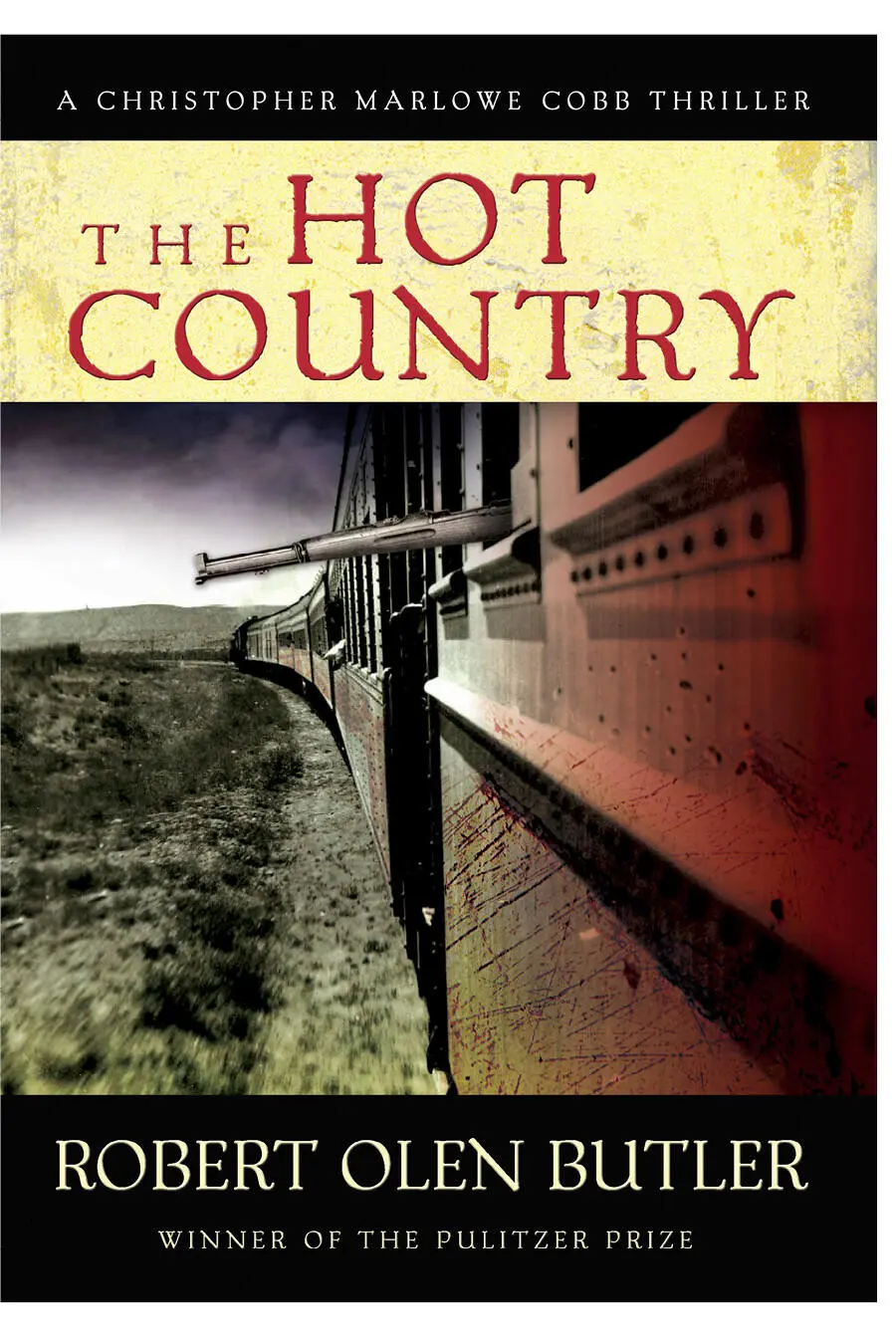
- Название:The Hot Country
- Автор:
- Издательство:Mysterious Press
- Жанр:
- Год:2012
- ISBN:нет данных
- Рейтинг книги:5 / 5. Голосов: 1
-
Избранное:Добавить в избранное
- Отзывы:
-
Ваша оценка:
The Hot Country: краткое содержание, описание и аннотация
Предлагаем к чтению аннотацию, описание, краткое содержание или предисловие (зависит от того, что написал сам автор книги «The Hot Country»). Если вы не нашли необходимую информацию о книге — напишите в комментариях, мы постараемся отыскать её.
, Christopher Marlowe Cobb (“Kit”), the swashbuckling early 20th century American newspaper war correspondent travels to Mexico in April and May of 1914, during that country’s civil war, the American invasion of Vera Cruz and the controversial presidency of Victoriano Huerta, El Chacal (The Jackal). Covering the war in enemy territory and sweltering heat, Cobb falls in love with Luisa, a young Mexican laundress, who is not as innocent as she seems.
The intrepid war reporter soon witnesses a priest being shot. The bullet rebounds on the cross the holly man wears around his neck and leaves him unharmed. Cobb employs a young pickpocket to help him find out the identity of the sniper and, more importantly, why important German officials are coming into the city in the middle of the night from ammunition ships docked in the port.
An exciting tale of intrigue and espionage, Butler’s powerful crime-fiction debut is a thriller not to be missed.
The Hot Country — читать онлайн бесплатно полную книгу (весь текст) целиком
Ниже представлен текст книги, разбитый по страницам. Система сохранения места последней прочитанной страницы, позволяет с удобством читать онлайн бесплатно книгу «The Hot Country», без необходимости каждый раз заново искать на чём Вы остановились. Поставьте закладку, и сможете в любой момент перейти на страницу, на которой закончили чтение.
Интервал:
Закладка:
And the image of him standing near Villa’s car snapped clearly into focus in my head. His horse and saddlebags were elsewhere. He had nothing in his hands, nothing under his arm. Okay. He was not going to play all his cards straight off his horse with the night coming on. This was the time just to register his horsemanship with Villa and have a drink. He would keep the papers to himself overnight. He would make that presentation formally. Probably tomorrow. The papers weren’t left on the horse. They were in his quarters. And this might be the only shot I had at them.
“I need to step out for a while,” I said, my first impulse being to head up to Villa’s car and wait for Mensinger to come out and then follow him. I needed to know where he was staying, but this plan would simply leave me waiting for him to go out again. Which he might not do.
Slim and Hernando shot each other a sly look. Slim said, “Next train back, the first boxcar behind the tender. Ask for Señora Toba-Rojas. She keeps track of the unattached women. She’ll know about your girl if she came to us.”
“Use my name with the señora,” Hernando said, and he flipped his chin at Slim. “Not the gringo ’s.”
The two shared a laugh, about Slim’s problems with Toba-Rojas, not about me supposedly looking for Luisa. I was content to let them think that was why I was going out. And I was glad to know how to look for Luisa, if it came to that.
I took my first step away from them and my hand fell to my side. I touched my holster. I paused. Do I want my pistol with me? Yes. And then another thought: Before I dashed off to find out something the hard way, I should see if there was an easier way. I turned back to the two men. They knew I was a reporter. They would assume I’d consider anyone fair game for my questions. And this guy was obviously interesting.
So I asked, “Do either of you know where the German will be quartered?”
Hernando and Slim looked at each other, thinking together in silence about this.
After a moment, Slim nodded, and then Hernando. As if the one made a suggestion and the other agreed, though neither of them said a word. These were two men who had fought beside each other for a long while.
“Well, not your journalist car,” Slim said.
Hernando said, “No. The journalist car is full of whores now.”
Slim shot me a glance. “Always has been,” he said.
The two laughed loud, this time at me.
I made myself laugh too.
Slim said, “There’s another caboose a couple of trains back.”
“Right.”
“They’d put him there.”
“Any important visitors go there when we’re on the move,” Hernando said.
I had to lead up to a suspicious question now, but I didn’t know any other way.
I asked, “Does everybody in camp realize the important visitors stay there?”
Slim and Hernando were still giving my questions thoughtful consideration. They looked at each other and nodded. “Pretty much,” Slim said.
“Do the big boys get a guard?”
“Sometimes,” Slim said. “If they bring one.”
“And when they go out? What about theft?”
Slim shrugged. “If there ain’t exactly honor among all the thieves here — and there is actually some of that, believe it or not — there is at least fear. Everyone knows not to mess with whoever’s in there. The man who does has nowhere to run and he’d end up shot if he tried to.”
“The guy who brought him to Villa. Would he be able to ease the German’s mind on that?” I asked this of Slim, in English.
Slim gave me a quick now-I-know-what-you’re-up-to look, but he said, also in English, “Major Ostos. Yeah. He’d put your man’s mind at ease.”
“Thanks,” I said and I took a step toward the door.
“Hey,” Slim said. I stopped and turned. “Chicago Slim,” he said. Meaning me.
I was surprised at how this filled me up like a racing tire on a Stutz. But all I could do was nod very slightly. Which was enough for Tallahassee Slim, I knew.
He said, in Spanish again, “When you’re done mashing, if you want to do some drinking, we’re fifty yards due south.” And he pointed very deliberately out the window of the car to show me where he meant.
I nodded again and turned and I went out the door and down the steps. I thought: Mensinger wants to keep it personal with Villa tonight. Ostos assured him of the safety of his quarters. Mensinger took the papers inside and put them somewhere out of sight. They are waiting for me. For a little while, at least.
And though I was focusing on the story now, as I headed in the direction of Mensinger’s car, my thoughts of the saddlebags carried me to an image of Mensinger taking them from his horse and hiding them away, but my mind ebbed back to the horse being led off and then on to the boy who took our own horses. I thought of his bandolera, and then I thought of Diego, and I thought of all the children I’d seen out of the corner of my eye in the past hour or two. It was not just the women of Mexico who went off to live inside the war as it was being fought; it was the children. And my mind flowed back again to Diego. And to Bunky. I reassured myself that when I finished this story and got to the nearest safe telegraph office — and given the story’s contents, that would mean a telegraph office across the border — and as soon as Clyde cleared the story and was ready to run it, I would head back to Vera Cruz.
I was passing the first boxcar after the tender on the next train. The door was open. And I thought of Luisa too. But I didn’t know how long Mensinger would linger with Villa tonight. Every moment was crucial. I put aside all the peripheral people in my life. I walked faster, as fast as I could without drawing attention to myself.
45
I removed my sombrero and sloughed off my serape and held them low beside me on the side nearest the train as I approached Mensinger’s caboose. Anyone observing me was more likely to wonder at one of their own entering the car reserved for special guests than at a seeming gringo . Still, I drifted a little beyond the car and hesitated and looked around, and for all the potential observers arrayed widely before me, camped in the open and lounging by their campfires, and for all the irregular flow of people along the track, no one seemed to be paying any attention to me whatsoever.
I went up the back steps of the caboose and entered. I put my serape and sombrero on. There was still a bit of post-sunset lightness in the sky and I could see well enough inside to find a kerosene lamp on the desk and a box of matches beside it. I removed the chimney. The wick was new and trimmed and I struck a match and replaced the chimney. I turned the wick knob so the lamp would burn as low as possible but still provide reading light.
I looked around. The car was similar to Villa’s, though the benches on both sides were made up like bunks. Except for the lamp, the desktop was empty. The bunks had only bedding. The chair before the desk, the chair farther along, next to the potbellied stove, were empty. No saddlebags. I moved farther into the car, passing the stove, and I saw something out of the corner of my eye, a shape in the deep shadows behind the stove. I stopped. I bent near.
Mensinger’s saddlebags.
I took note of exactly how they were folded there.
I pulled them out and carried them to the desk.
I laid them flat and opened one side and began to put my hand in to feel around. But I hesitated. Mensinger could have set a little trap. I ran one hand inside, palm upward, very slowly, keeping the hand absolutely flat and with the back of it pressed against the inner wall of the bag, my hand and forearm sliding into the bag till my fingertips touched the bottom, feeling cloth on my palm the whole way. I imagined a stacking of folded clothes. I spread my hand and hooked my fingers upward at the bottom edge of as much of everything above it that I could, and I carefully began to draw out the contents in a single, preserved stack.
Читать дальшеИнтервал:
Закладка:
Похожие книги на «The Hot Country»
Представляем Вашему вниманию похожие книги на «The Hot Country» списком для выбора. Мы отобрали схожую по названию и смыслу литературу в надежде предоставить читателям больше вариантов отыскать новые, интересные, ещё непрочитанные произведения.


Обсуждение, отзывы о книге «The Hot Country» и просто собственные мнения читателей. Оставьте ваши комментарии, напишите, что Вы думаете о произведении, его смысле или главных героях. Укажите что конкретно понравилось, а что нет, и почему Вы так считаете.