Robert Butler - The Hot Country
Здесь есть возможность читать онлайн «Robert Butler - The Hot Country» весь текст электронной книги совершенно бесплатно (целиком полную версию без сокращений). В некоторых случаях можно слушать аудио, скачать через торрент в формате fb2 и присутствует краткое содержание. Год выпуска: 2012, Издательство: Mysterious Press, Жанр: Современная проза, Триллер, на английском языке. Описание произведения, (предисловие) а так же отзывы посетителей доступны на портале библиотеки ЛибКат.
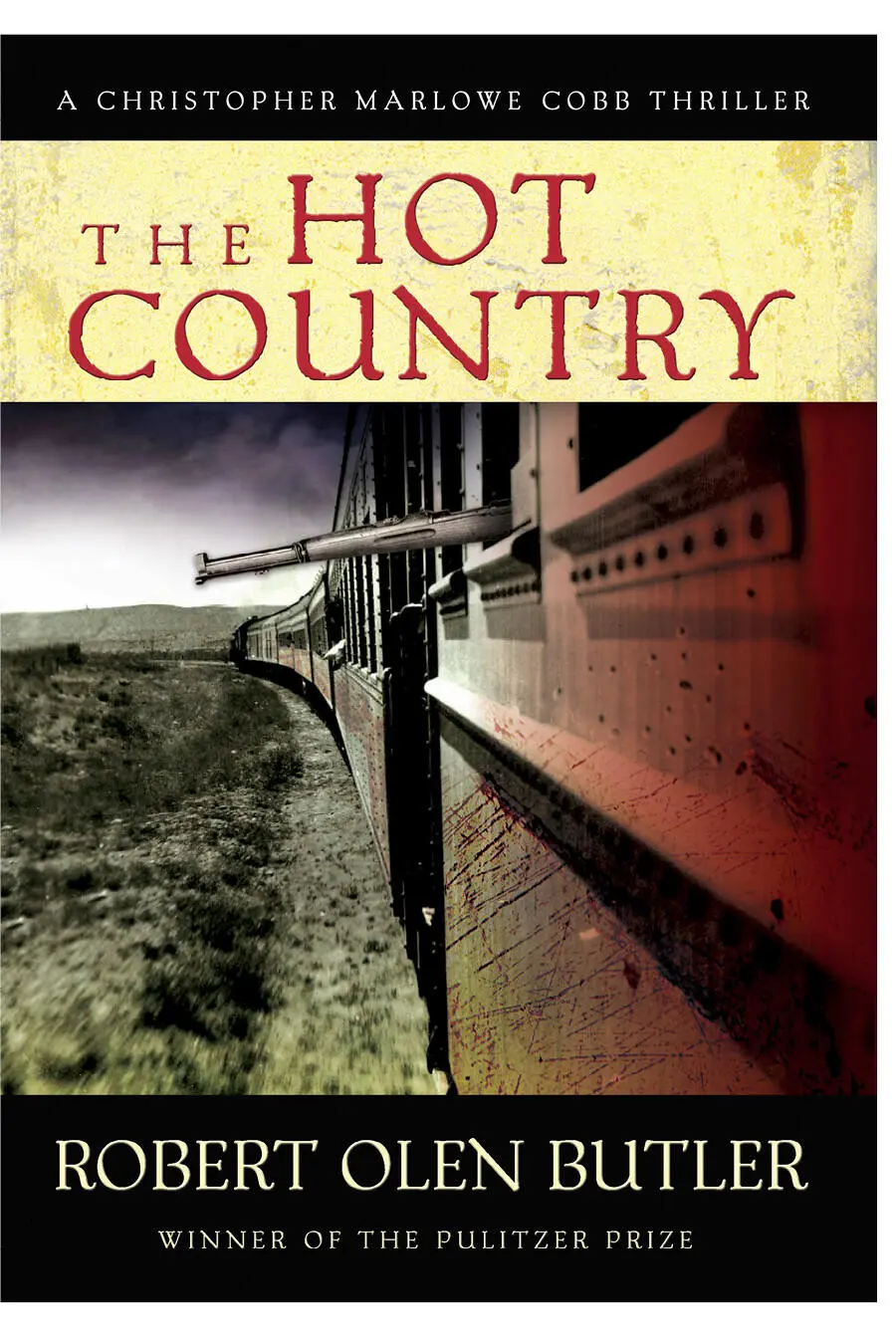
- Название:The Hot Country
- Автор:
- Издательство:Mysterious Press
- Жанр:
- Год:2012
- ISBN:нет данных
- Рейтинг книги:5 / 5. Голосов: 1
-
Избранное:Добавить в избранное
- Отзывы:
-
Ваша оценка:
The Hot Country: краткое содержание, описание и аннотация
Предлагаем к чтению аннотацию, описание, краткое содержание или предисловие (зависит от того, что написал сам автор книги «The Hot Country»). Если вы не нашли необходимую информацию о книге — напишите в комментариях, мы постараемся отыскать её.
, Christopher Marlowe Cobb (“Kit”), the swashbuckling early 20th century American newspaper war correspondent travels to Mexico in April and May of 1914, during that country’s civil war, the American invasion of Vera Cruz and the controversial presidency of Victoriano Huerta, El Chacal (The Jackal). Covering the war in enemy territory and sweltering heat, Cobb falls in love with Luisa, a young Mexican laundress, who is not as innocent as she seems.
The intrepid war reporter soon witnesses a priest being shot. The bullet rebounds on the cross the holly man wears around his neck and leaves him unharmed. Cobb employs a young pickpocket to help him find out the identity of the sniper and, more importantly, why important German officials are coming into the city in the middle of the night from ammunition ships docked in the port.
An exciting tale of intrigue and espionage, Butler’s powerful crime-fiction debut is a thriller not to be missed.
The Hot Country — читать онлайн бесплатно полную книгу (весь текст) целиком
Ниже представлен текст книги, разбитый по страницам. Система сохранения места последней прочитанной страницы, позволяет с удобством читать онлайн бесплатно книгу «The Hot Country», без необходимости каждый раз заново искать на чём Вы остановились. Поставьте закладку, и сможете в любой момент перейти на страницу, на которой закончили чтение.
Интервал:
Закладка:
I looked at all the faces arrayed before me, dark in the shadows of their sombreros. They had that placid inertness which was a fighting man’s stare of respect.
I reached up and stripped the fedora from my head and tossed it aside. I took the sombrero from Slim and lifted it and put it on my head. It fit me as if I’d carefully chosen it at a hatter on Michigan Avenue. There was now a moment and then another in which these faces before me did not change but held their expression and in which no one spoke a word, and another moment, and then, as one, we all broke and mounted our horses and we headed north.
Had I killed a man before? For all the men I’d watched die in battle, for all the scrapes I’d gotten into so I could write stories about men dying in battle, until this morning I had never killed a man. But for a long while on the day when I’d done this thing for the first time, as I rode with the Villistas, wearing that man’s hat, which fit my own head precisely, I could only think about the pinto I’d inadvertently shot in the side. I could only hear the pinto neighing in pain and galloping off as if it could outrun this burning in its side. Before we’d left the hacienda I’d mounted my horse and ridden around for a while in the land behind the casa to see if I could find the pinto to at least put him out of his pain. But I couldn’t find him. And on the ride north I thought and thought and I couldn’t stop thinking about where he was right now, how hard it surely was for even an animal to die alone. I worried about the horse and not the men I’d killed. Horses are innocent. We men kill each other in wars because men are guilty. We are all guilty.
And eventually Slim made a point of dropping back and riding by my side. Slim and I rode together through the high-plateau desert of estado Coahuila, and we didn’t say a word to each other. We rode together because I saved his life and he saved mine.
42
On the second day, we passed through the laguna country, the bed of a vast, ancient lake, vanished eons ago into the air, and we turned east and began to climb the ascending peaks curling through Coahuila, a stray plume of the long tail of mountains that started as the Rockies and ended as the Sierra Madre, and as the sun verged low behind us we came over a rise and found, half a mile off, the small town of Hipolito. Stretching out from its center were a dozen trains with hundreds of cars, most of them strung farther than we could see back along the single eastward-bound track, and eight thousand cavalry troops and four thousand infantry were living in the boxcars or camped now for the coming night without shelter in the chaparral.
We’d been pushing hard since the hacienda, at first even more intensively because of the two men who needed serious medical attention. We buried them both along the way but we kept pushing, and now we paused, strung along the rise, and we rested for a long moment, leaning on our saddle horns, and there were no yelps of joy, no words at all, but we were glad to be at the end of our journey.
And I became acutely aware of how I was thinking. We buried our dead. We buried. Our dead. This was the end of our journey. The past forty-eight hours had lifted me from the life I was leading into quite a different life, a life that was familiar in many ways but one that I’d always viewed from the outside. I was inside the war now. I’d become part of it. Who was I as I sat here on this horse? Was I a Villista now? The Villista Hernando Soto, who barely more than two days ago was robbing me and then was about to draw his pistol and shoot me dead, shared his canteen with me an hour ago, wordlessly, riding up as I drained the last bit of mine and he offered me his and I drank and I nodded at him and he nodded at me. And the men who lately would have killed him — technically soldiers of the Federal Government of Mexico — would also have killed me, and these men he had lately killed, I had killed as well.
And now, without any one of our band of Villistas giving a command or seeming even to be the first one to take up his reins, we all moved forward together as one and descended into the mountain valley and we rode toward Pancho Villa’s army. Our army. And only now was my other self reawakening. Christopher Marlowe Cobb. Kit Cobb. Byline, Christopher Cobb. He thought of Friedrich von Mensinger. I thought of Friedrich von Mensinger. I wondered if the German agent had arrived. I assumed he had. I felt confident I’d correctly figured out his plan of arrival, and he had time to execute it. But perhaps only barely. He went up the train line ahead of us and he no doubt quickly secured his horse and he rode hard to cover himself with trail dust and sweat. This man carried some serious promises that could well shape the decisions of the man that I, too, must now impress. Impress enough so that I could discover and confirm what was going on so that I could then vanish from the camp and find a telegraph and write a story so that my readers — and the country they were part of — knew what was happening. That is who I am, I reminded myself. I am a reporter.
And we were moving among the soldiers, a thousand small fires beginning, their horses nibbling whatever was near, some of the lucky men camped next to mesquite, where they could hang their serapes and dry their meat. Some were even luckier to have women, who were beginning to cook the tortillas and the jerked beef. And they all watched us, and many of the men nodded at us as we passed, and some of the men stood as we passed, and many were confused at first glance to see me, but I rode at the front beside Slim, and I had a serape thrown around me now and I wore a sombrero and my bandaged left arm was exposed and the upper remnant of the sleeve of my white shirt was red with my blood and I had a place at the head of our band, and all these things made the first confusion vanish quickly and I received special nods and one man took off his sombrero to me and another reached out and patted my boot as I passed.
And we neared the trains and we moved along them, some of our men splitting off now to take care of the riderless horses and the spoils from the train, to find a place among the other fighters preparing for the night, to find their way to their women. The flatcars and the roofs of many of the boxcars were full of the soldaderas —the name seeming entirely ironic in this camp, the women shouldering children and not arms, cooking on small fires, waiting to service the men. I could not keep from looking at the faces of the younger women, the women of the right size, to see if one of them was Luisa. None was.
We approached a box car painted with a white cross, one of forty such that Villa brought with him to the areas of engagement. They were enameled inside and outfitted for medical care and he had doctors and he had nurses, a thing this untutored man had decided for himself to make part of his army, with no other army in Mexico, including that of the Federales, having anything like it.
Slim broke off from me and rode back to the four wounded men who had survived our journey and he made sure they went in now for treatment, and he returned to me and he said, “They should look at your arm.”
I said, “Hernando the tailor has done a good job.”
I said it loud enough for Hernando, who was nearby, to hear me. He turned his head away and flipped his chin.
“They should see it,” Slim said.
“Are you going to Villa now?”
“Yes.”
“I’ll do it after.”
“All right,” Slim said. “No use wasting the medicine if he’s going to shoot you for a gringo at first sight.” And he said this without a wink, without a flicker of anything on his face.
Читать дальшеИнтервал:
Закладка:
Похожие книги на «The Hot Country»
Представляем Вашему вниманию похожие книги на «The Hot Country» списком для выбора. Мы отобрали схожую по названию и смыслу литературу в надежде предоставить читателям больше вариантов отыскать новые, интересные, ещё непрочитанные произведения.
Обсуждение, отзывы о книге «The Hot Country» и просто собственные мнения читателей. Оставьте ваши комментарии, напишите, что Вы думаете о произведении, его смысле или главных героях. Укажите что конкретно понравилось, а что нет, и почему Вы так считаете.