Robert Butler - The Hot Country
Здесь есть возможность читать онлайн «Robert Butler - The Hot Country» весь текст электронной книги совершенно бесплатно (целиком полную версию без сокращений). В некоторых случаях можно слушать аудио, скачать через торрент в формате fb2 и присутствует краткое содержание. Год выпуска: 2012, Издательство: Mysterious Press, Жанр: Современная проза, Триллер, на английском языке. Описание произведения, (предисловие) а так же отзывы посетителей доступны на портале библиотеки ЛибКат.
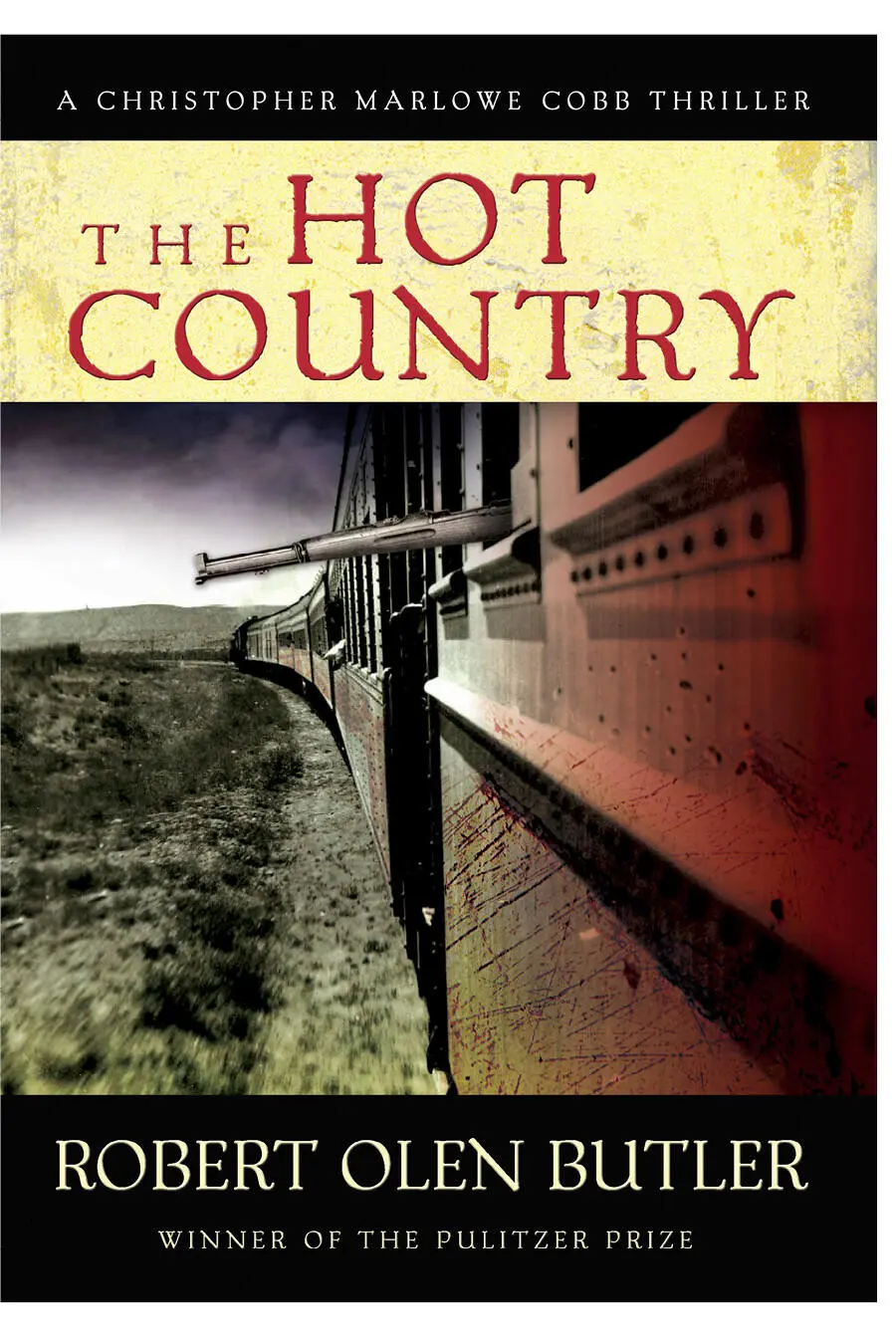
- Название:The Hot Country
- Автор:
- Издательство:Mysterious Press
- Жанр:
- Год:2012
- ISBN:нет данных
- Рейтинг книги:5 / 5. Голосов: 1
-
Избранное:Добавить в избранное
- Отзывы:
-
Ваша оценка:
The Hot Country: краткое содержание, описание и аннотация
Предлагаем к чтению аннотацию, описание, краткое содержание или предисловие (зависит от того, что написал сам автор книги «The Hot Country»). Если вы не нашли необходимую информацию о книге — напишите в комментариях, мы постараемся отыскать её.
, Christopher Marlowe Cobb (“Kit”), the swashbuckling early 20th century American newspaper war correspondent travels to Mexico in April and May of 1914, during that country’s civil war, the American invasion of Vera Cruz and the controversial presidency of Victoriano Huerta, El Chacal (The Jackal). Covering the war in enemy territory and sweltering heat, Cobb falls in love with Luisa, a young Mexican laundress, who is not as innocent as she seems.
The intrepid war reporter soon witnesses a priest being shot. The bullet rebounds on the cross the holly man wears around his neck and leaves him unharmed. Cobb employs a young pickpocket to help him find out the identity of the sniper and, more importantly, why important German officials are coming into the city in the middle of the night from ammunition ships docked in the port.
An exciting tale of intrigue and espionage, Butler’s powerful crime-fiction debut is a thriller not to be missed.
The Hot Country — читать онлайн бесплатно полную книгу (весь текст) целиком
Ниже представлен текст книги, разбитый по страницам. Система сохранения места последней прочитанной страницы, позволяет с удобством читать онлайн бесплатно книгу «The Hot Country», без необходимости каждый раз заново искать на чём Вы остановились. Поставьте закладку, и сможете в любой момент перейти на страницу, на которой закончили чтение.
Интервал:
Закладка:
“You wouldn’t put Zapata ahead of Obregón?” I asked.
“We need to talk from the German point of view, yes?”
“Yes.”
“Zapata is a fool and a primitive Bolshevik. He just wants to make all the land communal for all the peasants, and once that’s done, he’d be happy simply to play the bespangled charro in the mountains of Morelos.”
“And Obregón is probably the smartest military man,” I said.
“He probably is. But not in a way that would register in Berlin. At least at this point.”
“Carranza then. Isn’t he the ostensible leader of the rebels now? The Primer Jefe, even for Villa?” I was ready for Gerhard to throw all these questions back on me. But he seemed only to have wanted to make it clear he knew my tricks. When it came down to it, he apparently liked playing the authority and wasn’t really inclined to listen to a possible different opinion. He wouldn’t make a good reporter in that way. Maybe not even a good spy. But he did know some things.
He was talking Carranza now. “That First Chief title won’t last long. He doesn’t seem a natural leader for the radical change the others are after,” Gerhard said. “He came from a landowner family, like Madero. He went to the National Preparatory School in Mexico City and wanted to be a scholar, but he had to go home to play the son of a wealthy cattle owner instead. Nevertheless, the scholarly world was the natural one for him, and it shows.”
“The Kaiser’s not looking for an intellectual.”
“What do you think?” He made a faint snort and a snappish little furrowing of the brow.
I meant it as a statement between us of the obvious thing, a step-by-step articulation of our reasoning, and he acted as if it were a naïve question. I was remembering that I didn’t like Gerhard when I first met him. He won me over with baseball, but he was a damn Pirates fan, after all.
“What do I think?” I repeated, as if that were the naïve question. “I think the Escuela Nacional Preparatoria hardly makes you an intellectual,” I said, converting his translated “National Preparatory School” back into its real name. All of this suddenly felt like a low-level game of one-upmanship that I shouldn’t be playing.
“Even worse,” he said. “The most blindly insistent intellectual is the intellectual who got stunted in his growth.”
And that was true enough. I needed to get rid of this odd sense of rivalry and just let him tell me what he thought he knew. And I realized the attitude that irritated me a few moments ago could have been directed at the Kaiser, not me. I was breaking my own rules. I was jumping to conclusions too easily. In this case about Gerhard. “So not Carranza,” I said. “Which leaves us with Villa.”
“Which leaves us with Villa. And the case for him is strong, if you think like the Kaiser. He’s got by far the largest army, the best-trained army, and the most aggressive, straightforward combat style.”
“Which is why Obregón’s virtues as a general are still not registering in Berlin.”
“That’s right. And Villa’s got a string of victories that would impress the Germans. Ciudad Juárez, Tierra Blanca, Chihuahua, Ojinaga. And now he’s beaten Huerta head-on at Gómez Palacio and Torreón. And Carranza’s getting very nervous. He thinks Villa’s in the process of clearing the way to Mexico City for himself. Something’s going to happen over all that. They will break, the two of them, they’ll turn into enemies and I think they both know it.”
“And that means renewed general chaos for all the rebel leaders, everyone fighting everyone,” I said.
“Villa’s shrewd,” Gerhard said. “As strong, comparatively, as he is, he still knows he can’t prevail in chaos. The great mass of Mexicans are just keeping their heads down. Villa needs something.”
“So the time is right for Germany to approach him.”
“ Jawohl, mein Herr, ” Gerhard said with that little snort of a laugh. I was finally realizing his attitude I’d been picking up on was actually directed at the country that was not his country but that was in his blood.
I said, “So the question is: What’s the ‘something’ Mensinger is going to offer? And what do the Germans get in return?”
We both took a deep breath and sat back in our chairs. There was a glib answer to this. Arms. But there were six hundred tons of arms sitting in a German ship out in the harbor right now. Was the simple offer of more arms enough to prompt a Friedrich von Mensinger and all the secrecy? Gerhard and I both understood that there was something else going on.
“Are you going to follow him?” Gerhard asked.
“You’re not?”
He shook his head very slowly no.
I said, “It’s the next move if I want this story.”
“Can we talk before you file it?”
“I’ll file.”
“Of course you will. You work for a good newspaper. I work for the United States of America.”
He didn’t need to say the next thing. “If it’s feasible,” I said.
“If it’s feasible.”
“I’m an American too.”
“I know you are. Baseball.”
“Baseball.”
Either of us could have said this now, but Gerhard did: “We both have some work to do.”
21
At the portales, pretty far advanced in the morning now, there was still no sign of Bunky. The waiter gave me the telegram Bunk would normally be holding for me.
It was from Clyde. This was a quick turnaround and he was only starting to inquire about Mensinger. But Hans, the tenth-floor janitor, was apparently still puttering around when Clyde got my cable, and so Clyde had sent me quick answers about the German words I was unsure of in Mensinger’s notes. Einmarsch was literally “marching in.” Kein Einmarsch, then: “not a marching in.” Not an invasion. The other phrase where there was not something: keine Eier . I’d given Clyde both words, for what I presumed was a phrase. Clyde said Hans had a good laugh. Eier was “eggs.” Keine Eier was the German way of saying somebody has “no balls.” Ningunos cojones .
Which gave me a good, though quiet, laugh. With all their posturing and militarism and Prussian blood, the German men thought of their balls, their nuts, their stones, as eggs. As fragile, easily cracked eggs. Maybe that actually explained all the posturing and militarism.
And Amboß . Anvil. Entweder Hammer oder Amboß. Either a hammer or an anvil.
So as it turned out, I didn’t need Gerhard to translate the notes. But I wondered what he’d make of them. I decided to drop back in on him at the first opportunity. But Bunky first. He was always ambulatory by now. He was on my mind. I was hoping perhaps that his writing that story about the utility commissioner deciding to work with the Americans — but with a B. F. Millerman cynical twist about the financial motives — had warmed up his reporter’s blood and he’d been working on a new lead.
However, this wasn’t the case. When I arrived at his casa de huéspedes on a side street near the docks, where Bunky’d taken a furnished room, I was met at the door by the manager, a Colombian woman with her hair so tightly knotted at the top of her head she seemed perpetually wide-eyed in surprise. When I asked for Señor Millerman, she shrugged and then pantomimed the knocking back of what surely was meant to be a stiff drink. She gave me his room number and stood aside to let me in.
I went one flight up the carpeted steps — it was one of the better boardinghouses in town — and I stood before Bunky’s door. I knocked. No response. I knocked again and called his name and he was still not making a sound and I tried the handle. It turned.
Читать дальшеИнтервал:
Закладка:
Похожие книги на «The Hot Country»
Представляем Вашему вниманию похожие книги на «The Hot Country» списком для выбора. Мы отобрали схожую по названию и смыслу литературу в надежде предоставить читателям больше вариантов отыскать новые, интересные, ещё непрочитанные произведения.


Обсуждение, отзывы о книге «The Hot Country» и просто собственные мнения читателей. Оставьте ваши комментарии, напишите, что Вы думаете о произведении, его смысле или главных героях. Укажите что конкретно понравилось, а что нет, и почему Вы так считаете.