Robert Butler - The Hot Country
Здесь есть возможность читать онлайн «Robert Butler - The Hot Country» весь текст электронной книги совершенно бесплатно (целиком полную версию без сокращений). В некоторых случаях можно слушать аудио, скачать через торрент в формате fb2 и присутствует краткое содержание. Год выпуска: 2012, Издательство: Mysterious Press, Жанр: Современная проза, Триллер, на английском языке. Описание произведения, (предисловие) а так же отзывы посетителей доступны на портале библиотеки ЛибКат.
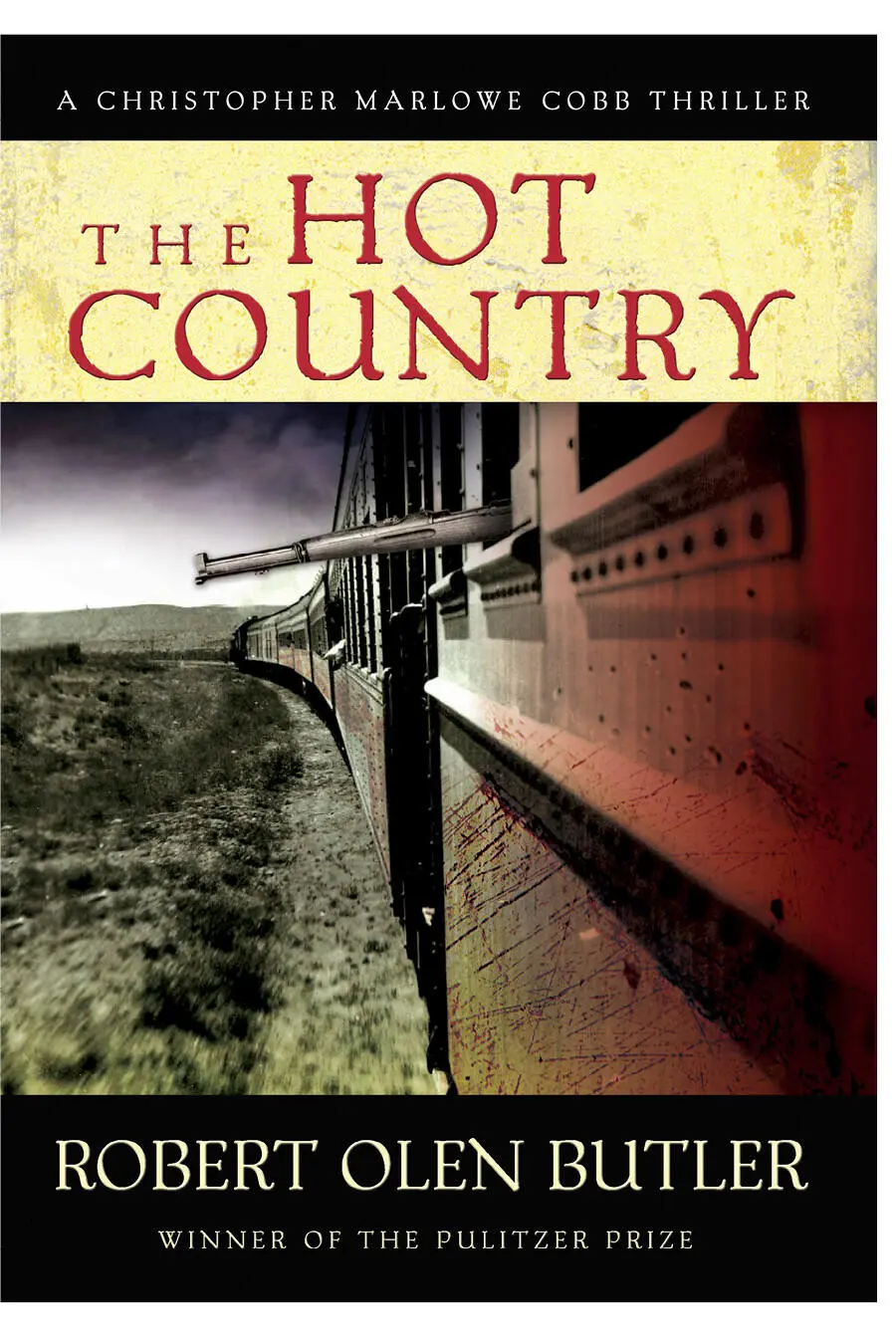
- Название:The Hot Country
- Автор:
- Издательство:Mysterious Press
- Жанр:
- Год:2012
- ISBN:нет данных
- Рейтинг книги:5 / 5. Голосов: 1
-
Избранное:Добавить в избранное
- Отзывы:
-
Ваша оценка:
The Hot Country: краткое содержание, описание и аннотация
Предлагаем к чтению аннотацию, описание, краткое содержание или предисловие (зависит от того, что написал сам автор книги «The Hot Country»). Если вы не нашли необходимую информацию о книге — напишите в комментариях, мы постараемся отыскать её.
, Christopher Marlowe Cobb (“Kit”), the swashbuckling early 20th century American newspaper war correspondent travels to Mexico in April and May of 1914, during that country’s civil war, the American invasion of Vera Cruz and the controversial presidency of Victoriano Huerta, El Chacal (The Jackal). Covering the war in enemy territory and sweltering heat, Cobb falls in love with Luisa, a young Mexican laundress, who is not as innocent as she seems.
The intrepid war reporter soon witnesses a priest being shot. The bullet rebounds on the cross the holly man wears around his neck and leaves him unharmed. Cobb employs a young pickpocket to help him find out the identity of the sniper and, more importantly, why important German officials are coming into the city in the middle of the night from ammunition ships docked in the port.
An exciting tale of intrigue and espionage, Butler’s powerful crime-fiction debut is a thriller not to be missed.
The Hot Country — читать онлайн бесплатно полную книгу (весь текст) целиком
Ниже представлен текст книги, разбитый по страницам. Система сохранения места последней прочитанной страницы, позволяет с удобством читать онлайн бесплатно книгу «The Hot Country», без необходимости каждый раз заново искать на чём Вы остановились. Поставьте закладку, и сможете в любой момент перейти на страницу, на которой закончили чтение.
Интервал:
Закладка:
“You stayed,” I said.
He didn’t seem to understand.
“In Germany after she died.”
“I stayed,” he said.
I watched him reading me the way I just did him: He thought I wasn’t understanding. “By then,” Gerhard said, “I was in the Hüttner Kapelle . A very good orchestra in Dortmund.”
That was all he said. I didn’t press him about the leap from a good orchestra in a concert hall in Dortmund to a brass band in a public park in Vera Cruz. With a potential source you have only a certain amount in your reporter’s goodwill bank account. You can press him only a finite number of times. I’d keep something in my account for later, for more important questions.
But I did say, “That wasn’t such a long time ago.”
He didn’t understand.
“Seven years. You said it was a long time ago that you were an American.”
He gave me a faint, ironic smile. “It seems long.”
I could have grilled him more. How if it seemed like a long time that he had not been an American and if he was no longer in the very good German orchestra and if the woman who caused him to leave America in the first place was dead, why the next move was Mexico with a German brass band and not back to the States. We’ve got plenty of band shells in plenty of parks in the U. S. of A. But it was not his story I was interested in.
As his odd little smile faded, he took a drink, his tankard rising high as he drained the last bit.
“Let me get you another of those,” I said.
I didn’t wait for an answer but grabbed his empty and headed for the wooden bar, where the tankards were topped off and lined up ready, and I brought a full one back to the table.
He took it with a nod as I sat. His “thanks” felt almost like an afterthought.
“You like this stuff?” I said.
“No.”
“If you’re going to hate the taste anyway, you can try the mezcal .”
He shrugged again. All the shrugs were alike. “Wherever I want to end up by drinking,” he said, “I need to get there slow.”
“Or else you might start talking English.”
He flipped his head in a little laugh that sounded more like a snort. He took a sip of the pulque.
“It’s not just your style,” he said. “You dig up the dope and you write it straight.”
He caught me off guard with one of my own tricks. Get a thing halfway into the conversation and leave it, and then, when it is mostly forgotten, abruptly return to it. Not that it made me say anything, not that he was even trying to get me to, but I leaned back in my chair and he’d gotten me off my own tack.
Then his use of “dope” registered on me. “So you played the horses before you took off for the Fatherland,” I said.
Now he was the one to sit back. After a few beats of silence, he said, “She saved me from that.”
It was the right thing to say to shut me up for a while.
I lifted my tankard to him.
He lifted his, and we touched them.
We drank.
The tankards went down to the table.
The Germans at the back of the room brayed in sudden laughter. Anyone watching Gerhard and me would have thought we never even heard it.
We drank again and we both seemed to be waiting for something.
I said, “For a German band, you boys play a lot of American music.”
“Ragtime and Broadway,” he said. “That’s our colonial empire. We’ll rule the world.”
“We?”
He looked at me like I was a damn fool. “Red, white, and blue,” he said. “Why do you think I’m sitting at this table?”
“So what’s what with the Wagner tonight?”
There was a stopping in him. But not like I’d caught him in something. He pulled in a breath and held it and nodded very faintly, like he’d been waiting for it to get around to this. But he said, “I don’t know.”
This guy was like reading a book in bed by candlelight and you’re getting very sleepy. You run your eyes over words that seem familiar, but they’re not sticking together to make sense.
“You figure it was for your visitors?” I said.
“Obviously,” he said.
So I threw the fastball down the center of the plate. “Who’s the tall man?” I asked.
You keep looking for little clues in the people you work on for the dope. He was giving me plenty of them, but I couldn’t quite put them together. He’d suddenly gone very quiet. Whatever stopped in him when I asked about the Wagner was going again, but he was quiet. His hands were still. His eyes were steady. If anything, they were looking at me like he was disappointed. He just wanted an American drinking buddy, one who also happened to be in the magazines, and I was grilling him. After a few beats of silence that felt much longer, he said, “I don’t know.”
I wanted to ask him what took him so long to come around to saying that, if he didn’t know. Normally I wouldn’t have believed him. But I did, somehow.
Especially when he added, “He was striking. I wondered myself.”
“‘Striking’ is a good word for him,” I said.
“You have any ideas?” he said.
“He’s your guy. Don’t look at me.” I realized I was sounding snide again. I thought to try to back out of it a bit. “I said he’s yours since you’re playing in a German band in Mexico instead of going back home to a band shell in Pittsburgh.” Which maybe didn’t quite sound snide but sure wasn’t a backpedal.
In fact, he should have gotten wired up by that. But he didn’t. He just seemed to get quieter.
So I said to him, “I’m sounding like a Cub fan ragging a Pirate fan. You and the boys make good music in a warm climate. It’s not my place. .”
He waved off the half-assed apology. “You’re doing your job,” he said.
I nodded at him. A thanks-for-understanding nod.
And he said, “I should get back to the boys.” He dragged out “the boys” enough to let me know he was quoting me. He did it without cracking a smile. Okay. I deserved that.
“Maybe we’ll have another drink sometime without all the racket,” I said.
He said, “If I hear anything about the tall man I’ll let you know.”
“Good.” And if he was serious about that offer, I had a thought that might help him get me what I wanted. Better him with this approach than me. I said, “Maybe your bandmaster knows something.”
Gerhard gave me another thoughtful but unreadable look.
Then he said, “You mind doing the same? If you hear something? You’ve got me curious.”
I didn’t answer right away and he laughed the closest thing to a real laugh I’d heard from him, though it left a faint afterclap of irony.
“I promise I won’t scoop you,” he said.
I lifted my drink to him.
He lifted his and said, “ I have a room at the Hostal Buen Viaje . On Calle de Montesinos near the station.”
I nodded a thanks at this. “I’m beneath the portales of the Diligencias every morning,” I said.
We touched tankards and they clanged like a distant fire bell.
16
When I stepped out of the pulquería, leaving Gerhard Vogel with his German buddies and his secret Scribner’s, I was not aware that something had happened one stop up the trolley line, wouldn’t learn about it till I was drinking my morning coffee in the portales. I took a few paces toward the center of the cobbled street, out almost to the trolley tracks, just to get away from the stink of the pulque, which was stronger now because I was carrying traces of it in my mouth. The more or less full moon was high, and spotted along this block of drinking joints were a few electric lamps, one of them across the street and thirty yards or so down to my right. I was lit up by the moon, with more light just down the street. And things were quiet. Even the pulquería behind me was keeping its sounds tight to itself now. Or maybe it had fallen silent in there. Maybe Gerhard chilled down his friends. I bet he had that effect.
Читать дальшеИнтервал:
Закладка:
Похожие книги на «The Hot Country»
Представляем Вашему вниманию похожие книги на «The Hot Country» списком для выбора. Мы отобрали схожую по названию и смыслу литературу в надежде предоставить читателям больше вариантов отыскать новые, интересные, ещё непрочитанные произведения.


Обсуждение, отзывы о книге «The Hot Country» и просто собственные мнения читателей. Оставьте ваши комментарии, напишите, что Вы думаете о произведении, его смысле или главных героях. Укажите что конкретно понравилось, а что нет, и почему Вы так считаете.