Pearl Buck - The Living Reed
Здесь есть возможность читать онлайн «Pearl Buck - The Living Reed» весь текст электронной книги совершенно бесплатно (целиком полную версию без сокращений). В некоторых случаях можно слушать аудио, скачать через торрент в формате fb2 и присутствует краткое содержание. Год выпуска: 2012, Издательство: Open Road Media, Жанр: Современная проза, на английском языке. Описание произведения, (предисловие) а так же отзывы посетителей доступны на портале библиотеки ЛибКат.
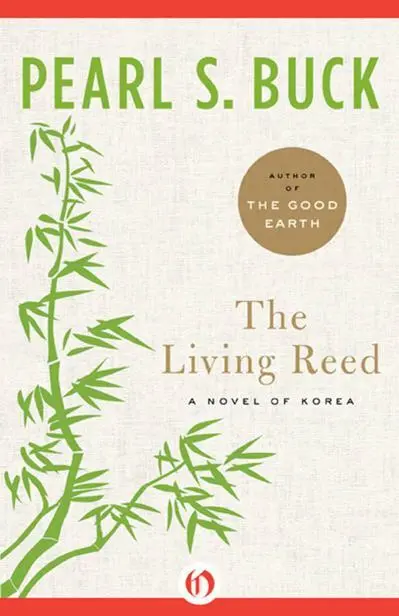
- Название:The Living Reed
- Автор:
- Издательство:Open Road Media
- Жанр:
- Год:2012
- ISBN:нет данных
- Рейтинг книги:4 / 5. Голосов: 1
-
Избранное:Добавить в избранное
- Отзывы:
-
Ваша оценка:
The Living Reed: краткое содержание, описание и аннотация
Предлагаем к чтению аннотацию, описание, краткое содержание или предисловие (зависит от того, что написал сам автор книги «The Living Reed»). Если вы не нашли необходимую информацию о книге — напишите в комментариях, мы постараемся отыскать её.
, Pearl S. Buck’s epic historical novel about four generations of one aristocratic family in Korea. Through the story of the Kims, Buck traces the country’s journey from the late nineteenth century through the end of the Second World War. The chronicle begins as the Kims live comfortably as advisors to the Korean royal family. That world is torn apart with the Japanese invasion, when the queen is killed and the Kims are thrust into hiding. Regarded by Buck as “the best among my Asian books,”
is a gripping account of a nation’s fight for survival, and a detailed portrait of one family’s entanglement in the ebb and flow of history.
The Living Reed — читать онлайн бесплатно полную книгу (весь текст) целиком
Ниже представлен текст книги, разбитый по страницам. Система сохранения места последней прочитанной страницы, позволяет с удобством читать онлайн бесплатно книгу «The Living Reed», без необходимости каждый раз заново искать на чём Вы остановились. Поставьте закладку, и сможете в любой момент перейти на страницу, на которой закончили чтение.
Интервал:
Закладка:
In the night, when Il-han returned from the long conference with the King, he told Sunia that he had been offered a high post in government and that he had declined. He did not regret his refusal, yet he wondered if she, perhaps, being more simple than he by nature, or so he imagined, might secretly envy other women whose husbands were publicly known. He had a certain fame as a scholar, a thinker, one who did not fear to do what he liked or refuse to do what he disliked, but was this enough? When she replied, he perceived that he had been wrong, and again he marveled, as he had often before, how it is that a man can live with a woman and have sons by her and still know very little of what she is. For Sunia spoke at once when he finished what he had to tell.
“You did very well to refuse a post,” she said.
It was night and they lay on the floor mattresses. A candle burned on the low table at his side. The house was silent and beyond the drawn screens the night was dark. He had talked for a long time, and she had listened.
“Why do you say so?” he asked now.
“For one reason,” she said. “You always forget small things. You are a great man, but only in great things. You speak to kings and queens as though you were their brother, but you do not know one servant in this house from another, except your own man. And I wonder sometimes if you would even know your sons, if you saw them in a crowd of children. Now you will have time to know your sons — and me, too, I daresay!”
She broke off to laugh, and she had ready laughter, but he was surprised at what she had said.
“You describe a very foolish fellow,” he complained, “and I think I am better than that.”
She turned on her side then and leaned her head on her elbow and looked down into his rebellious face. “You are only foolish, I say, in small things. If you were clever in small ways you would be foolish in great ones and I am satisfied with what you are. More than that, I know very well that I am a fortunate woman, a lucky wife, a blessed mother.”
“Now, now,” he said, laughing in turn. “You blame yourself too much. A woman gets what she deserves.”
This banter went into sudden passion between them, he aroused by the sight of the lovely face so near, her eyes lustrous and dark in the candlelight. In this way he knew her very well, for when she was ready a peculiar fragrance came from her body. He had learned, but not easily, that while without this fragrance she could submit, it was without response, and then he was robbed of half his joy. While he was a bridegroom, a husband too young, he had not been able to restrain his passion, or suit its timing to hers, even though he cursed himself because, if he did not, they were further apart afterward. But with the fullness of manhood he learned, and he was rewarded. Better to have her whole, at her own time, than resisting when she was not.
Now her fragrance came sweet and strong, and he held her long and close. When they drew apart, they were closer than ever before, and they lay in peace and silence, she thinking while he fell asleep.
He woke after an hour or so and was thirsty and she poured a bowl of tea and then came out with what she had been thinking.
“While we are in mourning, you can do nothing outside, and you must promise me to learn the difference between our two sons. I feel each is different from the other, each not ordinary, but I have not the wit to know what the difference is. This is the first thing I have to say.”
He drank the tea and held his bowl for more.
“Then there is a second? And a third, doubtless! When a man has a little time to be idle, be sure his wife will fill it for him.”
She pretended to snatch the bowl away from him.
“Dare to think I am like other wives!”
“Fortunately you are not.” He was suddenly wide awake, relaxed, amused, and wondering whether, if he indulged her, her fragrance would flow again. She had changed her garments, he could see, and the odor was that of clean freshness.
“You are to stop thinking your own private thoughts,” she retorted. “You are to listen to me, if you please! Il-han, I say you should know some of these Americans before you advise the King again. You are in a high, responsible place. You advise rulers. Yet how do you know if Americans are good or evil? What if you lead the King into wrongdoing and our people suffer because you know too little of what you are talking about?”
This was the surprising woman. While he could have sworn she had no concern for anything beyond her household, she came forward with this simple wise conclusion. Unpleasant though it was to consider consorting with foreigners, what she had said was true. Chinese he knew, and Japanese, and a few Russians, but he knew almost no Americans.
All inclination for renewed lovemaking ebbed out of him.
“Go to sleep,” he told Sunia. “You have said enough to keep me awake the rest of the night and for many nights to come.” And he pinched out the flame of the candle between his thumb and forefinger.
In these days of mourning for the one dead, Il-han devoted himself to the living. Each morning he sat near while the tutor taught his elder son and he was pleased by the boy’s quickness where he was interested and then displeased because where he had no interest he idled. Nevertheless he did not interfere and as the days passed he saw that the tutor understood the child well, and when the child looked away from his books he did not reproach him. Instead he bade the boy run in the garden or he gave him a brush and colored inks and let him paint a picture.
“In a picture,” he told Il-han privately, “I discover the child’s hidden thoughts and feelings.”
“What does he paint?” Il-han asked.
The tutor was troubled. “He paints violence,” he said at last. “In this gentle and noble household your son paints a cat with a bird in its teeth, or a devil peering out from the bamboos, or a hawk with a mouse bleeding in its claws.”
Il-han heard this with surprise. “No one has ever treated this child harshly. Why should he have such thoughts?”
“I surmise that it comes from the times in which we live,” the tutor replied. “He hears of robbers in the city and of bandits in the mountains and he has asked me many times why the Queen was all but murdered, and he is aware of the quarrels among the noble clans. When he is in the country at your honored father’s house, as he has always wished to be in the summer, he makes friends with the sons of the farmers who till your lands, sir, and they are wild children. I try to keep him away from them, but he escapes me and I find him there in the village, his good clothes torn and dusty, and his face and hands as black as theirs. He is often rude to me then, and he uses coarse language that he has heard them use. Indeed, he has told me more than once that he wishes he were the son of a peasant, so that he could be free to run the streets and do what he likes.”
This was grave news, and Il-han was pricked by his conscience. While he had been concerned with the Queen and the King, his son had found companionship among the ignorant and the poor. That very day, when the morning’s lessons were over and the noon meal eaten, he took his elder son by the hand and led him toward the bamboo grove.
“Let us see whether the young shoots are ready to break through again,” he coaxed.
The season was too early, he feared, but no, when they came into the shadows of the grove, the bamboos so thick together that the sunlight fell through in drops of light, they saw the earth was loosened by the uprising shoots. Here and there a pointed sheath of palest green, feathered at the tips, showed above the earth.
“Do you remember,” Il-han asked his son, “how once you broke the shoots and killed the trees?”
Читать дальшеИнтервал:
Закладка:
Похожие книги на «The Living Reed»
Представляем Вашему вниманию похожие книги на «The Living Reed» списком для выбора. Мы отобрали схожую по названию и смыслу литературу в надежде предоставить читателям больше вариантов отыскать новые, интересные, ещё непрочитанные произведения.




Обсуждение, отзывы о книге «The Living Reed» и просто собственные мнения читателей. Оставьте ваши комментарии, напишите, что Вы думаете о произведении, его смысле или главных героях. Укажите что конкретно понравилось, а что нет, и почему Вы так считаете.