Pearl Buck - The Living Reed
Здесь есть возможность читать онлайн «Pearl Buck - The Living Reed» весь текст электронной книги совершенно бесплатно (целиком полную версию без сокращений). В некоторых случаях можно слушать аудио, скачать через торрент в формате fb2 и присутствует краткое содержание. Год выпуска: 2012, Издательство: Open Road Media, Жанр: Современная проза, на английском языке. Описание произведения, (предисловие) а так же отзывы посетителей доступны на портале библиотеки ЛибКат.
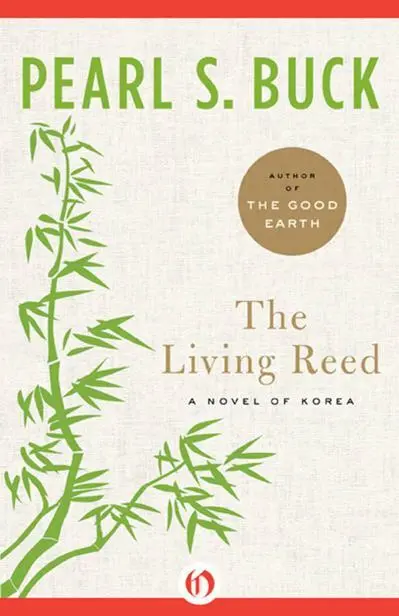
- Название:The Living Reed
- Автор:
- Издательство:Open Road Media
- Жанр:
- Год:2012
- ISBN:нет данных
- Рейтинг книги:4 / 5. Голосов: 1
-
Избранное:Добавить в избранное
- Отзывы:
-
Ваша оценка:
The Living Reed: краткое содержание, описание и аннотация
Предлагаем к чтению аннотацию, описание, краткое содержание или предисловие (зависит от того, что написал сам автор книги «The Living Reed»). Если вы не нашли необходимую информацию о книге — напишите в комментариях, мы постараемся отыскать её.
, Pearl S. Buck’s epic historical novel about four generations of one aristocratic family in Korea. Through the story of the Kims, Buck traces the country’s journey from the late nineteenth century through the end of the Second World War. The chronicle begins as the Kims live comfortably as advisors to the Korean royal family. That world is torn apart with the Japanese invasion, when the queen is killed and the Kims are thrust into hiding. Regarded by Buck as “the best among my Asian books,”
is a gripping account of a nation’s fight for survival, and a detailed portrait of one family’s entanglement in the ebb and flow of history.
The Living Reed — читать онлайн бесплатно полную книгу (весь текст) целиком
Ниже представлен текст книги, разбитый по страницам. Система сохранения места последней прочитанной страницы, позволяет с удобством читать онлайн бесплатно книгу «The Living Reed», без необходимости каждый раз заново искать на чём Вы остановились. Поставьте закладку, и сможете в любой момент перейти на страницу, на которой закончили чтение.
Интервал:
Закладка:
“You said they were only reeds — not trees.” The boy spoke willfully, but Il-han could see that he did remember. Still holding the boy’s hand he explained what he had said before.
“You were too small to understand what I told you. Although they were only hollow reeds they were living, and they spring anew from old roots. I said that in our country the bamboo shoot is the symbol of the strong uprising spirit of a man. Perhaps the man is a great poet, or an artist, or perhaps he is a leader among the people, even a revolutionist. It is easy to crush these bamboo shoots. You could do it even when you were very small. It is easy to destroy but hard to create. Remember that, when you want to destroy something.”
The boy was struggling to pull away his hand, but Il-han would not let him go until he had finished what he wanted to say. Now he loosed him and the boy, as soon as he felt himself free, ran swiftly away. Il-han looked after the flying slender figure, and was deeply troubled. From then on he kept watch of this son, and when he saw him push his younger brother, or tear down what the younger son had built of stones or small blocks of wood, he took the elder firmly by the hands and held his hands behind his back and reminded him again and again. “It is easy to destroy, but it is hard to create. Do not destroy what your brother creates.”
Sunia observed this one day. “It is not enough merely not to destroy,” she said. “Why not help him to create something himself?”
Again she had said something to stir his mind, and Il-han thought of his ancestor Chong-ho, surnamed Kim, who was the first mapmaker. This ancestor, as a boy in the province of Kuang Hwang-hai, had been restless, too. He had wandered over mountains and beside rivers, and he began to wonder where the rivers had their sources, and how the mountains lay, and what the shape was of the winding coastlines, and how many islands were beyond.
Il-han told his elder son one day of the mapmaker. “This ancestor of ours asked everyone where he could find a map of our country which would tell him all these things. There was no such map. He promised himself then that he would be a mapmaker when he grew up, and he studied every map he could find, traveling here and there to see whether the maps were true. They were not true. Mountains and rivers were in confusion and the shorelines were straight where they should be curved into bays and coves, and the sources of the rivers were only imagined. When he was a man he came here to Seoul and asked the rulers to help him, but no one cared for maps or knew their usefulness. He was discouraged but he did not give up. He traveled everywhere again, measuring and drawing pictures and writing down what he found, until he had made the first complete map of Korea. Then it had to be printed. Still no one helped him and he worked and saved and bought blocks of wood and carved the shape of the map upon them. He inked these blocks and stamped them on paper and there was the map! Alas, the King in those times only thought that our ancestor was helping some enemy, and he had the maps burned with the blocks of wood. But our ancestor had memorized the map, and then the King decided that he should be killed.
The boy listened to this, and his face turned pale. “How did they kill him?”
“Does it matter?” Il-han replied.
“I want to know,” the boy insisted.
“They cut off his head,” Il-han said shortly.
The boy thought for a moment. Then he said in a cool voice, as though without interest, “There must have been much blood.”
“Doubtless,” Il-han answered, “but that is not important. I tell the story because I want you to know of our ancestor, and how brave he was to create something so good and useful as a map, and how foolish it was to destroy him. Even the King was ignorant.”
He did not know whether his son heard him. He thought he had not, for he felt the child’s hand on the back of his neck.
“What now?” Il-han inquired, and pulled the young hand away from his neck.
“The bone,” his son said, his great eyes staring and dark. “They must have used a saw to cut the bone.”
At this Il-han pushed the child’s hand aside and went away. But in the night he woke suddenly and fully heard in the distance the sound of the night watchman in the street, on guard against fires. Among the huts of the poor a fire burning in the middle of a room could set a thatched roof ablaze, and even in the houses of the rich a faulty flue or rubbish thrown out by a careless servant could destroy the city. All night the fire guard walked the streets, striking his two bamboo sticks together so that folk, waking, would know that he was watching over their safety. Il-han listened to the man come nearer, until the clack-clack was loud and clear and then it faded again into the distance. It was not this sound that had waked him, for he slept through it every night of his life. No, he was waked by a deep worry inside his mind and his heart, a worry he had set aside in the day, and which now rose up in the darkness of the night. From this time on, he swore to himself, he would spend some part of every day with his elder son. For he could not forget the hand feeling the bone in his neck, the small cold hand.
… The younger son was another creature. This child could not bear to crush a fly or pull a cat’s tail.
It was Il-han’s habit that, until a child was free of his nurse, he took no great notice. Indeed the first notice he gave to this second son, beyond the worry of his shortened ear, was on his first birthday, one of the three highest days in a man’s life, the second being his wedding day and the third his sixtieth birthday. True, he could never forget that this baby son had looked as pretty as a girl on that day. For Sunia had ordered her women to make special garments for him, light blue silk trousers, a peach-pink short coat, the sleeves striped in red, blue and green, a blue vest buttoned with jade buttons, and on his head the pointed cap on the sides of which were the Chinese’s letters for long life and prosperity. Il-han had noticed that Sunia had cut the sides of this hat long to cover the child’s ears. She could not forget, and in her persistent grieving that her child was not perfect, he recalled again that he had heard of foreign doctors who could mend such faults. He had not reminded her, however, for he wished not to add a sadness to the bright day. Guests had come bearing presents for the child and feasts were prepared for all, the best for the relatives and guests and lesser dishes for the servants they brought with them, as well as for his own. What he remembered now was his small son seated on the warm floor, while before him Sunia placed the objects for his choice, a sword, short and square-bladed, a book, a writing brush, a lute, and other such things. The child had looked at them for a while, seeming even at so young an age to know what they meant. Then he had put out his hand and grasped the handle of the sword, but he could not lift it and he cried and again he had tried to lift the sword and each time he failed and cried again. Sunia had coaxed the child with other objects, but he refused and hid his face in her bosom, sobbing.
This younger son, Il-han now observed anew. The child was delicately shaped, the bones fine and the flesh soft. From which ancestor the elder child had drawn his square shoulders and unusual height none knew, but the second child looked like Il-han’s father. He had the same large poetic eyes, and fine brows and high forehead. There were times when Sunia said she believed that the old man’s spirit after he died had entered into the child, so quiet and staid were the child’s movements, and yet graceful. He liked to play with small animals, with birds, butterflies and goldfish. Especially he loved lighted lanterns and flying kites and music. Sunia could play the Black Crane harp, so-called because in the time of Koguryo a musician had made a new instrument from the ancient Chinese harp, and while he played a hundred melodies upon it, a black crane had come down from the sky and danced. This harp could persuade Il-han’s second son to come out of any melancholy or fit of weeping if he fell down or were ill.
Читать дальшеИнтервал:
Закладка:
Похожие книги на «The Living Reed»
Представляем Вашему вниманию похожие книги на «The Living Reed» списком для выбора. Мы отобрали схожую по названию и смыслу литературу в надежде предоставить читателям больше вариантов отыскать новые, интересные, ещё непрочитанные произведения.


Обсуждение, отзывы о книге «The Living Reed» и просто собственные мнения читателей. Оставьте ваши комментарии, напишите, что Вы думаете о произведении, его смысле или главных героях. Укажите что конкретно понравилось, а что нет, и почему Вы так считаете.