Pearl Buck - The Living Reed
Здесь есть возможность читать онлайн «Pearl Buck - The Living Reed» весь текст электронной книги совершенно бесплатно (целиком полную версию без сокращений). В некоторых случаях можно слушать аудио, скачать через торрент в формате fb2 и присутствует краткое содержание. Год выпуска: 2012, Издательство: Open Road Media, Жанр: Современная проза, на английском языке. Описание произведения, (предисловие) а так же отзывы посетителей доступны на портале библиотеки ЛибКат.
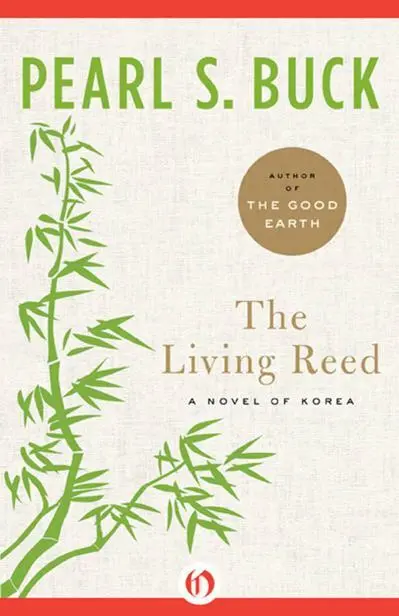
- Название:The Living Reed
- Автор:
- Издательство:Open Road Media
- Жанр:
- Год:2012
- ISBN:нет данных
- Рейтинг книги:4 / 5. Голосов: 1
-
Избранное:Добавить в избранное
- Отзывы:
-
Ваша оценка:
The Living Reed: краткое содержание, описание и аннотация
Предлагаем к чтению аннотацию, описание, краткое содержание или предисловие (зависит от того, что написал сам автор книги «The Living Reed»). Если вы не нашли необходимую информацию о книге — напишите в комментариях, мы постараемся отыскать её.
, Pearl S. Buck’s epic historical novel about four generations of one aristocratic family in Korea. Through the story of the Kims, Buck traces the country’s journey from the late nineteenth century through the end of the Second World War. The chronicle begins as the Kims live comfortably as advisors to the Korean royal family. That world is torn apart with the Japanese invasion, when the queen is killed and the Kims are thrust into hiding. Regarded by Buck as “the best among my Asian books,”
is a gripping account of a nation’s fight for survival, and a detailed portrait of one family’s entanglement in the ebb and flow of history.
The Living Reed — читать онлайн бесплатно полную книгу (весь текст) целиком
Ниже представлен текст книги, разбитый по страницам. Система сохранения места последней прочитанной страницы, позволяет с удобством читать онлайн бесплатно книгу «The Living Reed», без необходимости каждый раз заново искать на чём Вы остановились. Поставьте закладку, и сможете в любой момент перейти на страницу, на которой закончили чтение.
Интервал:
Закладка:
The Queen heard this with interest. She who was accustomed to command! The poet’s wife saw her unbelieving look, and went on in haste to explain.
“You do not know what poets are! They are so willful that they dare anything. They are children in spirit but in wit and wisdom they are already old men when they are born. What I have to endure! I tell you, it is not easy to be married to a poet.”
“All the more reason,” the Queen said, “for me to hear these poets. Leave the door open a crack—”
At this very moment while she stood in the garden she saw the poets coming from the village. They wore their long white robes, those robes which their wives washed fresh for them every day, doubtless, as the poet’s wife did in this house, and they wore their high black horsehair hats tied under their chins, the tapering crowns making the men seem taller than they were. They walked one behind the other, the smallest and the oldest first, so that she could see each head above the other. She waited as long as she dared so that she could see their faces, and then made haste into the small room, leaving the door open a crack.
Lucky the room was without a window, for she could sit in darkness and peer through the crack at the five men who crowded into the one room, each upon a floor cushion, the low table in the middle. Greetings were given and taken, the easy greetings of old friends, and she saw that they were contented men, though poor. Since she had been reared in the learning of ancient China, she remembered what Confucius had said: “Though I eat coarse rice and drink only water, though my bent arm is my pillow, happiness may yet be mine, for ill-gained wealth and empty honors are only floating clouds.”
Yet these poets, she soon perceived, were men of mirth as well as wisdom. They were not dismayed when the poet’s wife brought them only pots of weak green tea without cakes. Sipping the tea, they encouraged one another to begin the day’s enjoyment by reciting the poems each had written since the last time they met, and with proper courtesy each waited on the others until the eldest took lead. Closing his eyes and placing his hands on his knees, he recited in a clear voice, surprisingly loud for so small and old a man, a poem about a beautiful woman who could change herself into a fox at night. When her husband, who was also a poet, went hopefully to bed with her, he woke to find the marks of tiny claws on his hands and cheeks, and the pillow beside him was empty.
It was the youngest poet whose poem was of sorrow and death in the shadows of a pine grove. The more she listened the more the Queen perceived that the old men dreamed of youth and beauty and the young men dreamed of melancholy and doom. Most confounding to her was the fact that none of them spoke even once of the terrors of the present age, the enemies pressing from without the nation and the quarrels and the wars within. These men, both young and old, learned though they were, seemed not to know that they lived in peril of the times or that the past could not save them, or that their future could be lost unless they bestirred themselves to save their people. When she perceived this, it was all she could do to keep from throwing open the door and revealing herself as their Queen. To what end? So that she could cry at them to wake their minds!
“How dare you,” she longed to cry at them, “how dare you live in these mists of dreams and poetry while I, your Queen, am in danger of my life? Wake up, you men! Old and young, you are all children. Must I be your mother forever?”
She forbade herself such indulgence. She must be silent for the sake of more than these, and silent she was, biting her thumbnail and forcing herself to be quiet. She must wait and still wait until some night the poet’s wife would rouse her and whisper to her, “The palanquin is at the door.”
Kim Il-han was not idle although he was prudent and did not venture from his house so that he might protect his family if the Regent ordered violence. To his father he sent word that he was not well, that his illness was not defined by the physicians and he felt it his duty not to come near his father until he was sure he was harmless. Daily messages passed between the two houses, nevertheless, his father’s and his own, his servant coming and going, and his father, too, was prudent, and he said he had slight disorder of the stomach and must stay inside his own gates. The old man knew, of course, that his son’s illness was not of the body. These were dangerous times for the Kim clan.
Step by step, Il-han planned the restoration of the Queen. His tool in this planning was his son’s tutor. He called the young man to his private room one evening when the household lay asleep, and without daring to explain his whole purpose, he sent the young man to summon a handful of other statesmen whom he could trust. These gathered, not all at once, but one by one, this one today and another one tomorrow, weaving a web between their houses, and the messenger was always the tutor.
“You must trust me,” Il-han told him. “I am working to save us all.”
“Will you restore the Queen?” the tutor asked. “The times are changed,” he added.
Il-han looked at him sharply. The face he saw was lean and young, the mouth too gentle, but the eyes were clear and demanding.
“Nothing is forever,” Il-han said at last. “If she returns, she too must change.”
“I trust you, sir,” the young man rejoined, “so long as you know there must be change,” and taking up the letters that Il-han had given him, he went to obey.
The first step was plain. The Regent must be removed. He must be taken bodily out of the country and sent to a place across the seas from whence he could not return, because he would be in the hands of his enemies. Who were his enemies? The Chinese were his enemies and the chief of these was the Empress Tzu-hsi. Il-han would not plot to take the life of the Regent, nor would he allow others to do so, for to use such cruelty would inflame his people against the Queen. Once the Regent was gone, the next step would be to send the palanquin to the poet’s house and restore the Queen to her palace.
From his quiet house, while the children played in the gardens and Sunia tended her flowers and directed her women, Il-han spun his web wide. He had the genius to direct without seeming to command. Thus among his fellow statesmen as he had opportunity, or made it, he put his thoughts into a question here, or he made a reflection there, a suggestion that others, following his words eagerly, took up and put into action. His friends were peaceful men, and to them, also, he knew he could not propose violent deeds. Instead he proposed a new friendship with the Chinese.
“Our neighbors in the Middle Kingdom,” he said one day in conference in his own house, “are ever ready to help us. Let us now use their enmity against Japan, and make it our weapon.”
It was a day in late spring when he so spoke. Outside the open doors a hum of bees gathering among the yellow flowers of a persimmon tree told him that a hive had split. These were the wanderers seeking a new life for themselves with their queen, a symbol, perhaps, of what he sought too for his own kind. He clapped his hands for a servant and when the man came he gave a command.
“Tell the gardener that bees are hiving. Let him catch that mass of bees hanging there from the branch of the persimmon tree and persuade them into a new hive so that we may have the honey.”
The man obeyed and Il-han rose and drew the door shut so that the bees would not be disturbed. Then he sat down again on his floor cushion.
“A good omen,” he said to his guests. “There is honey to be had if we snare the bees.”
They laughed moderately in politeness and waited, a circle of gentlemen in white robes, their faces bland beneath the black hair coiled on their crowns. Il-han continued.
Читать дальшеИнтервал:
Закладка:
Похожие книги на «The Living Reed»
Представляем Вашему вниманию похожие книги на «The Living Reed» списком для выбора. Мы отобрали схожую по названию и смыслу литературу в надежде предоставить читателям больше вариантов отыскать новые, интересные, ещё непрочитанные произведения.



Обсуждение, отзывы о книге «The Living Reed» и просто собственные мнения читателей. Оставьте ваши комментарии, напишите, что Вы думаете о произведении, его смысле или главных героях. Укажите что конкретно понравилось, а что нет, и почему Вы так считаете.