Pearl Buck - The Living Reed
Здесь есть возможность читать онлайн «Pearl Buck - The Living Reed» весь текст электронной книги совершенно бесплатно (целиком полную версию без сокращений). В некоторых случаях можно слушать аудио, скачать через торрент в формате fb2 и присутствует краткое содержание. Год выпуска: 2012, Издательство: Open Road Media, Жанр: Современная проза, на английском языке. Описание произведения, (предисловие) а так же отзывы посетителей доступны на портале библиотеки ЛибКат.
- Название:The Living Reed
- Автор:
- Издательство:Open Road Media
- Жанр:
- Год:2012
- ISBN:нет данных
- Рейтинг книги:4 / 5. Голосов: 1
-
Избранное:Добавить в избранное
- Отзывы:
-
Ваша оценка:
The Living Reed: краткое содержание, описание и аннотация
Предлагаем к чтению аннотацию, описание, краткое содержание или предисловие (зависит от того, что написал сам автор книги «The Living Reed»). Если вы не нашли необходимую информацию о книге — напишите в комментариях, мы постараемся отыскать её.
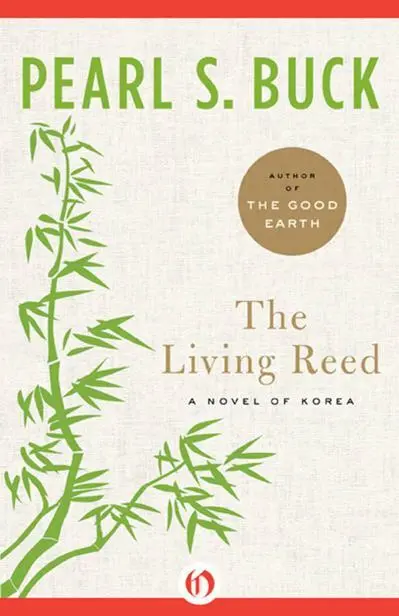
, Pearl S. Buck’s epic historical novel about four generations of one aristocratic family in Korea. Through the story of the Kims, Buck traces the country’s journey from the late nineteenth century through the end of the Second World War. The chronicle begins as the Kims live comfortably as advisors to the Korean royal family. That world is torn apart with the Japanese invasion, when the queen is killed and the Kims are thrust into hiding. Regarded by Buck as “the best among my Asian books,”
is a gripping account of a nation’s fight for survival, and a detailed portrait of one family’s entanglement in the ebb and flow of history.
The Living Reed — читать онлайн бесплатно полную книгу (весь текст) целиком
Ниже представлен текст книги, разбитый по страницам. Система сохранения места последней прочитанной страницы, позволяет с удобством читать онлайн бесплатно книгу «The Living Reed», без необходимости каждый раз заново искать на чём Вы остановились. Поставьте закладку, и сможете в любой момент перейти на страницу, на которой закончили чтение.
Интервал:
Закладка:
“It is Il-han,” he told his friend.
“Il-han! Come in, come in quickly—”
His friend’s voice was joyful, for they had once gone to school together and it had been years since they had met.
Il-han gave his horse’s bridle to the servant and stepped into the gate and spoke to his friend’s ear.
“I have a royal refugee with me. She must be safely hidden. I know the woman in your house will receive and hide her somehow.”
The poet could not believe what he heard. Gossip from the capital had proclaimed the Queen’s death. Yet, some said, no one had found her body, nor had the rivers cast up a body that could be hers, and though the wells had been searched, they had not yielded her. True, there was a woman dead who wore royal robes, but it was found that she was not the Queen.
“You are not saying—” his friend gasped.
“Yes, I am saying!” Il-han told him. “Let me bring her in now. She is half frozen, as we all are. She needs rest and food.”
He waited for his friend to protest that he could not accept such danger as the concealment of a queen. But this poet was a true one. He revered learning and so he had stayed poor and having little to lose, he was brave.
“I will tell my wife,” he said. “Meanwhile the door is open. Lead her into my house.”
So saying, he went ahead and Il-han helped the Queen dismount and he led her into the house.
“I have chosen this hiding place for you because my friend is a good man,” he told her. “And it is well that he is poor. He will not have many people coming and going. You will be safe. But I ask that you make yourself one of the persons in this house. You are not royal here. Imagine that you belong to this poor good family.”
The Queen was humbled by now, through her many days of hard travel. For the first time she saw how her people lived and who they were. Never again would she be so wasteful of money and jewels and fine silks. She had the heart and mind of a noblewoman, truebone and clear, and she was changed.
“I will remember,” she told Il-han.
He had not imagined how difficult, nevertheless, it would be to leave her there as the poet’s wife came bowing and half dazed to receive them. Her husband had bidden her not to mention the name of the Queen and not to say Majesty and she obeyed but she was overwhelmed.
“If you will come with me,” she murmured.
The Queen bowed her head and then turned to implore Il-han. “You will stay a day or two?”
“Not even an hour or two,” Il-han replied. “I must return at once and begin my plans for your return.”
“We have said nothing of those plans,” she urged.
“Because I will not tell you something that will be a burden on you. You are to live here quietly, helping this family as a friend might. Share the duties of this housewife — they have no servants. Listen to her talk, but do not talk much for yourself. Use this time for learning what it is to be a poor man with no treasure except a love of learning and of beauty. These people, too, are your subjects.”
“Is this farewell?” she asked and he saw fright in her wide eyes.
“We meet again soon,” he said.
He stood and watched as the poet’s wife led her away. Suddenly she turned and came swiftly to him again. He looked at her, questioning, but saying nothing, she reached into her bosom and then pressed something into his right hand.
He looked and saw what it was. “I cannot take it,” he exclaimed beneath his breath.
It was her private seal, a piece of Chinese jade upon which was carved her royal name.
“You must,” she told him, her voice very low. “You may need to use my name in some high place to save your life — or mine.”
He stood amazed while she ran back to the waiting woman, and he marveled that she put such trust in him. His heart was moved and he knew himself forever her loyal subject, yes, and more.
He stayed then for a brief space with his friend while the servant fed and rested the horses.
“Why should you hasten away?” the poet urged.
“It is better if there are no horses at your gate when the dawn comes,” Il-han said, “and better if I and my servant are not here in your house. A woman can be hidden more easily than a man. Ah yes — before I forget — let your wife lend her some plain clothing when she needs it. She wears all that she has. And if someone asks who she is, say that she is a distant relative, newly widowed, who has come to stay with you because she has no other home.”
“I am still bemused,” the poet said. “It will take time for me to get back to myself.”
“I shall be here again before many moons,” Il-han told him.
The poet held him by the arm. “Wait — my wife wants to know what she eats.”
“She eats anything,” Il-han said firmly, and went away.
The Queen was left much alone in the lowly house of the poet. She understood that this was not enmity but reverence for her royal person. The poet’s wife was always near but speechless with awe unless the Queen encouraged her. The poet kept apart in a separate small hut where he sat upon a straw mat before a low table and read his few books and brushed his poems. Each morning he presented himself to her, bowed to ask of her welfare, and then withdrew.
The Queen mused often on her fate. She remembered that her mother had foretold her wanderings, for she had been born at sunrise one morning, and at the same moment a cock crowed. According to the four pillars of her destiny, the hour, the day, the month, the year in which she was born, she had lived thus far according to prophecy, a woman of willfulness she did not deny, but also of strength. When she thought of her own strength, she thought of the King. She had believed him to be weak, but there were times now when she was not sure. Perhaps he had hidden his true self from her. He was the son of a strong mother and through his childhood he had cultivated habits of secret resistance against his father, loving him and hating him, deciding what he would do but telling no one what it was until the act was complete. The return of the Regent — had it been perhaps with the consent of the King? If it were only the Regent’s love of power, could not the King have prevented the usurpation, since he had eyes and ears everywhere throughout the capital? And if he had allowed his father, the Regent, to return, was it because he hated her, his Queen, and rebelled against her as he had rebelled against his mother before her, and so because she favored the Chinese as suzerains, he had chosen his father who was against such suzerainty? When did the King become the man? And when did the royal family tangle become enmeshed with the troubles of the nation, and beyond that, with the declining strength of China and the dangerous strength of Japan made new by Meiji emperors?
She grew restless with such musings as the days passed. There could be no hope of messages from Kim Il-han. He had warned her that communication was impossible. “When it is safe for you to return,” he had said as he left her, “your palanquin will be at the gate. Step into it without asking a question. It is I who send it.”
Yet there was no palanquin. She was first impatient and then angry. Once she went to the gate, as she should not, and saw a brook tumbling out of the mountains, and beside it a wandering cobbled country road. The poet’s house was outside the village, a cluster of grass-roofed houses belonging, she supposed, to landfolk and their families, except that out of villages came poets. Such men, four or five, gathered at the poet’s house often, and then the poet’s wife asked her to stay within the small side room.
“I would beg my husband not to allow his friends to come while you are with us,” she told the Queen, “but they are used to coming, and were he to stop them now they would put questions.”
Читать дальшеИнтервал:
Закладка:
Похожие книги на «The Living Reed»
Представляем Вашему вниманию похожие книги на «The Living Reed» списком для выбора. Мы отобрали схожую по названию и смыслу литературу в надежде предоставить читателям больше вариантов отыскать новые, интересные, ещё непрочитанные произведения.


Обсуждение, отзывы о книге «The Living Reed» и просто собственные мнения читателей. Оставьте ваши комментарии, напишите, что Вы думаете о произведении, его смысле или главных героях. Укажите что конкретно понравилось, а что нет, и почему Вы так считаете.