Daniel Alarcon - Lost City Radio
Здесь есть возможность читать онлайн «Daniel Alarcon - Lost City Radio» весь текст электронной книги совершенно бесплатно (целиком полную версию без сокращений). В некоторых случаях можно слушать аудио, скачать через торрент в формате fb2 и присутствует краткое содержание. Год выпуска: 2008, Издательство: Harper Perennial, Жанр: Современная проза, на английском языке. Описание произведения, (предисловие) а так же отзывы посетителей доступны на портале библиотеки ЛибКат.
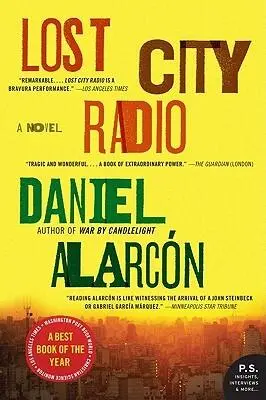
- Название:Lost City Radio
- Автор:
- Издательство:Harper Perennial
- Жанр:
- Год:2008
- ISBN:нет данных
- Рейтинг книги:4 / 5. Голосов: 1
-
Избранное:Добавить в избранное
- Отзывы:
-
Ваша оценка:
Lost City Radio: краткое содержание, описание и аннотация
Предлагаем к чтению аннотацию, описание, краткое содержание или предисловие (зависит от того, что написал сам автор книги «Lost City Radio»). Если вы не нашли необходимую информацию о книге — напишите в комментариях, мы постараемся отыскать её.
, she reads the names of those who have disappeared — those whom the furiously expanding city has swallowed. Through her efforts lovers are reunited and the lost are found. But in the aftermath of the decadelong bloody civil conflict, her own life is about to forever change — thanks to the arrival of a young boy from the jungle who provides a cryptic clue to the fate of Norma's vanished husband.
Lost City Radio — читать онлайн бесплатно полную книгу (весь текст) целиком
Ниже представлен текст книги, разбитый по страницам. Система сохранения места последней прочитанной страницы, позволяет с удобством читать онлайн бесплатно книгу «Lost City Radio», без необходимости каждый раз заново искать на чём Вы остановились. Поставьте закладку, и сможете в любой момент перейти на страницу, на которой закончили чтение.
Интервал:
Закладка:
This Manau: he began with apologies that made Norma uncomfortable. She focused on the room to avoid staring as the man began to break down. It was decorated in pastels, or in once-vivid colors that had been allowed to fade. She couldn’t tell. “I made a mistake,” Manau said. He was hoarse, color bloomed in his cheeks. “I’m sorry,” he said, and it seemed he didn’t know whom exactly to apologize to. It seemed, in fact, that he might choke, that he might expire before them. Norma let him talk. Her anger had dissipated completely, but she felt he owed this to them, to the boy. He babbled about promises made and broken, and looked pleadingly at Norma when he described Victor’s mother and her drowning. Before long, Victor had moved to his teacher’s couch, was comforting this grown man with words that Norma couldn’t make out. The old language perhaps, but she doubted that Manau could understand them, either.
She let some time pass, a minute or more, but could hardly contain the impatience she felt. Her Rey was on this list — alive or dead, here was someone who might be able to tell her more. It was all she had ever wanted: more of Rey’s time, of his heart, of his body. If she had been honest, she would have admitted it years before: that she’d always wanted more from Rey than he was willing to give. The night of the fire in Tamoé, the night of the first Great Blackout, she and Rey had gone back into the bar, had huddled inside the tense room full of strangers while someone went in search of a car battery to power the radio. A few candles were lit and, as they waited, people began talking. “I live in Tamoé,” someone said. “I knew this was coming. These people have no scruples.” Another: “The police do nothing.” Another: “They torture the innocent, they disappeared my brother!” Someone said, “Fuck the IL!” and someone — not Rey — answered, “Fuck the president!”
And so on it went, a civilized shouting match in the flickering yellow light. The room had grown unbearably smoky, and someone opened a window. Norma recalled it now in such fine detail: the way the cool night air filled the room, the yelling that continued, the waves of words, exhortations, of confessions and condemnations. It was impossible to make out who was speaking, only the barest facts that their accents exposed: this one, from the mountains; that one, from the city. This man and that woman, and the varying shades of their anger, spreading, that evening, in all directions. It was a knife edge they walked: they might gather in a giant, tearful embrace; or a dozen weapons might be pulled, and they could kill each other blindly in this suddenly dark, suddenly cold room.
Then someone mentioned the Moon, and Norma felt Rey tense. Whoever the state kills deserved it, someone yelled. Trini had been dead for almost a year, murdered, Rey always said, by the state that had betrayed him. She pushed her body into Rey’s, and realized in that moment what she’d been afraid of: that he might say something. That he might say the wrong thing, because how can you read the mood of an anonymous crowd in a poorly lit room? She held him tightly, wrapped her arms around his chest. She ran her hands under his shirt and locked her fingers. There, in his shirt pocket, was Trini’s letter. She felt it. He’d read it to her one night, and they had cried together. Trini had been such a nice man. But be quiet now, Rey, she thought, stay quiet, my husband.
“Hush,” she whispered.
“Have you seen the list?” Norma asked Manau when he’d finished apologizing. She didn’t wait for an answer; after all, she knew that he had. She said slowly, “I need to know about the list.” Norma touched her own forehead; she was sweating. Had she begun to lose him that night?
Manau nodded. He knew why they had come. Why she had come. He rose and excused himself. “I have something to show you.”
Norma sat with her memories. The boy wandered the room, scrutinizing the photographs in their dusty frames. “It’s Manau,” he said, pointing, but Norma couldn’t do more than smile at him.
Back in his room, Manau opened the bag he’d brought from 1797. He rummaged through it without turning on the light. He didn’t need to: there was only one thing he had for Norma, and he found it right away. It was a piece of parchment, rolled up, wrapped in bark, and tied with a string. Adela had given it to him for safekeeping. It smelled of the jungle, and he was seized by the urge to lie down, to sleep and dream until these visitors had gone away, but he didn’t. There were murmurs from the front room. They were waiting. Manau shut the bag and then the door behind him.
“I’ve been to the Moon,” Rey said that night the war began, and Norma pinched him, but it came louder the next time: “I’ve been to the Moon!”
She bit his ear, she put her hand over his mouth: was it too late?
“Fuck you, IL dog!” came the first shout.
“What’s this?” Norma said when Manau gave her the parchment.
Then the boy had joined them. “What is it?” he asked. Norma untied the string, unrolled the bark, and spread the parchment on the table. Victor held the edges with his little fingers. Manau helped him. That night fourteen years before, the night the war came to the city, what saved Rey was darkness. Someone yelled, “You IL piece of shit!” and there was a stir, but what more could they or anybody do? It was the first Great Blackout, the war had arrived in the city, and they all were strangers to one another, people stranded on their way to other places, crowded now into this dreary bar. They were squatters. “Quiet!” someone else called, a man’s voice, heavy with authority. “The radio!” A crackle from the speaker, a blue spark from the battery. On that night in Tamoé, an angry crowd marched on one of the police stations, carrying torches and throwing stones with the zeal of true believers. The first shots were fired in warning. These were followed by shots fired in anger, and then hundreds of people were running, scattering through the dark night, doubling back to retrieve their wounded, their fallen. The next day, the first funerals were held: slow, dismal processions along Avenue F–10, to the hills where the district ended, where the houses ended. Caskets sized for children were carried to the tops of the low mountains and burned in accordance with the traditions of those who had settled the place. That night in Asylum Downs, many were too afraid to leave their homes, and those who owned radios and batteries listened for news with the volume humming almost inaudibly. Men gathered their guns in case the looters came, and they locked their frightened wives and sleepy children in the most hidden rooms, the ones farthest from the street. Shots were heard into the early morning, the last casualty of that long night coming just after dawn, when an old man, a beggar, was killed next to his shopping cart piled high with clothes, in an alleyway not even ten blocks from the bar where Norma and Rey stayed but did not sleep. All night, the radio spat news that was progressively worse, and sometime after midnight, the decision was made to padlock the door of the bar. The windows were closed as well, and again the room grew thick with smoke. Some people managed to sleep. In the middle of the night, someone called for water, and suddenly everyone was thirsty and hot. Outside, bandits scurried along the streets, but no one paid any attention, because the news held them all rapt: tanks, it was announced, had moved into the Plaza, were patrolling the main arteries of their city. Looting was widespread. A couple had been seen jumping hand in hand from the balcony of their burning apartment building. Inside the bar, a woman fainted and was revived. Two times in the night there was an urgent knocking at the door, followed by a thin, high-pitched plea for help, but the candles had burned out, and inside it was dark, and no one could look anyone in the eye. There was no obligation to do anything except stay quiet and wait. Norma held Rey, and they rested with their backs against the door, and eventually the knocking stopped, and the pleading ended, and the sounds of footsteps could be heard, now fading, as the supplicant moved elsewhere in search of refuge.
Читать дальшеИнтервал:
Закладка:
Похожие книги на «Lost City Radio»
Представляем Вашему вниманию похожие книги на «Lost City Radio» списком для выбора. Мы отобрали схожую по названию и смыслу литературу в надежде предоставить читателям больше вариантов отыскать новые, интересные, ещё непрочитанные произведения.









Обсуждение, отзывы о книге «Lost City Radio» и просто собственные мнения читателей. Оставьте ваши комментарии, напишите, что Вы думаете о произведении, его смысле или главных героях. Укажите что конкретно понравилось, а что нет, и почему Вы так считаете.