Daniel Alarcon - Lost City Radio
Здесь есть возможность читать онлайн «Daniel Alarcon - Lost City Radio» весь текст электронной книги совершенно бесплатно (целиком полную версию без сокращений). В некоторых случаях можно слушать аудио, скачать через торрент в формате fb2 и присутствует краткое содержание. Год выпуска: 2008, Издательство: Harper Perennial, Жанр: Современная проза, на английском языке. Описание произведения, (предисловие) а так же отзывы посетителей доступны на портале библиотеки ЛибКат.
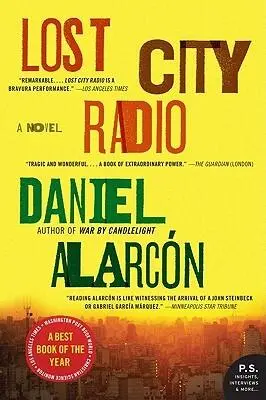
- Название:Lost City Radio
- Автор:
- Издательство:Harper Perennial
- Жанр:
- Год:2008
- ISBN:нет данных
- Рейтинг книги:4 / 5. Голосов: 1
-
Избранное:Добавить в избранное
- Отзывы:
-
Ваша оценка:
Lost City Radio: краткое содержание, описание и аннотация
Предлагаем к чтению аннотацию, описание, краткое содержание или предисловие (зависит от того, что написал сам автор книги «Lost City Radio»). Если вы не нашли необходимую информацию о книге — напишите в комментариях, мы постараемся отыскать её.
, she reads the names of those who have disappeared — those whom the furiously expanding city has swallowed. Through her efforts lovers are reunited and the lost are found. But in the aftermath of the decadelong bloody civil conflict, her own life is about to forever change — thanks to the arrival of a young boy from the jungle who provides a cryptic clue to the fate of Norma's vanished husband.
Lost City Radio — читать онлайн бесплатно полную книгу (весь текст) целиком
Ниже представлен текст книги, разбитый по страницам. Система сохранения места последней прочитанной страницы, позволяет с удобством читать онлайн бесплатно книгу «Lost City Radio», без необходимости каждый раз заново искать на чём Вы остановились. Поставьте закладку, и сможете в любой момент перейти на страницу, на которой закончили чтение.
Интервал:
Закладка:
“Oh.” Manau nodded. The boy was anxious to leave, swiveling his head every few moments toward the door. “Do you want to be a soldier?” Manau asked.
“I don’t know, sir.”
“It would break your mother’s heart if you left.”
“Do you know my mother, sir?” the boy asked very politely.
Manau suddenly felt the red skin beneath his clothes awaken in complaint. He steeled himself against the urge to itch. “I do,” he said.
“Oh.”
“But not well,” Manau added. “Not well.”
Insinuating a woman through her child, thought Manau, what a despicable and cowardly thing to do! He wanted to be done with it. From his bag, he produced a new lead pencil. He offered it to Victor, and the boy took it without hesitation. Manau meant to send the boy off, but Victor coughed into his hand and asked permission to speak. When Manau assented, the boy said, “Sir, how old were you when you left home?”
“What a strange question!”
“I’m sorry, sir.”
Manau stood, and wondered what he might say. Was it a trip around the world at age twelve, a stowaway in the hold of a ship headed north? Could he lie and say he’d been to the other side of the continent, or farther — to Africa? Might he say, I have seen the grand cathedrals of Europe, the skyscrapers of New York, the temples of Asia? Of course, by leaving home, the boy meant something completely different. Seeing the world was incidental: if you were born in a place like 1797, leaving was what you did to begin your life.
“I’m from the city, boy. We don’t have to leave.”
Victor nodded, and Manau was aware that what he had said was terrible, cruel, and untrue. In the city, like here, the children dreamed of escape.
“I’m thirty years old and I’ve only just left my home,” Manau said. “Why?”
The boy bit his lip, shot a glance toward the door and then back at his teacher. “It’s Nico,” he said. “He’s always said he would leave with the soldiers. He says he doesn’t care if his family starves without him.”
Manau nodded. His landlord had often confessed that fear: “Without Nico’s hands, we’ll go hungry. What can I do with these stumps?”
“Why is it your business?”
“Somebody should do something,” Victor said. “He’s my friend.”
“You’re a good boy,” Manau said. He thanked Victor, patted him on the shoulder, and told him not to worry. “I’ll talk with his father.” He led the boy to the door and watched him scamper off to join his friends. The teacher returned to his desk, straightened some papers, then erased the board with a wet rag. Outside, the boys hovered around the soldiers, entranced. Soon their mothers would come to shoo them away, to send them into the jungle to hide. But that fear was old-fashioned, and the children knew it. When he strolled by on his way, Manau saw in their eyes looks of excitement, looks no student had ever shown him.
LATER, WHEN his mother died and he left 1797, Victor would remember this day as the beginning of the village’s dissolution. Nico spoke of leaving, and Victor worried. The two of them watched the soldiers, admired them from a distance and then up close, brought water and fruit when they were told to. After an hour, Nico asked one soldier where he was from. The young man looked barely eighteen. He gave a number and said it was in the mountains. Victor and Nico nodded in unison.
“How can you boys stand this heat?” the soldier said, scowling, his face flush. He sat slumped and sweating beneath the shade of the tarp.
“We can’t,” Nico said. “We hate it here.”
The soldier laughed and called over a few of his friends. “They hate it here too,” he said, and everyone agreed they were smart boys.
Victor didn’t hate it. He watched his friend enumerate the town’s shortcomings for the soldier and felt ashamed. There’s no work, Nico said, but that wasn’t exactly true: all anyone did was work. Nico said there was nothing to do, but Victor still considered climbing trees an activity. All Nico’s complaints sounded cruel, uncharitable. In the afternoon, they would go swimming in the river — that’s how we stand the heat, he wanted to say. And it’s great. It’s beautiful. The water is cool and murky, and at the bottom you can plunge your toes into the cold mud, feel it close around your feet, suctioning like it wants to drown you. The thought of it made him smile. You come out clean. But he didn’t say any of this. Nico spoke with such confidence that to contradict him seemed almost dangerous. He listened in silence until the young soldier eyed him and said, “What about you, little man? What do you have to say?”
The soldier pointed with a thin, bony finger. Victor looked quickly over his own shoulder, and everyone laughed.
Just then, the mothers arrived and hurriedly dispersed their children. His own mother was there, and she glared at the soldier. “Shame,” she said, and the soldier backed away, as if from a wild animal.
“I’m fine, Ma,” Victor muttered, but it was no use. She wasn’t listening. The mothers were taking turns shouting at the soldiers; the children hung their heads and listened. Victor’s mother held his hand tightly; her voice rose above everyone else’s. There she was, with an accusing finger drawing circles in the air, upbraiding the captain. “What do you want with our boys?” she said. “Can’t you see they’re all we have?”
The captain was a burly giant of a man with wide, round eyes and a mustache flecked with gray. As Victor’s mother spoke, he nodded apologetically. “Madam,” the captain said when she was finished. “My sincerest apologies. I will instruct my soldiers to avoid speaking with your boys.”
“Thank you,” Victor’s mother said.
“Do you hear that, men?” the captain shouted.
A round of yessirs came from the enlisted men. They stood at attention out of respect for the women.
The apologies continued. As the captain spoke, he twirled his cap by the bill. “I’m afraid we have sullied relations with the people of this fine village,” he said, shaking his head. “We are only here to help. It is our solemn mandate.”
The women all nodded, but Victor knew the captain was only addressing his mother. He could see it in the man’s eyes. She squeezed his hand, and Victor squeezed back.
“I assure you we want nothing with your boys, madam,” the captain continued, his lips curling into a smile. “It’s this town’s women who are so beguiling.”
THAT EVENING, the canteen was crowded with soldiers. They were stripped down to their undershirts, had taken off their boots and laid them in a pile by the door. The heat that day had been an animal thing: scalding, heavy. The entire village had given in to its weight, with the evening set aside for recovery. A breeze blew now and again through the open windows of the canteen. Inside, it smelled of feet and beer. The soldiers were drinking the place dry, singing along to the radio. The wooden floor was shiny and slick. Manau was feeling gloomy, sharing liter bottles with a few disaffected, unhappy men. They grumbled about the dwindling beer supply and the thirsty soldiers. There was only one glass, so they drank in circles. “Who do these brats think they are?” Manau heard a man complain. “They’ll leave us with nothing.”
It was a real concern among the regulars. Periodically, someone offered the soldiers a rueful smile and a toast, then mumbled curses under his breath.
Nico’s father arrived, placed his stumps on the bar, and confirmed their worst fears. It would be ten days before the next truck came. “That’s if the roads aren’t washed out,” Zahir added. He knew the delivery schedules well. Whenever the beer truck or any other truck came, he lent his broad back to the driver for loading and unloading. He had a special cart that clasped around his chest so that he could be useful even without his hands.
Читать дальшеИнтервал:
Закладка:
Похожие книги на «Lost City Radio»
Представляем Вашему вниманию похожие книги на «Lost City Radio» списком для выбора. Мы отобрали схожую по названию и смыслу литературу в надежде предоставить читателям больше вариантов отыскать новые, интересные, ещё непрочитанные произведения.











Обсуждение, отзывы о книге «Lost City Radio» и просто собственные мнения читателей. Оставьте ваши комментарии, напишите, что Вы думаете о произведении, его смысле или главных героях. Укажите что конкретно понравилось, а что нет, и почему Вы так считаете.