Rafael Yglesias - Dr. Neruda's Cure for Evil
Здесь есть возможность читать онлайн «Rafael Yglesias - Dr. Neruda's Cure for Evil» весь текст электронной книги совершенно бесплатно (целиком полную версию без сокращений). В некоторых случаях можно слушать аудио, скачать через торрент в формате fb2 и присутствует краткое содержание. Город: New York, Год выпуска: 2010, ISBN: 2010, Издательство: Open Road Integrated Media LLC, Жанр: Современная проза, Триллер, на английском языке. Описание произведения, (предисловие) а так же отзывы посетителей доступны на портале библиотеки ЛибКат.
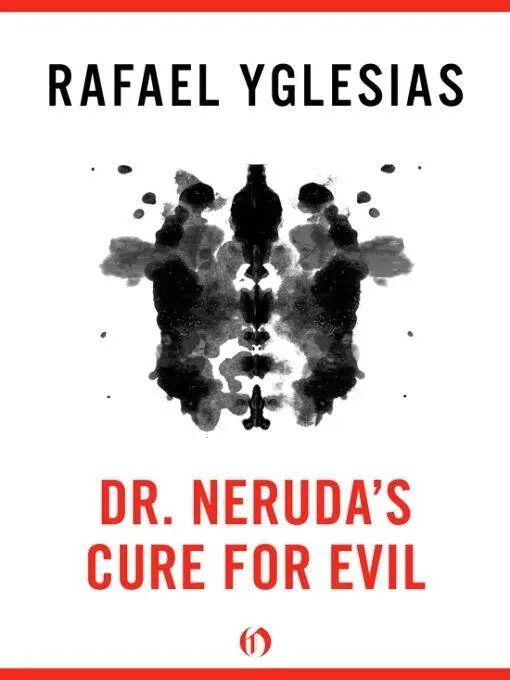
- Название:Dr. Neruda's Cure for Evil
- Автор:
- Издательство:Open Road Integrated Media LLC
- Жанр:
- Год:2010
- Город:New York
- ISBN:9780446673327
- Рейтинг книги:5 / 5. Голосов: 1
-
Избранное:Добавить в избранное
- Отзывы:
-
Ваша оценка:
Dr. Neruda's Cure for Evil: краткое содержание, описание и аннотация
Предлагаем к чтению аннотацию, описание, краткое содержание или предисловие (зависит от того, что написал сам автор книги «Dr. Neruda's Cure for Evil»). Если вы не нашли необходимую информацию о книге — напишите в комментариях, мы постараемся отыскать её.
Dr. Neruda's Cure for Evil — читать онлайн бесплатно полную книгу (весь текст) целиком
Ниже представлен текст книги, разбитый по страницам. Система сохранения места последней прочитанной страницы, позволяет с удобством читать онлайн бесплатно книгу «Dr. Neruda's Cure for Evil», без необходимости каждый раз заново искать на чём Вы остановились. Поставьте закладку, и сможете в любой момент перейти на страницу, на которой закончили чтение.
Интервал:
Закладка:
Our conversation influenced me. I decided to make a clean breast to Diane. That was a struggle. Diane and I were supposed to go out to dinner with friends. I canceled the date. She found out before I had a chance to inform her. She confronted me in the clinic’s parking lot when we met to drive home together.
“Lilly told me you canceled tonight. Something about an emergency.”
“Did I say emergency?” I managed to summon a smile. “I guess I am panicked.” I lifted my briefcase and said, “I’ve got Phil Samuels’s new study.”
Diane frowned. “Fuck him,” she said. Her pert nose wrinkled. “It’s so bad we can’t eat dinner?” I noticed the few hours we spent out in the sun down in Tampa had already manufactured many new freckles. It wasn’t anatomically possible for her to appear threatening. I knew I was in trouble with her, and that did frighten me, but I couldn’t be scared of her.
“It’s so bad we may have to give up breakfast too. Anyway, this isn’t the place to talk about it.” I got into the car. She stayed outside, still frowning. Her short bobbed black hair trembled faintly as she tilted her head. Her right index finger made a circle around her temple, and then she pointed at me. One of our teenage patients, who was playing basketball on the half court adjoining the lot, saw her do it. He let the ball dribble away while he laughed uproariously, clapping slowly as he doubled over. Diane blew him a kiss and got in.
“So what does this motherfucker’s brilliant new study say?” she asked in a mock English accent, as if she were a duchess.
“I’d rather talk about this at home,” I said.
“No chance, bub. You canceled dinner, so number one, you’re cooking and number two, you’re explaining yourself right away.”
I tried a distraction. “You’re in a good mood.”
It worked. “I had a great day,” Diane told me and went on to explain that she’d had a breakthrough with a seven-year-old girl who, a year ago, had been found by the police locked in a closet, her legs scalded by immersion in a tub full of hot water. She talked enthusiastically about her patient’s progress for a while. Diane was saying, “She actually made a joke about her burns,” when she caught herself and figured it out. “Wait a minute. Nice try. Tell me about Phil. Or at least give me the study to read.”
“Now?” I asked, merging onto the Henry Hudson Parkway.
“Cut it out,” she said as sternly as she could. “Quit stalling.”
“Remember the construct? Kids six and under were brought in for a routine physical examination by a pediatrician. Everything is videotaped, of course. The doctor does a few unorthodox things: listens to their feet with a stethoscope, puts a paper cup on their stomach. Clothes are never removed. Then they were interviewed by therapists, as if there had been a charge of sexual molestation. Almost half the kids made up outrageous things about what the pediatrician did. Vaginal penetration, anal penetration, foundling of the genitals, the works.”
“In how many interrogations?”
“Most of the kids who made up stuff did it by the second session.”
There was a silence. I didn’t look over at her. It was a lovely end to a mild spring day. To our left, the West Side of New York stood guard over the broad river on our right. The brown, silver, and white buildings were aged by grime and neglect; yet they were standing, to my eyes, as timeless as the flat shimmering water.
When Diane spoke, her light tone had darkened. “What aren’t you telling me about this, Rafe?”
I waited. I swung around one of the highway’s sharp curves, made narrower by a lane closed thanks to perpetual construction. Litter flew up from the car in front of me and slapped the side window. We were near our exit, near our home. I was apprehensive as I let the secret out, but I have to admit to a little excitement also, a feeling that at last I would learn something I might otherwise never have known for sure about our relationship. “Remember when Phil came to town almost a year ago?”
“Un huh,” Diane said with such emphasis that I was convinced she had already guessed what I was going to say.
“I gave him the tapes of your sessions with the Peterson girls. He copied our technique.”
“Jesus,” she said quietly, but distinctly, making two widely separated syllables of His name.
“I haven’t looked at the video,” I continued. “I don’t know how carefully—”
“It doesn’t matter—” she began.
I talked over her, “And he doesn’t identify the source of the technique.”
“Oh, swell! Isn’t that just grand? What a wonderful generous guy.”
There was a long silence. I kept my eyes on the road. Perhaps a minute or two passed while I exited the highway, turning onto Riverside. Our garage was only a block away. I had to stop at a light. Then I looked at her. I was surprised, very surprised, and, at last, frightened by what I saw.
Diane’s youthful face was turned to me. There were her girlish freckles, without frowns or wrinkles. Her features were calm and settled. But behind the round wire-rimmed glasses, her eyes were full of tears.
Our argument — the first of many, but in a real sense, the only important one — lasted until dawn and ended with her packing a bag to move out. First we watched the tape. Diane read the study, I re-read it, we watched the tape again. Since she subsequently attacked the finding in many public forums, her reaction is no secret. She believed Phil’s study was corrupted by the pediatrician doing unorthodox, albeit harmless, things in the examinations. She complained — irrelevantly, I thought — that routine examinations are never conducted without a parent being present. And she asserted his graduate students merely imitated our techniques without any imagination, using the dolls right away despite the absence of preliminary indications of abuse.
“It’s bullshit,” she said to me at three o’clock in the morning. “You know it’s bullshit. We would’ve stopped the interviews after the first round of questions. I would never have gone to dolls, not without some symptoms of emotional upset. It’s just got nothing to do with the real world. He set out to prove kids are unreliable because that’s what he wants to believe.”
By then, I believed more talk was hopeless, but I spoke anyway. “We can’t guarantee the performance of all therapists. You might not have fallen into this trap. But there are lots of mediocre or poorly trained professionals—”
“How do you know that? And what does it mean, anyway? Of course incompetent people can fuck up any procedure. Jesus Christ, a surgeon can kill somebody doing an appendectomy. What the fuck does that prove?”
Our disagreement boiled down to this: Diane believed our work was under siege by a culture unwilling to take responsibility for its neglect; that even if a small number of child abuse accusations by young children were wrongful, that was far preferable to returning to the old days when incest, beatings, and killings went on without any attempt to halt them, or treatment being available to abandoned children who have no resources. I replied that I had no intention of giving up our work with children we knew were abused, but to participate in interrogations that would be used in custody battles or criminal procedures, unless there was physical corroboration of abuse, was immoral. “I can’t be party to something that might put innocent people in jail or cost them their jobs or make them pariahs to their families and their communities,” I said.
“But that’s totally impractical,” Diane said, apparently still unable to absorb the fact that I was more than merely rattled by Phil’s study. “Under the law, we have to report all accusations to the police. We’d have to close the clinic. Beside, we’d lose our grants. And even if we can somehow hobble along without funding, we’ll have to turn away half our prospective patients without bothering to diagnose them. What about them? What about the kids who will slip through and end up crippled or worse? We can only be responsible for what we do. And I’m sure we haven’t hurt any innocent people.”
Читать дальшеИнтервал:
Закладка:
Похожие книги на «Dr. Neruda's Cure for Evil»
Представляем Вашему вниманию похожие книги на «Dr. Neruda's Cure for Evil» списком для выбора. Мы отобрали схожую по названию и смыслу литературу в надежде предоставить читателям больше вариантов отыскать новые, интересные, ещё непрочитанные произведения.



Обсуждение, отзывы о книге «Dr. Neruda's Cure for Evil» и просто собственные мнения читателей. Оставьте ваши комментарии, напишите, что Вы думаете о произведении, его смысле или главных героях. Укажите что конкретно понравилось, а что нет, и почему Вы так считаете.