Vikram Chandra - Sacred Games
Здесь есть возможность читать онлайн «Vikram Chandra - Sacred Games» весь текст электронной книги совершенно бесплатно (целиком полную версию без сокращений). В некоторых случаях можно слушать аудио, скачать через торрент в формате fb2 и присутствует краткое содержание. Год выпуска: 2009, Издательство: HarperCollins, Жанр: Современная проза, на английском языке. Описание произведения, (предисловие) а так же отзывы посетителей доступны на портале библиотеки ЛибКат.
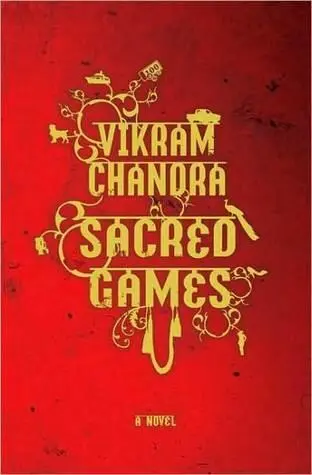
- Название:Sacred Games
- Автор:
- Издательство:HarperCollins
- Жанр:
- Год:2009
- ISBN:нет данных
- Рейтинг книги:3 / 5. Голосов: 1
-
Избранное:Добавить в избранное
- Отзывы:
-
Ваша оценка:
Sacred Games: краткое содержание, описание и аннотация
Предлагаем к чтению аннотацию, описание, краткое содержание или предисловие (зависит от того, что написал сам автор книги «Sacred Games»). Если вы не нашли необходимую информацию о книге — напишите в комментариях, мы постараемся отыскать её.
is an epic of exceptional richness and power. Vikram Chandra's novel draws the reader deep into the life of Inspector Sartaj Singh — and into the criminal underworld of Ganesh Gaitonde, the most wanted gangster in India.
Sartaj, one of the very few Sikhs on the Mumbai police force, is used to being identified by his turban, beard and the sharp cut of his trousers. But "the silky Sikh" is now past forty, his marriage is over and his career prospects are on the slide. When Sartaj gets an anonymous tip-off as to the secret hide-out of the legendary boss of G-Company, he's determined that he'll be the one to collect the prize.
Vikram Chandra's keenly anticipated new novel is a magnificent story of friendship and betrayal, of terrible violence, of an astonishing modern city and its dark side. Drawing inspiration from the classics of nineteenth-century fiction, mystery novels, Bollywood movies and Chandra's own life and research on the streets of Mumbai,
evokes with devastating realism the way we live now but resonates with the intelligence and emotional depth of the best of literature.
Sacred Games — читать онлайн бесплатно полную книгу (весь текст) целиком
Ниже представлен текст книги, разбитый по страницам. Система сохранения места последней прочитанной страницы, позволяет с удобством читать онлайн бесплатно книгу «Sacred Games», без необходимости каждый раз заново искать на чём Вы остановились. Поставьте закладку, и сможете в любой момент перейти на страницу, на которой закончили чтение.
Интервал:
Закладка:
'Did you remember anything about Gaitonde, Uncle?'
'No. Nothing new. Only the things you already know.' Gaitonde was his recruit, his client. After K.D. had retired, Anjali had wanted to be his handler. There had been objections within the organization: she was too young, too inexperienced, and finally and most importantly, she was a woman. What kind of gangster would be handled by a female officer, what woman could handle the fearsome Gaitonde, that ruthless monster, that womanizer with no respect for women? This was old and accepted reasoning within the organization, that women couldn't be given field postings because they couldn't handle the kind of criminal elements that were the everyday providers and producers of intelligence, that women couldn't make deals and give instructions to sweaty smugglers, border-crossing petty criminals, drug-carrying mules, the illiterate and the vulgar and the desperate. So women were good at a desk, the reasoning went, they were fine analysts. Keep them there. But Anjali had chafed at her various desks, and struggled against this old-fashioned reasoning, and proven herself as a field operative in her foreign postings in London and Frankfurt. She was a fine analyst and also a good handler of women and men, a certain Pakistani immigrant-smuggler in Marseilles, a moustachioed and particularly brutal Pathan, had called her Bhen-ji and provided vital connections to carriers of Afghan heroin, with implications in Peshawar and Islamabad. So there were particular ways in which women could indeed handle men, but the organization had refused Anjali's request. They had given Gaitonde to one Anand Kulkarni, who was very masculine and very tough. Gaitonde proved finally to be unreliable, and Kulkarni had been criticized within the organization for his handling of him, but he K.D. was the one who recruited the bastard. It's his fault that Gaitonde went bad, if it is anybody's. K.D. asks, 'Why is it so important? Gaitonde is dead.'
'Yes, he is dead.'
'So, then? There will be a struggle to occupy his territories. Maybe his company will fall apart. Maybe they will kill each other. So what?'
She is evaluating him. She is trying to decide whether to tell him something, or not. He understands he is a risk now, that he cannot be trusted with information. He is not himself, he may tell Dr Kharas, the nurse, people passing in the corridor. And yet he wants to know. 'Tell me,' he says. 'If you tell me, maybe I can help. Maybe if you tell me, it'll help me to remember.' He is not sure whether this is true, whether the tatters of his once-vaunted memory hold together enough that results can be produced from small cues, from careful direction and prodding. But she has to gamble. Calculated risks are the everyday work of the game, and K.D. has trained Anjali in these small steps through danger: at that very last moment when you are walking towards a drop point, unsure whether you are under surveillance, do you keep walking or reach for the bag? You have come to know that one of your officers has been selling information to the other side, to many other sides, so a number of your sources may have been compromised, and you have a man in a defence research establishment near Islamabad, a physicist, do you call him in or not? Calculate the payoff, and the punishment that failure will inflict, and decide.
She has decided. She speaks fast and low. 'We found Gaitonde in a house in Bombay. The house was built like a very deep bunker, with hardened walls. We found the builder and the architect who built it for Gaitonde. They told us that it was done in ten days, from plans faxed in by Gaitonde. He told them not to worry about money, just finish it. They did. We have a copy of the plans. The title page and some other identifying labels had been removed or erased, but there was enough text to allow us to trace the plans to the source. They were downloaded from the internet, from a North American survivalist website entitled "How You Can Survive Doomsday". We examined the structure in Bombay. Gaitonde built a nuclear fallout shelter.'
Her eyes are silvery black and sparkling and frightened. Outside, night settles with the sigh of thousands of beating wings. The groaning rush of the city's traffic is still alive, far below. There is a certain formless vacuity to this nuclear threat, K.D. thinks, an ultimate white blankness which stops all thought, all motion. Anjali cannot think past it, he can see this. He prompts her. 'So Gaitonde broke cover, he ran?'
'Yes, he came back to Bombay. He was looking for three sadhus. He was found dead from a self-inflicted wound. In this shelter.'
'What was in the shelter? Did you find anything?'
'There was another body, of a woman. A woman named Jojo Mascarenas, a madam who had supplied women to him. Gaitonde killed her with the same pistol he shot himself.'
K.D. had known about the women, the girls that Gaitonde had consumed in a steady flow. He had never bothered to ask where the supply came from. Now he knew. 'And what else?'
'There was an album of photographs, of these girls. And money. One crore twenty-one lakhs, in new notes from the Central Bank.'
'You followed up on this woman?'
'Yes. We found her apartment, searched it. Found nothing interesting. There was some cash. Some of it must have been from Gaitonde, it was the same series of new notes, in plastic wraps. She operated on the fringes of the television and film industry, there is a lot of black money in that business. There were tapes, photographs of actors. Nothing else.'
She waits. She is allowing herself a little bit of hope, but K.D. has nothing to tell her. No explanations have become dislodged from the whirl of his confusion, no clues have come floating up from the drifting masses of his past. 'Let me think about it,' he says. 'I'll have to think about this one.'
She eats dinner with him, from a partitioned steel tray. He spoons up his khichri and tries to think. The nuclear threat has been present on the subcontinent for decades, and they have dealt with it. The organization has run many ops to extract information about technologies, doctrines, tactics, locations, some of them very successfully. They have data, and they know the capabilities and intentions of the Pakistanis and the Chinese and the Americans. K.D. has seen some of these analytical reports and papers, and the reddish-brown satellite photos which show missile complexes and air bases, and knows there are real weapons at the ready, aimed at his cities, at him. And yet the reality of a nuclear explosion has always seemed unreal to him, very far away from the dirty night-time business of waiting in a freezing hut for a Pakistani informer, sitting on a broken crate with feet up to avoid snakes and scorpions. To put a man under a double barbed-wire fence, through shifting fields of wheat, under the night-scoped guns of Pakistani Rangers and past sleeping cattle, that was craft and labour and vocation, well-known and well-practised. But nuclear destruction, that belonged in the thrillers that K.D. read on long journeys and at bedtime, that he still reads. In the stack of books at his bedside, among the Roman histories and CIA autobiographies, there are these fictions that he reads for pleasure, often to laugh at the wild extremities of the scenarios that they create, the millions of dead and the dastardly plots and the brave, selfless heroes. In these books, and only in these books, bombs sometimes explode, taking whole cities. Only in these books is there the smoking aftermath, that silence without birds. But you always shut the book, you put it back on the night-stand, you drink your little sip of water, you turn over and go to sleep. No need to build grim little bunkers in the middle of Bombay, no need for gangsters to run from their safe foreign refuges and into danger, no need to look for three sadhus. No need at all. But Gaitonde is dead. Why?
Читать дальшеИнтервал:
Закладка:
Похожие книги на «Sacred Games»
Представляем Вашему вниманию похожие книги на «Sacred Games» списком для выбора. Мы отобрали схожую по названию и смыслу литературу в надежде предоставить читателям больше вариантов отыскать новые, интересные, ещё непрочитанные произведения.








Обсуждение, отзывы о книге «Sacred Games» и просто собственные мнения читателей. Оставьте ваши комментарии, напишите, что Вы думаете о произведении, его смысле или главных героях. Укажите что конкретно понравилось, а что нет, и почему Вы так считаете.