Vikram Chandra - Sacred Games
Здесь есть возможность читать онлайн «Vikram Chandra - Sacred Games» весь текст электронной книги совершенно бесплатно (целиком полную версию без сокращений). В некоторых случаях можно слушать аудио, скачать через торрент в формате fb2 и присутствует краткое содержание. Год выпуска: 2009, Издательство: HarperCollins, Жанр: Современная проза, на английском языке. Описание произведения, (предисловие) а так же отзывы посетителей доступны на портале библиотеки ЛибКат.
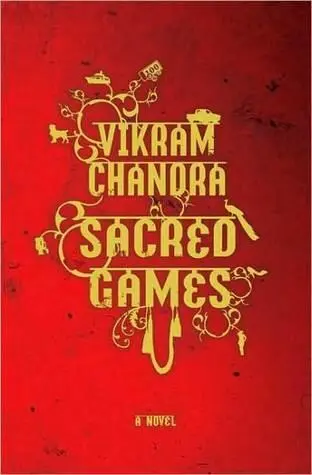
- Название:Sacred Games
- Автор:
- Издательство:HarperCollins
- Жанр:
- Год:2009
- ISBN:нет данных
- Рейтинг книги:3 / 5. Голосов: 1
-
Избранное:Добавить в избранное
- Отзывы:
-
Ваша оценка:
Sacred Games: краткое содержание, описание и аннотация
Предлагаем к чтению аннотацию, описание, краткое содержание или предисловие (зависит от того, что написал сам автор книги «Sacred Games»). Если вы не нашли необходимую информацию о книге — напишите в комментариях, мы постараемся отыскать её.
is an epic of exceptional richness and power. Vikram Chandra's novel draws the reader deep into the life of Inspector Sartaj Singh — and into the criminal underworld of Ganesh Gaitonde, the most wanted gangster in India.
Sartaj, one of the very few Sikhs on the Mumbai police force, is used to being identified by his turban, beard and the sharp cut of his trousers. But "the silky Sikh" is now past forty, his marriage is over and his career prospects are on the slide. When Sartaj gets an anonymous tip-off as to the secret hide-out of the legendary boss of G-Company, he's determined that he'll be the one to collect the prize.
Vikram Chandra's keenly anticipated new novel is a magnificent story of friendship and betrayal, of terrible violence, of an astonishing modern city and its dark side. Drawing inspiration from the classics of nineteenth-century fiction, mystery novels, Bollywood movies and Chandra's own life and research on the streets of Mumbai,
evokes with devastating realism the way we live now but resonates with the intelligence and emotional depth of the best of literature.
Sacred Games — читать онлайн бесплатно полную книгу (весь текст) целиком
Ниже представлен текст книги, разбитый по страницам. Система сохранения места последней прочитанной страницы, позволяет с удобством читать онлайн бесплатно книгу «Sacred Games», без необходимости каждый раз заново искать на чём Вы остановились. Поставьте закладку, и сможете в любой момент перейти на страницу, на которой закончили чтение.
Интервал:
Закладка:
'Good. I'm sure you can do it. There is one other interesting point.'
'Yes?'
'The cash you found in Jojo's apartment is fake.'
'Those notes? All of them?'
'Yes. They are very good quality counterfeits. They are produced across the border, in Pakistan. They have been introduced into the country in sizeable quantities over the last eight, ten years. They are often used to fund operations that their people run here. And they are in widespread use.'
'Jojo had a lot of them. In unbroken packets.'
'Right. Interesting in itself. But we've also noticed that the inks and the paper are very much better in recent notes. Jojo's notes were all from one of these new batches, which are as yet not that common. One of the only other places where a big batch of these new notes has been picked up was during an IB and Meerut police raid on people involved in arms smuggling. What happened was this: a Matador van was hit by a State Transport bus outside Meerut, the driver of the van was killed. The local police found one other passenger still alive, and twenty-three assault rifles in the back, under the floorboards. They interrogated the passenger the next day, and he told them he didn't know who he was working for, he was just supposed to pick up the van in Delhi and bring it to Meerut. He didn't know anything more. But he could give them the whereabouts of the men who had hired him in Delhi for the job. So, the police raided a Delhi house. They got three more men, a hundred and thirty-nine AK-56 rifles, forty pistols, almost eighteen thousand rounds of ammunition and ten lakhs in cash.
'Interrogation of all the apradhis revealed other names, other connections. When these leads were followed, and after several layers had been penetrated, it was finally revealed that the original supplier of the arms in Bombay was Gaitonde. That was the extent of that case, it led us to Gaitonde's arms smuggling. After his death, in my investigations, I was reading that case file. I thought of taking a new look at the seized cash. And yes, all ten lakhs were in these new Pakistani notes.'
'And who were these men who were arrested in Delhi?'
'They belong to an underground Hindu organization called Kalki Sena, which we had never heard of before. They are getting ready for a war, they said in their statements. I read some of the literature that was found on the raid. They are going to set up a Hindu rashtra, it seems. After the war, which will be the frightful end of Kaliyug, there will be a perfect nation, run according to ancient Hindu principles.'
'Ram-rajya.'
'Ram-rajya, yes.'
'And this war, who is it going to be against?'
'Muslims, communists, Christians, Sikhs. Anyone else who doesn't like this perfect nation. Militant Dalits also. The rifles were on their way to Bihar, to some right-wing private army run by landlords.'
'You think Gaitonde was part of this organization also? But he always presented himself as the secular don.'
'Yes. So maybe he was just doing business with these Kalki Sena-wallahs, nothing more, he had no involvement in their politics. The apradhis in Delhi couldn't tell us anything more, they were just one cell with a specific job. Whoever is running this is doing it well, putting in many cut-outs. So Gaitonde was maybe involved on an ideological level, or maybe he wasn't. I want to know. And I want to know, that nuclear shelter, why?'
'Yes. I'll talk to the actress.' Sartaj was now wanting to know as well, he wanted some answers to all these questions, some reason for that cube. If somebody was going to wage war against him and his family and his people, he wanted to know who the bastards were, and how they were connected to Ganesh Gaitonde.
'Good.'
Sartaj said a quick 'Okay, bye,' and walked out into the sunlight. It was good to be warm in the morning. He had an aching back from the night's sleep, a crimped shoulder, but even the discomfort was welcome. It was good to be alive. He felt a benevolence towards the shopkeepers with their handy calculators and their shrines to pot-bellied Ganesha, the billboards with their lists of goods and services, the sturdy Maratha women in bright greens and blues striding energetically to work, the three urchins playing cricket with a red rubber ball and a stick. Sartaj squinted, and tried to see the aftermath of a nuclear blast, what it would leave of this bazaar. He couldn't. He remembered the images from the bomb-thriller movie, the brown cloud they had shown in a film within the film, the deadly wind. But it was hard to make it real, here on this street. Impossible to imagine, impossible to believe. And yet, it was here. Here in Kailashpada.
* * *
The shops in the market on Rajgir Road were thronged by legions of young women buying clothes for the nine nights of Navaratri. Sartaj slowed down and tilted the motorcycle towards the left, where he drove at the road's edge, relishing the excitement and joy of the girls who dodged past him on their way in and out of the boutiques. Surely Devi would be pleased by all this youthful energy, this feminine happiness. It revived Sartaj anyway, delivered him from the bomb. Someone laughed, and the sound made a sudden song that floated above the grunting and heaving of the traffic. Sartaj turned to look for the laugher, and caught sight of enormous dark eyes reflected in a car window, a moving flash, just that, and then the motorcycle was inches away from the back of an auto-rickshaw and he swerved wildly towards the pavement. The engine died, and Sartaj came safely to a stop, and could see nothing on the road-ward side but the long red side of a bus, and to his left a billboard rose some sixty feet above him, carrying the very foreshortened face of a blue-lit model up to the sky. He sat still for a moment, grinning at his own idiocy, his heart thumping a bit from the close call. A stanchion supporting the billboard made a downward-pointing triangle with another metal post, and through the triangle Sartaj could see the top of his own head in a shop window. Oy, Sardar-ji, he said to himself, get control, yaar. What's wrong with you?
He drove on, determined to think only professionally now, and calmly, and logically. He was on his way to meet Rachel Mathias, the Rachel who was an ex-friend of Kamala's and a potential enemy armed with too much intelligence. He hadn't quite decided yet how he was going to play the meeting. There was no official case, and he had no evidence to accuse the embittered Rachel with, so the intent of the visit was only to gather information, and to perhaps stir the muddy waters a bit and see what came bubbling up. He could be an aggressive, frightening policeman, or he could be a discreet new friend trying to serve Rachel's interests, not the crazy Kamala's. Detection was often a matter of playing several parts, sometimes simultaneously. If you could fit yourself into the suspect's prejudices, present yourself as a solution to her problems, she would talk. Sartaj had done this often enough, so he now didn't need to prepare too much, to think it all through in advance. A quick run-through of the essential facts as he drove was enough: two friends, one married, the other very lonely; a man; a quarrel. Very simple. But Sartaj knew women's quarrels well enough to know that they were never as simple as they might seem in a summary. Maybe the beautiful Umesh had just been the flash-point that set off this particular war, maybe tensions had been brewing for years. Maybe the hostilities were really about something else altogether. Assume nothing, he cautioned himself as he parked. Stay alert. Stop thinking about Navaratri and Durga and Lakshmi and Saraswati.
But the goddesses were well-represented in Rachel Mathias's drawing room, which was crowded with what was clearly expensive art, some of it antique. There were sculptures and paintings and, on the wall furthest from the window, a gigantic wooden double door that must have been taken from some great haveli. It leaned against the wall at a sharp angle, cut out from its context but still breathtakingly beautiful with its vibrant blues and reds and yellows and crossing bands of dark iron studded with rivets. Sartaj knew that each of the paintings on the wall, even the modern ones, would cost more than his annual income. Megha would have known the artists, all of them, but the only art that Sartaj recognized was a Raja Ravi Varma print of a bejewelled Lakshmi, graceful and voluptuous. A long time ago, on one of their first dates, Megha had taken him to an art exhibition and told him about the Raja and his works, and Sartaj had loved that Lakshmi ever since.
Читать дальшеИнтервал:
Закладка:
Похожие книги на «Sacred Games»
Представляем Вашему вниманию похожие книги на «Sacred Games» списком для выбора. Мы отобрали схожую по названию и смыслу литературу в надежде предоставить читателям больше вариантов отыскать новые, интересные, ещё непрочитанные произведения.







Обсуждение, отзывы о книге «Sacred Games» и просто собственные мнения читателей. Оставьте ваши комментарии, напишите, что Вы думаете о произведении, его смысле или главных героях. Укажите что конкретно понравилось, а что нет, и почему Вы так считаете.