Vikram Chandra - Sacred Games
Здесь есть возможность читать онлайн «Vikram Chandra - Sacred Games» весь текст электронной книги совершенно бесплатно (целиком полную версию без сокращений). В некоторых случаях можно слушать аудио, скачать через торрент в формате fb2 и присутствует краткое содержание. Год выпуска: 2009, Издательство: HarperCollins, Жанр: Современная проза, на английском языке. Описание произведения, (предисловие) а так же отзывы посетителей доступны на портале библиотеки ЛибКат.
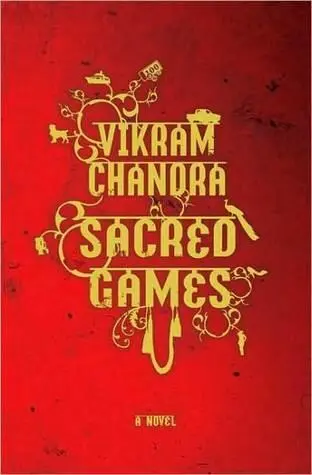
- Название:Sacred Games
- Автор:
- Издательство:HarperCollins
- Жанр:
- Год:2009
- ISBN:нет данных
- Рейтинг книги:3 / 5. Голосов: 1
-
Избранное:Добавить в избранное
- Отзывы:
-
Ваша оценка:
Sacred Games: краткое содержание, описание и аннотация
Предлагаем к чтению аннотацию, описание, краткое содержание или предисловие (зависит от того, что написал сам автор книги «Sacred Games»). Если вы не нашли необходимую информацию о книге — напишите в комментариях, мы постараемся отыскать её.
is an epic of exceptional richness and power. Vikram Chandra's novel draws the reader deep into the life of Inspector Sartaj Singh — and into the criminal underworld of Ganesh Gaitonde, the most wanted gangster in India.
Sartaj, one of the very few Sikhs on the Mumbai police force, is used to being identified by his turban, beard and the sharp cut of his trousers. But "the silky Sikh" is now past forty, his marriage is over and his career prospects are on the slide. When Sartaj gets an anonymous tip-off as to the secret hide-out of the legendary boss of G-Company, he's determined that he'll be the one to collect the prize.
Vikram Chandra's keenly anticipated new novel is a magnificent story of friendship and betrayal, of terrible violence, of an astonishing modern city and its dark side. Drawing inspiration from the classics of nineteenth-century fiction, mystery novels, Bollywood movies and Chandra's own life and research on the streets of Mumbai,
evokes with devastating realism the way we live now but resonates with the intelligence and emotional depth of the best of literature.
Sacred Games — читать онлайн бесплатно полную книгу (весь текст) целиком
Ниже представлен текст книги, разбитый по страницам. Система сохранения места последней прочитанной страницы, позволяет с удобством читать онлайн бесплатно книгу «Sacred Games», без необходимости каждый раз заново искать на чём Вы остановились. Поставьте закладку, и сможете в любой момент перейти на страницу, на которой закончили чтение.
Интервал:
Закладка:
'What is that on the paper, Mathu?' I said.
He cringed, and doubled over, and began to make a low whine.
'He is afraid you'll take it from him. In the general barracks, the prisoners used to make fun of him, and steal his paper and pencils and pens. That's why we put him in with the old men. He sits and draws all day long.'
'What, Mathu, what do you draw?' I rubbed his shoulder. 'Come on. You remember me. We went out on the boat together. See, you said you knew me. You know me. I am Ganesh Gaitonde.'
He turned to me then, and let me straighten him up and take the papers from under his leg. They were scraps of paper, old newspapers, envelopes flattened out and made wide, bits of receipts and jail documents. Every clear space on these scraps had been filled with tiny drawings of men and women and buildings and animals. He was a good artist, our Mathu. You could tell what a man was feeling, or if an animal was afraid. The trees bent to the force of a great wind, and there were streetlights on a dark lane. The people spoke to each other in little balloons, but the drawings were so crammed in and so tiny that you could hardly make out what they were saying, even when you had your eye an inch away from the paper. It was like some sort of gaandu crazy comic, it made you dizzy just to look at it, all those figures moving up and down the paper and spreading from one sheet to the next, every inch filled with some discussion or quarrel or love, but still you could tell that it was all connected, that it made some sense somehow.
'This is very good, Mathu. What is this you have been drawing?'
He was ecstatic that I had asked. For a minute I saw the Mathu I had known once, the Mathu who was faithful to his Dev Anand even in the days of Amitabh Bachchan, who liked to fly kites from morning till night all the way until Sakranti, who liked to wear navy blue because a friend of his sister's had once told him he looked handsome in it. He smiled wide, showing gaps in his yellowed teeth, and said, 'My life, Ganesh.'
I took that in. Now that he had said it, you could see that there was a little boy, about five or so, in shorts and chappals, who walked along the torn edge of an envelope, carrying a school-bag. 'This is you?'
'Yes.'
'And you're going to draw your whole life?'
'Yes, yes.'
'Why?'
That closed him up. He didn't have an answer to that. He hung his head down and after a while he began to cry. I hugged him and put him close to me, and got one of the boys to bring me a pad we had been using. 'Here, Mathu. Here's lots of paper. You want more paper?'
'Yes.' His nose was running, dripping on to the pad. He groped at the lined paper. 'And pens. With different colours.'
'I'll get you all that. Don't you worry.'
He nodded happily, and in that gesture I saw the young Mathu saying 'yes' to the idea of a movie, saying 'yes' to falooda and an outing. I had him cleaned up, and sent him back to the barrack laden with paper, escorted by two of my boys. Then I shivered, and pulled my knees up and thought. I could have him sent out into the world, of course, but the warder had told me he could barely get by without help even inside the jail. He gave his food to anyone who would give him a pen, and forgot to eat when he had food. All he wanted to do was draw his life. At the rate he was going at now after seven, eight years of drawing he had reached his first day in class two he would get to our trip with Salim Kaka in twenty or thirty years. He was no danger to me. So the next morning I gave orders, and deputed the warder who had brought Mathu to me to look after him in perpetuity. I gave Mathu a monthly pension, a sizeable one considering that his accommodation was free and all he really needed was paper and writing implements. He was to be fed and clothed and taken to the hospital once a month. And anyone who disrupted his drawing would have to answer to me.
So Mathu was drawing his life. I had time in jail to think about mine. Despite all my tragedies, my life had been a good one, I could see that. I had fame, I had power, I was still growing. I had suffered defeats, but I knew how to recover and respond. I learnt from my mistakes. I went on. But to what? Where was I going? If I were to draw my life, where would I send it after this meeting with Mathu?
Then, during my confusion, Bunty came to me with a report. He didn't want to give it to me over the phone, and he didn't want to send anything in writing. Our practice was that none of our controllers came to the jail. There were several cases pending against Bunty, but still he came to the warden's office. He shut the doors, and drew up a chair close to me. 'Bhai,' he said. 'It's about Sharma-ji.'
'So you finally found out who he's working for?'
'First we found him, bhai. A little money here, a few questions there Sharma-ji's name is actually Trivedi. He owns petrol pumps in Meerut, and has old relationships with all the politicians there. He used to be a Jana Sanghi, but left the party in the early eighties. He and a cousin of his and a few others started a new party, Akhand Bharat. The party is still around, but they've only managed a few municipal seats, never anything in the state elections or for parliament.'
'And?'
'He lives well, bhai. He has a house called Janki Kutir, three storeys, big as a cinema house. All white marble. This Akhand Bharat party is still running, they spend too much money for how small they are. It's not all coming from petrol pumps. And there's not enough to pay for our shipments. So I looked a bit more. We followed him for a couple of months. Nothing. He has a very routine life, temple in the morning, petrol pumps, party office in the afternoon. Nine children, many grandchildren, big joint family. He has an office in the house, spends his evenings there.'
'Then?'
'We made a source in the telephone department, didn't have to spend too much. We got lists of all the outgoing calls from his office number. We tracked down most of the repeating numbers, but there was one mobile he calls every Saturday. Around the time of our last shipment he was calling it every day. So then we had to make a source inside the mobile phone company. That took longer, some more money.'
'Finally?'
'Finally the mobile belongs to one Bhatia, Jaipal Bhatia, who lives in Delhi, in South Extension. Nice bungalow also, this Bhatia has. His one and only job is that he works as personal secretary to Madan Bhandari.'
'Bhandari is who?'
'Bhandari is nobody. Just a businessman, has interests in plastics, textiles. Twenty, thirty crore turnover. He's only interesting because, outside his factories, he has one main love in his life, bigger even than his wife and children. He is the main supporter and bhakt of Shridhar Shukla.'
'Shridhar Shukla the swami?'
'That one. He is their boss. He's the top. I am sure of that.'
That certainly changed the whole game. Swami Shridhar Shukla was an international swami, he had lunches with presidents and prime ministers, and told fortunes for ministers, and had film stars by the dozen at his darshans. I had seen him often on television, sitting in a wheelchair and smiling. He had perfect northern Brahmin Hindi, and fast English. Very impressive man. Very connected.
'Maderchod,' I said. 'Maderchod.'
Bunty nodded. He saw our problem, which was that we didn't have the slightest maderchod idea of what our problem was. We didn't know this sea we were swimming in. I got up, walked around the room once. Nehru was looking down at me. I gave him back a stare: I've been learning about you, bastard, you weren't that great for the country. 'We act directly,' I said. 'You get on the phone to that, that bastard, what's his name?'
'Trivedi.'
'Yes, Trivedi. You tell him that I want to talk to this Shukla. Latest by tomorrow evening. No arguments, no this or that. I talk to Shukla, directly. Otherwise we have trouble.'
Читать дальшеИнтервал:
Закладка:
Похожие книги на «Sacred Games»
Представляем Вашему вниманию похожие книги на «Sacred Games» списком для выбора. Мы отобрали схожую по названию и смыслу литературу в надежде предоставить читателям больше вариантов отыскать новые, интересные, ещё непрочитанные произведения.









Обсуждение, отзывы о книге «Sacred Games» и просто собственные мнения читателей. Оставьте ваши комментарии, напишите, что Вы думаете о произведении, его смысле или главных героях. Укажите что конкретно понравилось, а что нет, и почему Вы так считаете.