Sherman Alexie - Indian Killer
Здесь есть возможность читать онлайн «Sherman Alexie - Indian Killer» весь текст электронной книги совершенно бесплатно (целиком полную версию без сокращений). В некоторых случаях можно слушать аудио, скачать через торрент в формате fb2 и присутствует краткое содержание. Год выпуска: 2013, Издательство: Open Road Media, Жанр: Современная проза, на английском языке. Описание произведения, (предисловие) а так же отзывы посетителей доступны на портале библиотеки ЛибКат.
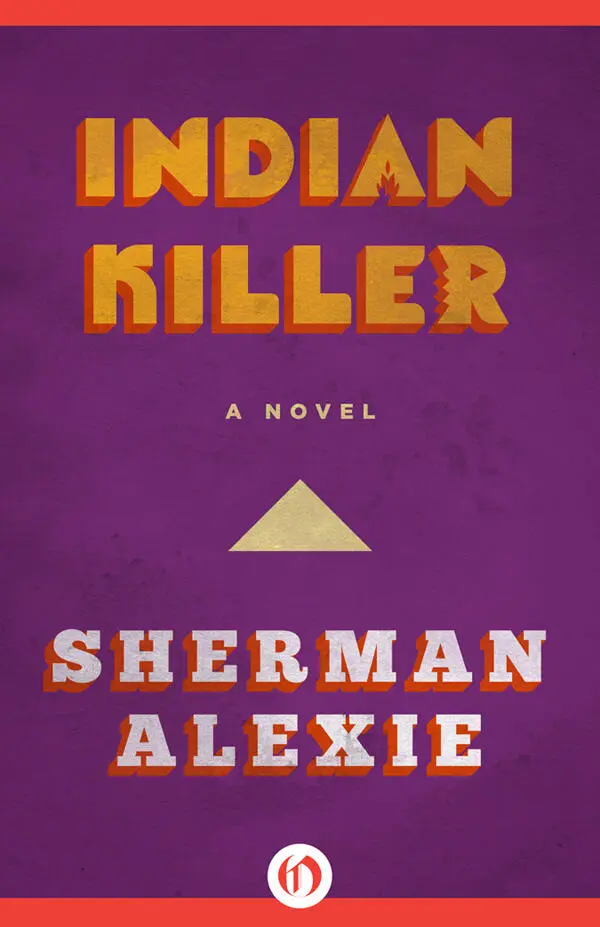
- Название:Indian Killer
- Автор:
- Издательство:Open Road Media
- Жанр:
- Год:2013
- ISBN:нет данных
- Рейтинг книги:3 / 5. Голосов: 1
-
Избранное:Добавить в избранное
- Отзывы:
-
Ваша оценка:
Indian Killer: краткое содержание, описание и аннотация
Предлагаем к чтению аннотацию, описание, краткое содержание или предисловие (зависит от того, что написал сам автор книги «Indian Killer»). Если вы не нашли необходимую информацию о книге — напишите в комментариях, мы постараемся отыскать её.
In the electrifying
, a national bestseller and New York Times Notable Book, Sherman Alexie delivers both a scintillating thriller and a searing parable of race, identity, and violence.
Indian Killer — читать онлайн бесплатно полную книгу (весь текст) целиком
Ниже представлен текст книги, разбитый по страницам. Система сохранения места последней прочитанной страницы, позволяет с удобством читать онлайн бесплатно книгу «Indian Killer», без необходимости каждый раз заново искать на чём Вы остановились. Поставьте закладку, и сможете в любой момент перейти на страницу, на которой закончили чтение.
Интервал:
Закладка:
He was still thinking of Dr. McMinn’s blue eyes, and speculating about her genetics, when three masked men stepped from the brush beside the trail. One man, wearing a white mask, was holding a baseball bat.
“Hey, prairie nigger,” said white mask. “What the fuck you doing on our trail?”
Arthur suddenly understood the flight instinct. And he also understood how a deer could stare into the headlights of an approaching car and be unable to move.
“I don’t want any trouble,” said Arthur.
“You don’t want any trouble?” asked white mask.
“No,” said Arthur, his voice breaking.
“Oh, now, listen to him squeal,” said white mask.
“Yeah, like a pig,” said blue mask.
Purple mask was silent.
“Are you an Indian pig?” asked white mask.
“Whatever you say, man,” said Arthur.
“Whatever I say?”
“Yeah, whatever.”
“Well, Indian pig, I say this,” said white mask as he punched the bat into Arthur’s belly. Dazed, Arthur staggered and fell to the ground. As he fell, he could see the baseball bat in white mask’s hands. Expecting a beating, Arthur reflexively curled into a fetal ball to protect himself. He wondered if he was going to die.
5. Big Heart’s Soda and Juice Bar
WILSON’S STUDIO APARTMENT WAS small but tidy. It was in an old building just east of downtown. He had lived in it forever even though he knew he could have moved into a larger place. He felt safe in this one. He liked his couch that folded out into a bed, the coffee table where he took many of his meals, the big-screen television filling up an entire wall, the clock radio, the chest of drawers with a black-and-white photograph of his birth parents set on top, the small desk with matching chair. His typewriter sat on his desk, along with a cup of pencils, some correcting fluid, and copies of his two published books. His kitchen was tucked into a corner: tiny refrigerator, stove, and sink. He had two plates, two settings of silverware, one cup, and one glass. Small stereo. A simple life, to be sure, but it was good camouflage from the monsters.
Wilson thought about the Indian Killer. A white man scalped, a white man disappeared, a white boy kidnapped. It was Biblical, David versus Goliath. But Wilson was disturbed by that. He wondered if a real Indian was capable of such violence. He knew about real Indians. He’d read the books, had spent long hours meditating, listening to the voices from the past. From the confusing and complicated cornucopia of tribal influences that made up Wilson’s idea of ceremony came burned sage and tobacco, a medicine pouch worn beneath his clothes, and a turquoise ring on his right hand. While beating the drum he’d ordered from a catalog, Wilson played Southern and Northern style, often within the same song. Some nights, Wilson would slip into the traditional dance outfit he’d bought at a downtown pawn shop, drop a powwow tape into the stereo, and two-step across the floor for hours. He dreamed of being the best traditional dancer in the world. Wilson saw himself inside a bright spotlight in a huge arena while thousands of Indians cheered for him. Real Indians.
Wilson sat down at the typewriter, cracked his knuckles, typed the first word, and leaned back in his chair. He cleared his throat, decided he was thirsty, and wondered if he had any milk left. He drank gallons of one-percent.
He stood up, walked over to his refrigerator, opened it, and discovered it was nearly empty. A pizza box, jar of mustard, and unidentifiable lunch meat. Opening the refrigerator had made him hungry, an automatic response, so he grabbed his apartment keys and went for some dinner at Big Heart’s Soda and Juice Bar on Aurora and 110th. In light traffic, Big Heart’s was at least a twenty-minute drive from his Capitol Hill apartment, but Wilson never minded the effort because Big Heart’s was an Indian bar, meaning that Indians frequented the place, although a white man owned it. Wilson spent a lot of time at Big Heart’s. The bar was a huge multilevel circus. On the main floor, a twenty-seat bar, a jukebox, and a dozen tables. Two pool tables on the lower level, a dance floor and bandstand on the upper floor. Three or four hundred Indians shoved into the place on a busy weekend night.
Despite all of the time he spent in Big Heart’s, Wilson had never come to understand the social lives of Indians. He did not know that, in the Indian world, there is not much social difference between a rich Indian and a poor one. Generally speaking, Indian is Indian. A few who gain wealth and power as lawyers, businessmen, artists, or doctors may marry white people and keep only white friends, but generally Indians of different classes interact freely with one another. Most unemployed or working poor, some with good jobs and steady incomes, but all mixing together. Wilson also did not realize how tribal distinctions were much more important than economic ones. The rich and poor Spokanes may hang out together, but that doesn’t necessarily mean the Spokanes are friendly with the Lakota or Navajo or any other tribe. The Sioux still distrust the Crow because they served as scouts for Custer. Hardly anybody likes the Pawnee. Most important, though, Wilson did not understand that the white people who pretend to be Indian are gently teased, ignored, plainly ridiculed, or beaten, depending on their degree of whiteness.
“Hey, there,” said Mick, the bartender, who was also the owner, as Wilson took a seat facing him. “What’ll you have? A hamburger and fries, a glass of milk, right?”
“I’ve been wondering,” Wilson said to Mick after the food arrived. “How come so many Indians come here?”
Mick shrugged his shoulders.
“How long they been coming here?”
Mick looked around the bar. A few Indians were playing pool, a big Indian guy in a dirty raincoat was sitting quietly at the other end of the bar from Wilson, and one couple was slow dancing to a bad song on the jukebox. It was still early on a weeknight. Mick breathed in deep, tilted his head in thought, made clicking sounds with his tongue, counting that way.
“I guess it must be about five, six years now,” said Mick. “A few Indians just showed up one night, you know, like they were scouts or something. Then there were a few more the next night. A couple weeks later and the whole place was Indian. You know, for a while, I used to have a lot of white customers, too, but the Indians drove them away. You’re about the only white guy left.”
Mick had always referred to Wilson as a fellow white guy. And that had always bothered Wilson, who was so proud of his Indian blood. He had told all of the Indians who would listen about Red Fox, his Indian ancestor. Wilson had not told them that he was a writer, though everybody knew anyway. He thought he was anonymous in this place, picking up bits of stray information for his novels, but Wilson wrongly assumed that the Indians who went to Big Heart’s did not read any books, let alone his books. In blissful ignorance, he figured he fit in fine, though the Skins in Big Heart’s knew that he was just another white guy trying to become Indian by hanging out in an Indian bar. Wilson thought he was charming, but he had just become an expected feature of Big Heart’s, a cheap sort of entertainment, and all the Indians called him Casper the Friendly Ghost.
“Hey, Mick,” said Wilson. “Have you ever had any serious trouble around here?”
“What do you mean?”
“I mean, have there been any killings, anything like that?”
“No way. Lot of fights, I guess, but nobody’s been killed. Why you ask?”
“Just curious.”
Mick nodded his head, then turned to wash a few glasses. There were only a few, just busy work, but he liked to stay on top of things. Mick had once come across one of Wilson’s books and was surprised to see his face on the back cover. Mick was even more surprised when he read the book. It was pretty good, although Mick was kind of tired of hearing about Indians. Still, Mick thought, Aristotle Little Hawk was a good Indian, even if he was just some character in a book. He wished more Indians like Little Hawk hung out in the bar. He knew Wilson claimed he had some Indian blood, said so inside the book. But Mick did not buy that shit. Mick’s great-grandmother was a little bit Indian, but that did not make him Indian. Besides, who the hell would want to be Indian when you could just as easily be white?
Читать дальшеИнтервал:
Закладка:
Похожие книги на «Indian Killer»
Представляем Вашему вниманию похожие книги на «Indian Killer» списком для выбора. Мы отобрали схожую по названию и смыслу литературу в надежде предоставить читателям больше вариантов отыскать новые, интересные, ещё непрочитанные произведения.



Обсуждение, отзывы о книге «Indian Killer» и просто собственные мнения читателей. Оставьте ваши комментарии, напишите, что Вы думаете о произведении, его смысле или главных героях. Укажите что конкретно понравилось, а что нет, и почему Вы так считаете.